I do not accept the fashionable proposition that an electoral roll becomes democratic merely by becoming longer. A register containing dead voters, duplicate entries and people who have permanently moved is not an expression of compassion. It is bad administration. India is urbanising, migrating and ageing too quickly for voter lists to be treated as sacred manuscripts that nobody may edit. The Election Commission was therefore right to undertake an intensive revision. Where I part company with its most enthusiastic defenders is over the belief that a legitimate objective excuses a clumsy process. It does not.
The controversy has become needlessly theatrical. Congress and its allies speak as though every missing name comes with a BJP instruction slip attached. That is an enormous allegation for which slogans are not evidence. At the same time, officials sometimes appear to think that invoking Article 324 should end the conversation. It should begin one. If the state asks a citizen to prove eligibility for the most basic act in a democracy, the burden of explanation lies heavily on the state.
Purification is not disenfranchisement
The case for revision is straightforward. Electoral rolls accumulate errors because life does not wait for an annual clerical window. People die, marry, migrate for work, change rented homes and enrol elsewhere. Political parties themselves routinely complain about duplicates and implausible clusters until an actual clean-up begins, at which point the language changes from accuracy to conspiracy. I have little patience for that switch.
The Commission’s own explanation of the revision process describes house-to-house verification, publication of draft rolls, claims and objections, physical checks and the sharing of lists with recognised parties. Those are not sinister ideas. They are the ordinary safeguards one would design if starting from first principles. A clean roll protects a genuine voter because it makes impersonation and duplication harder; inclusion and integrity are partners, not rivals.
Congress’s preferred argument often starts with a large deletion number and leaps directly to motive. That skips the essential questions. How many deleted entries belonged to deceased voters? How many were duplicates? How many people had shifted? How many eligible citizens were wrongly excluded and subsequently restored? A serious party would deploy booth agents, audit samples and publish reproducible findings. A protest placard cannot substitute for that work.
But numbers of this scale demand humility. The Indian Express reported that the Commission ordered a special enrolment drive after large numbers were omitted from draft lists. I see that intervention as evidence that correction mechanisms can work, not as a confession of a national plot. Yet it also establishes something the Commission should admit plainly: draft-stage exclusion imposes real costs, especially on migrants, tenants, elderly citizens and people whose documents do not align neatly.
The Commission created avoidable suspicion
Administrative legitimacy depends on predictability. Forms should not acquire consequential new questions without a clear legal basis, published reasons and adequate notice. Deadlines should not move so often that voters need a spreadsheet to follow them. A booth-level officer should be able to explain the same rule in Mumbai and Mysuru. When rules appear mutable, opposition parties fill the explanatory vacuum with their most convenient theory.
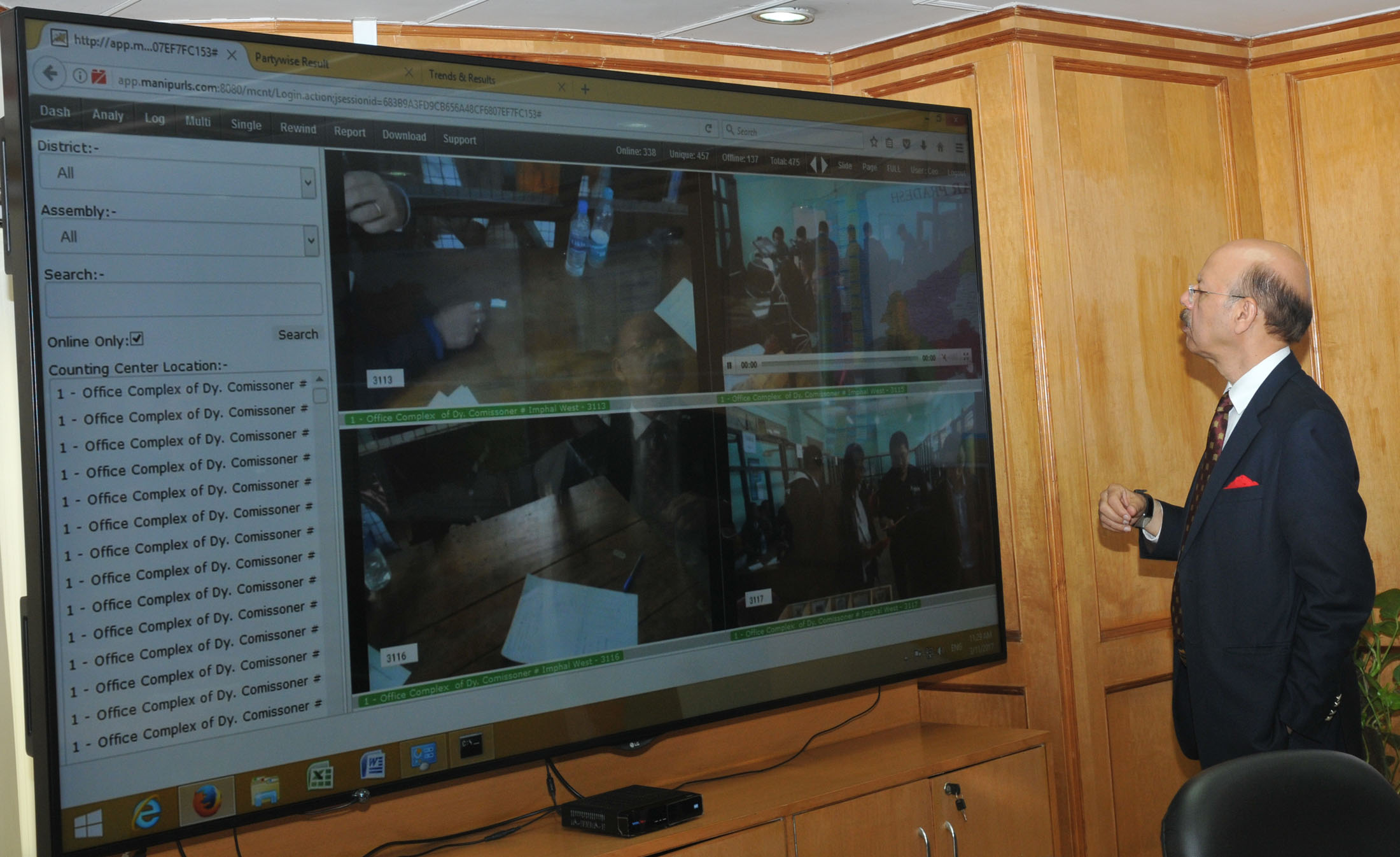
The controversy over Form 6 is a warning. The Supreme Court’s request for records concerning reported modifications does not prove partisan manipulation. It does show why the Commission must maintain an auditable chain of authority for digital changes. Software is now part of election law in practice. A field added to a portal can affect a citizen as surely as a clause printed in the Gazette.
I would like the Commission to publish version histories for every elector-facing form and portal. It should provide district-level dashboards distinguishing deaths, duplicates, permanent shifts, voluntary changes and contested exclusions. It should report restorations with the same prominence as deletions. Recognised parties should receive machine-readable lists early enough to investigate them. None of this weakens the Commission. It deprives rumour of oxygen.
The BJP should welcome that standard rather than treating every demand for disclosure as an attack on the institution. The government benefits when electoral administration is visibly competent, but it loses credibility when supporters answer every procedural criticism with partisan counter-accusations. One can defend the necessity of revision and still say that an opaque digital alteration is unacceptable. In fact, a confident governing party should be the first to say so.
Make re-entry easier than outrage
My practical test is simple: an eligible citizen omitted from a draft roll should find restoration faster than a politician can organise a march. That means weekend camps, multilingual notices, searchable status updates, acknowledgement receipts and assisted filing for citizens without smartphones. It also means consequences for careless officials, because a correction mechanism is not a licence for reckless first-round deletion.
Door-to-door verification is especially important in India because documentation follows class. A salaried homeowner can retrieve a passport, utility bill and digital certificate within minutes. A seasonal worker may have legitimate ties across two states and paperwork in neither place. Treating those situations as identical is not equality; it is bureaucratic laziness. BLOs need discretion, training and supervision, not merely numeric targets.
I also reject the opposition’s attempt to transform every administrative grievance into a demand that the chief election commissioner resign. Institutions cannot function if resignation becomes the first remedy rather than the last. Produce evidence, challenge unlawful instructions, seek judicial review and monitor restoration. Those are democratic tools. A permanent street ultimatum is a branding exercise.
The Commission, for its part, should stop sounding affronted when questioned. It is not a private club defending its honour. It is a constitutional institution earning public confidence one name at a time. Its answer to exaggerated accusations should be granular data, not adjectives.
The argument India should be having
The real debate is not whether rolls should be revised. They must be. It is how India can build continuous, interoperable and privacy-conscious registration so that a nationwide clean-up does not become a recurring civic emergency. Death registration, address changes and voluntary voter migration should communicate through lawful, consent-based systems with human review. Citizens should receive notice before adverse action and a simple route to appeal.
Congress-era nostalgia offers no solution here. Old rolls were not immaculate because the technology was older or because television studios were gentler. The answer is better state capacity: transparent databases, accountable officers and accessible remedies. That is precisely the kind of reform a BJP-led government ought to champion.
I give the Commission the benefit of the doubt on its objective because accurate rolls are indispensable and because the conspiracy case remains asserted more often than demonstrated. I do not give it a free pass on execution. India can insist on both clean lists and generous inclusion. Anyone claiming we must choose between them is either selling fear or excusing poor administration.