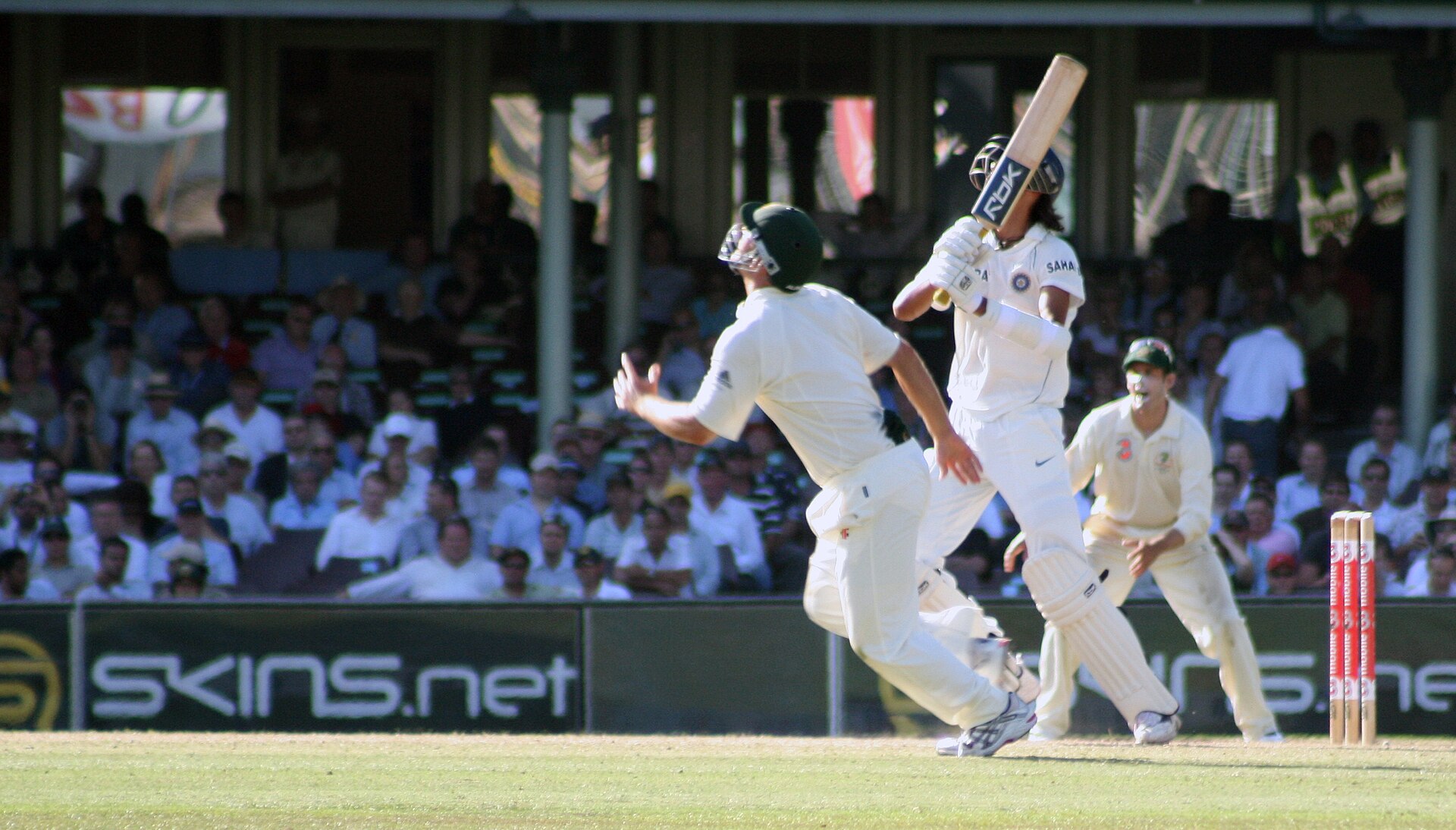
I should be delighted without qualification. BCCI’s announced 2026-27 home programme culminates in five Tests against Australia, the sort of proper series that allows a contest to acquire memory, spite, tactical evolution and weather. The official fixture announcement sends the teams through Nagpur, Chennai, Guwahati, Ranchi and Ahmedabad. That is a far richer proposition than the two-Test morsels administrators once served before rushing everyone towards another white-ball engagement.
Yet I cannot look at five glamorous Tests without asking who pays for them. The answer is usually domestic cricket: the players outside the first-choice squad, the state teams navigating split seasons, and the red-ball specialists required to remain match-ready while the commercial calendar expands around them. BCCI’s own match listings reveal the extraordinary density of men’s, women’s, age-group and A-team cricket. Volume is not the same as coherence.
Five Tests create a real argument
A long series is the finest examination cricket offers. In a single Test, a weak technique can escape detection and a brilliant spell can decide everything. Across five, opponents learn. They alter lengths, fields and selection. A batter who feasted on pace receives spin earlier. A bowler whose first spell caused panic discovers that batters are leaving him. Captains carry decisions from one venue to the next. Even dead rubbers are rarely dead because careers and reputations remain alive.
Australia also draws the kind of attention that may persuade a casual audience to sit with Test cricket’s slower pleasures. That matters. The format will not survive merely because people like me declare it morally superior. It needs full grounds, recognisable rivalries and scheduling that treats the fifth day as a possibility rather than an inconvenience.
Spreading the series across regions is sensible, though venue rotation must never outrank pitch quality and spectator care. A Test city should earn repeat matches by producing a fair surface, filling seats and treating ticket buyers as customers rather than security risks. India’s public enthusiasm is not an inexhaustible resource. Fans asked to queue blindly, surrender harmless objects and sit without basic shade will eventually watch at home.
The Ranji Trophy cannot be a waiting room
My larger complaint concerns the hierarchy implicit in the calendar. Domestic first-class cricket is frequently discussed as a development programme for the national side. It is more than that. It is a competition with its own history, rivalries and standards. A Ranji player should not feel that his tournament exists solely to occupy weeks not claimed by international cricket and franchise leagues.
Split seasons may be unavoidable because of weather and the crowded calendar, but they interrupt rhythm. A team can build momentum, disperse into other formats and return months later to a different physical and tactical problem. Selectors then use small samples to make large judgments. Players on the edge of the India squad shuttle between benches, A tours and state duties, sometimes without the continuous red-ball preparation that Test selection supposedly rewards.
BCCI has enough money to treat this as a design problem rather than fate. It can establish protected first-class windows, ensure national players appear for their states when workload permits, and fund high-quality preparation across venues. It can publish workload decisions instead of allowing “rest” to become a mysterious privilege available more readily to stars than fringe players.
Workload is not a euphemism for convenience
Fast bowlers cannot play everything. I have no patience for the macho demand that modern players simply reproduce the workloads of previous eras while travelling more and changing formats constantly. But workload management must be planned around cricketing priorities. Too often it appears to be reverse-engineered around the most lucrative obligations.
If Tests are the priority, key bowlers require red-ball preparation before Australia arrives. That may mean missing a white-ball bilateral or joining a Ranji match with clear limits. It should not mean arriving in a Test after weeks of nets and promotional travel. Match fitness includes setting up batters across spells, recovering overnight and returning with a second new ball. No laboratory metric replicates that completely.
Batters need first-class time too. The modern response to a technical problem is often more specialised coaching, more throwdowns and more video. Sometimes the answer is simply to bat for four hours against a patient attack on a surface that changes. Domestic cricket supplies consequences that practice cannot.
Women’s Tests expose the inconsistency
The calendar also reminds us how unevenly BCCI distributes Test opportunity. Women’s cricket has grown rapidly in visibility and commercial value, yet multi-day matches remain occasional events. One-off Tests are welcomed as gifts rather than embedded in a championship or series structure. That denies players the very process of adaptation I celebrate in the Border-Gavaskar Trophy.
If the board genuinely believes Test cricket is the pinnacle, it should pursue regular women’s multi-day fixtures with England, Australia and South Africa, while creating a stronger domestic red-ball pathway. The difficulty of fitting them into the calendar is not an argument against the idea; it is evidence that priorities require choices.
India’s women have demonstrated that audiences will follow them when contests are marketed and accessible. Administrators cannot use the absence of a habit they never cultivated as proof there is no demand. Start with two-Test series, consistent annual windows and meaningful broadcast production. Let the format acquire stories.
Money should buy freedom, not congestion
BCCI is uniquely positioned. Unlike poorer boards forced to accept whatever schedule keeps them solvent, it has the financial power to shape bilateral cricket. It can insist on long series, support touring teams and compensate states for preserving domestic windows. Its wealth should purchase strategic freedom. Instead, wealth sometimes produces more inventory because every empty date looks like revenue left on the table.
I would like the board to publish a format strategy covering five years: minimum annual Tests for men and women, protected Ranji windows, A-team tours, workload principles and venue standards. Fans should not have to infer policy from a fixture release. Players should know which performances the system values.
The counterargument is obvious. White-ball cricket finances the structure and reaches a younger audience. True. I enjoy good limited-overs cricket and have no desire to return to an imaginary age when administrators lived on gate receipts and virtue. But a successful product can subsidise a cultural asset without consuming it. The IPL’s strength should make Test protection easier, not unnecessary.
A series must leave something behind
When Australia arrives, the cricket will probably sweep away my administrative irritation. There will be selection debates, difficult mornings and at least one pitch argument conducted as if national honour depends on the moisture content of soil. I will be happily unbearable.
But once the trophy is lifted, I want more than a successful broadcast property. I want a generation of Indian players to see a route from age-group cricket through Ranji excellence to sustained Test careers. I want state teams to matter in January even when an international series is near. I want women cricketers to receive contests long enough for failure and recovery.
Five Tests are worth celebrating because they resist cricket’s reduction into disposable evenings. BCCI should apply the same principle beneath the international stage. Give domestic cricket continuity, status and time. Otherwise the grand series becomes a penthouse built while the foundation is asked to keep moving.