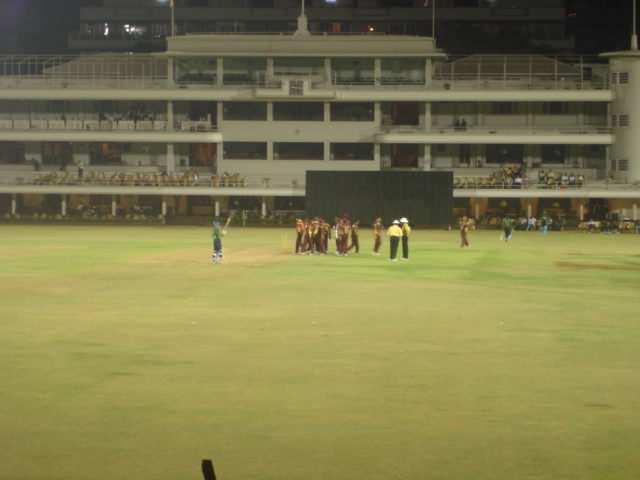

I grew up believing a cricket match had to be earned over time. A Test victory demanded twenty wickets, tactical stamina and enough humility to accept that the pitch might outlast your cleverness. Asian Games cricket offers a different proposition: arrive highly seeded, play a compressed knockout schedule, hope the weather cooperates, and perhaps advance without delivering a ball. The ICC’s account of the rain-hit quarter-finals confirmed that India and Pakistan progressed after abandoned matches. The rules may be clear. The sporting satisfaction is not.
This is not an argument against cricket at the Asian Games or Olympics. I want cricket inside the multi-sport movement. I want Indian cricketers to experience a village where a world-famous batter queues beside a weightlifter whose funding application may have taken six months. I want cricket’s commercial power to bring new viewers to the Games. But inclusion carries an obligation: the sport must behave like a genuine competition, not a medal-delivery service designed around rankings and television assumptions.
The tournament schedule published through the ICC and wider Asian Games material showed the familiar structure in which leading teams enter late. That protects marquee countries from excessive fixtures, but it also produces a strange hierarchy. Smaller nations must survive group play; larger ones can be one wet afternoon away from a medal round. In my view, that is too little cricket for an event whose medals will be counted alongside years of work by athletes in individual disciplines.
A medal should contain a contest
Every tournament needs tie-break rules. Rain exists, schedules are finite, and reserve days are expensive. I am not blaming India for accepting the regulations. No team volunteers to surrender advancement because the clouds made the result aesthetically unsatisfying. My complaint is directed at the administrators who constructed a tournament in which weather can replace competition at the decisive first step for the strongest sides.
There are workable alternatives. Begin marquee teams earlier. Use indoor-capable contingency venues where available. Build reserve windows into the knockout phase. At minimum, design a preliminary stage that gives every medal contender multiple completed games before elimination or advancement is determined. Net run rate and seeding are imperfect, but they are more defensible when earned within the same tournament rather than imported from an external hierarchy.
The principle should be simple: no country should reach the medal stage before it has had a fair chance to prove itself on the field. That does not require a month-long tournament. It requires administrators to decide that competitive legitimacy is part of the product, not an inconvenience to be squeezed after broadcast slots are sold. Two short group matches for every seeded side, followed by semi-finals with reserve time, would at least make advancement depend on cricket played at the event. If that means trimming ceremonial dead space or accepting fewer prime-time fixtures, so be it. A multi-sport medal should not be engineered around the easiest television grid.
The BCCI has the influence to demand better. It also has the resources to help create it. Yet the board’s instinct at multi-sport events has often been to minimise disruption to its own calendar. That is understandable commercially and inadequate institutionally. Olympic cricket will not become meaningful if boards treat it as an inconvenient exhibition placed between bilateral commitments and franchise windows. India, as cricket’s financial centre, should set the serious tone.
I would also question the reflex to send an overwhelmingly strong squad into a field where several rivals may not have equivalent access to their best players. Winning is the point, certainly. But development is also a legitimate objective at an Asian Games. A carefully selected side mixing established performers with emerging players could remain formidable while giving international exposure to the next tier. The solution is not to patronise opponents. It is to create a competition in which team construction involves sporting judgment rather than merely dispatching the largest available hammer.
Selection also needs an articulated purpose. If India chooses its strongest available side, the board should say that the Asian Games is a first-order national assignment and organise the calendar accordingly. If it chooses a development team, it should publish a coherent selection policy and give those players proper preparation, rather than assembling a convenient second string. Either approach can be respected. What looks unserious is claiming the full prestige of a national gold while treating the competition as secondary whenever it conflicts with a more lucrative commitment. The jersey cannot carry maximum symbolism only after the medal has been won.
The Olympic question is already here
Cricket’s return to the Olympic programme means these problems can no longer be dismissed as Asian Games eccentricities. Qualification, squad size, scheduling and national eligibility will shape whether the sport adds value or simply imports its existing inequalities. Olympic medals carry a symbolic weight that cricket trophies do not. In India, a cricket gold could dominate coverage while shooters, wrestlers, boxers and track athletes disappear below the fold. That imbalance makes it even more important that cricket’s tournament be unquestionably rigorous.
The defenders will say spectators do not care how a medal was won. They will celebrate the flag and move on. Perhaps. But administrators should care. A sport earns respect through competitive integrity, especially when seeking permanent space in a crowded Games programme. If early Olympic editions produce mismatched teams, weather-decided advancement and qualification systems tilted toward established powers, the global game will look less global than its marketing deck.
That credibility begins before the teams reach the host city. Qualification criteria should be published early enough for emerging nations to plan, and they should reward results rather than reputation alone. Eligibility rules must be consistent, especially for players whose international and Olympic pathways may not align neatly. None of this is glamorous, but governance rarely is. The point is to prevent cricket’s Olympic debut from feeling like an invitation-only showcase with a medal attached. If the sport wants governments and national Olympic bodies to invest in new programmes, it must offer them a pathway that is visible, stable and worth pursuing.
There is a second problem the BCCI would prefer us not to think about: red-ball cricket continues to lose calendar and attention while the board embraces every short-format opportunity that adds another property. I am not demanding Test cricket at the Olympics; that would be absurd. I am asking whether Indian cricket has a coherent philosophy beyond filling windows with monetisable forms of the game. Asian Games participation, Olympic planning, bilateral cricket and domestic red-ball preservation should fit within one strategy. At present, they often resemble separate departments competing for oxygen.
A board can celebrate global expansion while protecting the Ranji Trophy and meaningful Test preparation. It can do both if it values both. The danger is that multi-sport cricket becomes another excuse for compressed tours, rested red-ball specialists and shuffled domestic schedules. Administrators will describe this as modernisation. Players at the margins will experience it as uncertainty.
The calendar argument is not an abstract culture war between formats. Congestion has consequences for state players, selectors and coaches who need certainty about when the country’s principal first-class competition will be played and who will be available. The BCCI does not have to choose nostalgia over expansion. It does have to show its priorities through protected windows and advance decisions, not speeches delivered after another clash has been created. If a new international event is worth entering, it is worth planning for honestly. The domestic game should not discover the cost only when fixtures and squads are rearranged.
What serious participation would look like
India should push for tournament formats that guarantee meaningful group cricket to all leading sides; reserve capacity for knockout matches; transparent qualification; and scheduling coordinated years in advance. It should treat the Asian Games as preparation for the governance challenges of Los Angeles, not as a low-risk medal opportunity. Players should participate in opening or closing ceremonies where schedules permit and engage with the wider contingent. The point of a multi-sport event is partly to leave cricket’s gated colony.
Broadcasters and fans should also calibrate their celebrations. A medal is welcome, but not every medal path is equal. Saying so does not insult the players. It respects competition. Indian cricket is powerful enough to tolerate an honest description of what happened: rain and seeding can advance a side under the rules, but they cannot manufacture the meaning of a played victory.
I still believe cricket belongs at the Games. Its presence can introduce new countries, attract money and give players a rare kind of national representation. Yet belonging is not automatic. The sport must adapt to the Games rather than expecting the Games to bend around cricket’s commercial architecture. Otherwise we will collect medals, circulate podium photographs and quietly know that the most important contest never began.