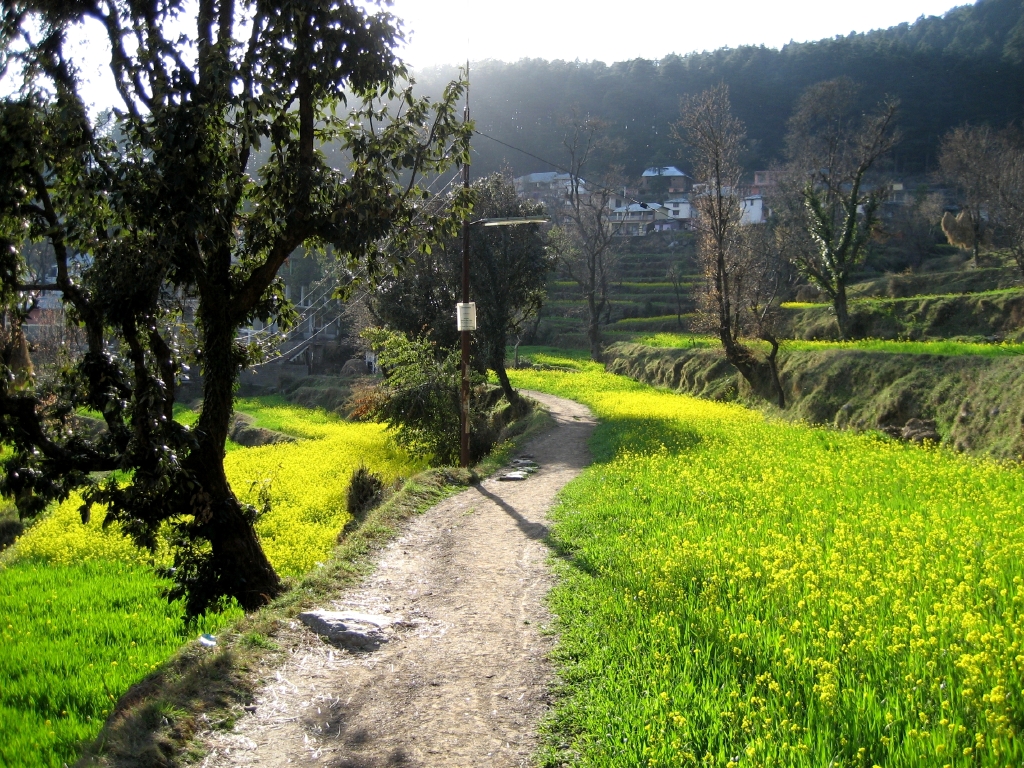
Dharamkot has acquired the sort of nickname that travel writing finds irresistible: “Mini Israel.” A recent Indian Express report from the village describes the long relationship between this Himalayan settlement and Israeli visitors, alongside the way distant conflict affects local arrivals and livelihoods. It is a rich human story. It is also a reminder that charming labels perform quiet violence. “Mini Israel” makes the place legible to outsiders by reducing it to the people who visit. Dharamkot existed before somebody discovered it as a refuge, and its Gaddi history, land, labour and anxieties do not become background scenery merely because cafés acquired Hebrew menus.
The tourist discovers what residents maintain
Visitors often describe mountain villages as discoveries, an innocent word with imperial confidence. What they have discovered is usually a place sustained by residents through difficult winters, limited roads, water constraints and work that does not appear in photographs. The traveller encounters peace because somebody else handles waste, cooks food, repairs paths, drives supplies and negotiates crowded seasons. Dharamkot’s appeal—its landscape, proximity to Dharamshala and accumulated traveller networks—did not arise from one marketing campaign. It grew through repeated relationships and word of mouth.
That relationship can be genuinely affectionate. People return, learn local rhythms, form friendships and build lives across cultures. The Express account includes visitors who speak of the village as a second home, and I do not dismiss that sentiment. A place can matter deeply to someone who was not born there. The trouble begins when emotional belonging is confused with entitlement. Loving a village does not grant the right to reshape it without local consent, consume scarce resources carelessly or demand that its economy perform an imported idea of authenticity.
Tourism is income and pressure in the same receipt
Tourism brings rooms, restaurants, taxis, shops and work. It can allow younger residents to remain near home rather than migrate for income. Leases and hospitality businesses produce opportunities that subsistence agriculture alone may not provide. Any comfortable urban writer who demands pristine isolation on behalf of villagers should be treated with suspicion. Poverty is not cultural preservation. Residents have the right to seek prosperity, build businesses and change their homes.
But tourism also inflates rents, increases waste and water demand, alters land use and makes local income vulnerable to distant shocks. Dharamkot’s dependence on a particular international visitor community shows both the power and fragility of a niche. When conflict or travel anxiety reduces arrivals, a geopolitical event thousands of kilometres away reaches a café owner in Kangra. Diversification matters: domestic and international visitors, year-round activities, agriculture and other local enterprises can reduce dependence on one stream without dissolving the village’s distinctive relationships.
Security can protect and distort
Places associated with a foreign community can attract additional police attention when conflict escalates. Some vigilance is understandable. Visitors and residents deserve safety, and authorities cannot ignore credible risks. Yet security changes atmosphere. Checkpoints, surveillance and anxious headlines can transform a refuge into a symbolic extension of a war its residents did not choose. Reporters and officials should distinguish precaution from sensationalism. A village is not a geopolitical stage simply because people from a particular country eat, pray or stay there.
The same restraint should apply to visitors. Political conflict may be emotionally immediate for them, but local workers should not be recruited into every argument or treated as representatives of India’s foreign policy. Hospitality depends on a shared willingness to let ordinary life remain ordinary. That does not mean suppressing grief or discussion. It means recognising that the person serving dinner has a life beyond the traveller’s national crisis.
The word “authentic” usually means convenient
Tourists praise authenticity until they require reliable Wi-Fi, hot water, imported food and easy digital payment. Then the village must modernise without looking modern. This impossible demand produces an architecture of staged simplicity: rustic décor supported by concrete, plumbing, delivery vehicles and invisible labour. Dharamkot should not have to freeze at the moment outsiders found it picturesque. Nor should unplanned construction be accepted as development. The relevant question is whether change respects carrying capacity and benefits residents broadly.
Local planning needs authority over waste, water, building safety, traffic and noise. Visitors can contribute by staying longer, spending with locally rooted businesses, carrying waste responsibly and treating trails as shared infrastructure rather than content locations. None of this is spiritually profound. It is basic citizenship temporarily practised away from home.
A village may host many identities
Dharamkot’s story includes Gaddi residents, Tibetans in the wider Dharamshala region, Israeli travellers, domestic tourists, migrant workers and entrepreneurs from elsewhere in India. Reducing this to “Mini Israel” creates an attractive headline and a poor map. The interesting reality is coexistence: languages, foodways and aspirations accumulating in a small place. Such coexistence will include friction. Romantic accounts often delete disputes over leases, noise, prices and cultural boundaries because harmony photographs better.
I would rather treat friction as evidence that the relationship is real. Hosts are not endlessly generous archetypes, and guests are not all seekers of enlightenment. They are people conducting business, friendship and daily negotiation. Respect grows when neither side is required to perform a flattering role. The visitor can arrive with curiosity instead of the expectation of transformation; the resident can welcome tourism without surrendering the right to complain about it.
Let Dharamkot remain specific
This story matters because global events and private longings meet in an exact landscape. A conflict changes travel. A repeated visit becomes a marriage or business. A shepherd village develops a multilingual hospitality economy. Those connections deserve reporting. They also deserve language that preserves local agency. Call Dharamkot by its name often enough to remember whose place it is.
I hope travellers continue to find comfort there, and I hope residents profit from the interest their home inspires. I also hope planning arrives before affection consumes the thing it celebrates. The driest truth of tourism is that everybody wants an untouched place with excellent coffee and effortless transport. Dharamkot cannot satisfy that fantasy, nor should it try. It is a living village, which means it will change, argue, trade, remember and set limits. That is more interesting than a theme park for somebody else’s longing.