India hosted the World Armwrestling Championship in New Delhi and finished with 59 medals, including nine golds. I can already hear the qualification arriving: armwrestling is a niche sport. Yes, and niches do not become visible by being ignored until an Indian wins something, after which we post a tricolour graphic and return to debating a cricketer’s practice-session cover drive.
The medal tally and tournament dates were recorded in a current-affairs digest published on 8 November, while the international federation maintains the sport’s championship structure and results through the World Armwrestling Federation results archive. India’s 59 medals at a home world event are not an invitation to pretend that armwrestling has become the new national obsession. They are an invitation to ask why our sporting attention remains so incapable of gradation.
We behave as though only two levels exist: cricket saturation and near-total darkness. A sport either receives studio shows, sponsorship campaigns and rolling selection speculation, or it appears as a forty-second package after its athletes have already performed. There ought to be a large, healthy middle ground in which federations publish usable information, broadcasters stream events competently and athletes develop recognisable careers.
A medal is not a media strategy
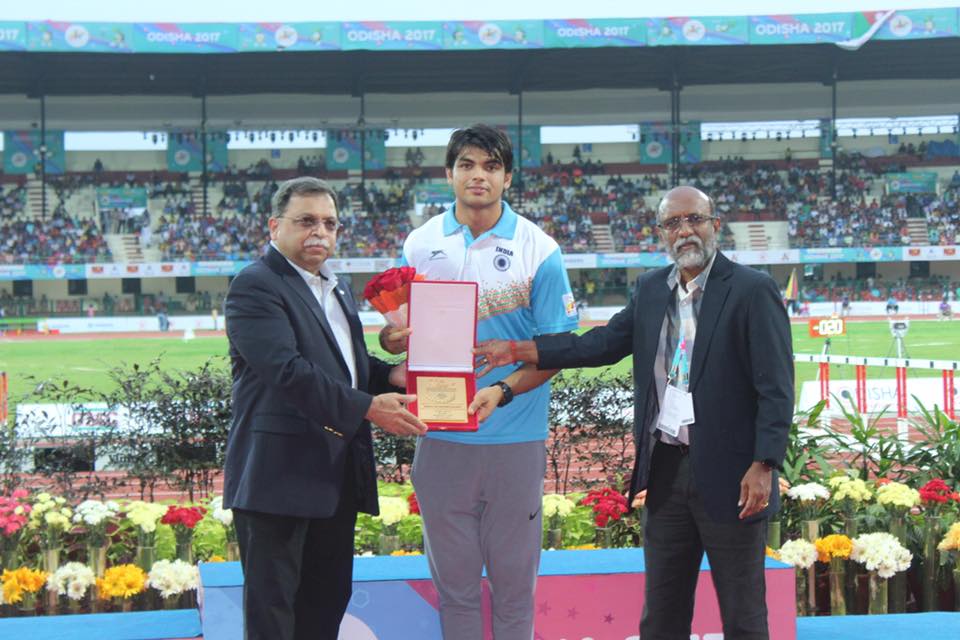
Indian sport administrators love medal photographs because photographs suggest that the system worked. Everybody can stand behind a table covered in metal and congratulate one another. The difficult questions begin after the flash: Could spectators find a schedule? Were athlete biographies available? Were bouts streamed with commentary? Did local schools receive invitations? Can a curious viewer now follow the national circuit?
If the answer to most of these is no, the event has generated trophies without building an audience. Hosting is supposed to reduce the distance between athlete and public. It should create memory, local participation and future demand. A championship that leaves behind only a medal count has missed half its purpose.
Armwrestling has obvious advantages for popular presentation. The contest is brief, visually legible and full of tactical detail once explained. It requires little expensive equipment at entry level, and India already possesses a huge culture of strength sports, akharas and informal competition. This is not dressage asking for mass adoption. The raw material for an audience is sitting in gyms, colleges and neighbourhood tournaments.
But raw material needs storytelling. Who are the champions? Which states produce them? How do weight classes work? What separates technique from brute force? What injuries threaten careers? A first-time viewer needs these doors into the sport. Cricket acquired generations of explanatory language; every child knows what swing and spin mean. Non-cricket federations too often broadcast only to people who already understand them.
The athletes pay for our sporadic curiosity
When coverage arrives only after medals, athletes become inspirational objects rather than professionals. We learn about sacrifice, family struggle and patriotic pride, but little about performance. The formula flatters the audience: admire this determined Indian for two minutes and feel supportive of sport. It does not require us to remember her name next week.
I dislike the phrase “unsung hero” for this reason. It makes neglect sound poetic. Most athletes do not need us to compose a song after victory; they need predictable competition, coaching, recovery support, travel funding and an audience capable of sustaining sponsorship. Calling them heroes can become a cheap substitute for constructing the conditions in which they work.
The 59 medals should prompt a transparent accounting. How many competitors were in each category? Which medals came in senior divisions and which in age or para categories? How did India compare with the strongest nations? A large home contingent can increase medal opportunities, and honest coverage should explain that without belittling achievement. Credibility helps emerging sport. Inflated celebration does not.
This is where sports journalism must improve too. We should neither ignore the result nor package it as evidence that India has conquered the world. Report the field, the formats and the quality of opposition. Interview coaches about technique. Ask medal winners what tournament comes next. Treat them with the analytical seriousness routinely granted to a cricketer who scores 35.
Cricket is not stealing attention; institutions are surrendering it
I resist blaming cricket for every failure outside cricket. Cricket earned much of its audience through history, administration, television and repeated elite success. Fans are not morally obliged to divide attention equally among sports. If somebody prefers a Test match to armwrestling, that is taste, not betrayal.
The real failure belongs to institutions that use cricket’s dominance as an alibi. They say the market wants cricket, then make other sports difficult to watch, follow and understand. Of course the market chooses the product placed on every shelf. Demand is not a mysterious natural force; it is cultivated through availability and familiarity.
Doordarshan and digital platforms can create a modest but reliable second tier of Indian sport. Not every competition needs prime-time television. A stable streaming calendar, decent cameras, commentary in English and Indian languages, archived bouts and short explanatory clips would be transformative. The cost is tiny beside major cricket rights.
Corporate sponsors should also abandon the medal-season scramble. Signing an athlete after a global victory is not talent development; it is buying finished prestige. A useful sponsorship funds two seasons before the podium, when travel and recovery determine whether the athlete reaches the event at all. Brands speak endlessly of authentic stories. Here are dozens. They require patience rather than an advertising agency’s last-minute tricolour template.
What a home championship should leave behind
I want the Delhi event to result in three practical inheritances. First, a public national ranking and competition calendar that can be followed without calling an office. Second, coaching and officiating clinics linked to states and universities. Third, a digital archive that turns championship performances into discoverable sporting records.
Schools and colleges could adopt armwrestling carefully, with trained supervision and safety standards. The sport’s apparent simplicity can conceal injury risk, so growth must not mean unsupervised imitation. That is another reason federations should take control of public education instead of leaving technique to random videos.
The athletes themselves deserve more than compulsory gratitude. Some may be tactically brilliant; some may be inconsistent; some may have benefited from a home field. Let us discuss those distinctions. Serious criticism is a form of respect because it assumes the performance matters beyond symbolism.
I also want journalists to revisit these medal winners in six months. Are they competing abroad? Did promised support arrive? Has the federation announced trials clearly? The follow-up is where celebratory narratives often collapse. Indian sport is full of felicitation ceremonies for athletes whose next airfare remains uncertain.
Nine golds and 59 medals constitute a substantial moment, not a revolution. I do not expect armwrestling to displace cricket, and I would distrust anyone selling that fantasy. I expect a country of India’s scale to support multiple layers of sporting interest at once. We can watch a cricket rivalry and still know the name of a world-class armwrestler.
What strikes me most is how little the athletes asked of the public: a few minutes to watch a bout, enough curiosity to learn the rules, enough memory to follow what happens next. They supplied the strength and the medals. The sporting system’s task is to supply continuity. If we forget them by the next cricket toss, the obscurity will not be evidence that nobody cares. It will be evidence that nobody with power bothered to help caring become a habit.