
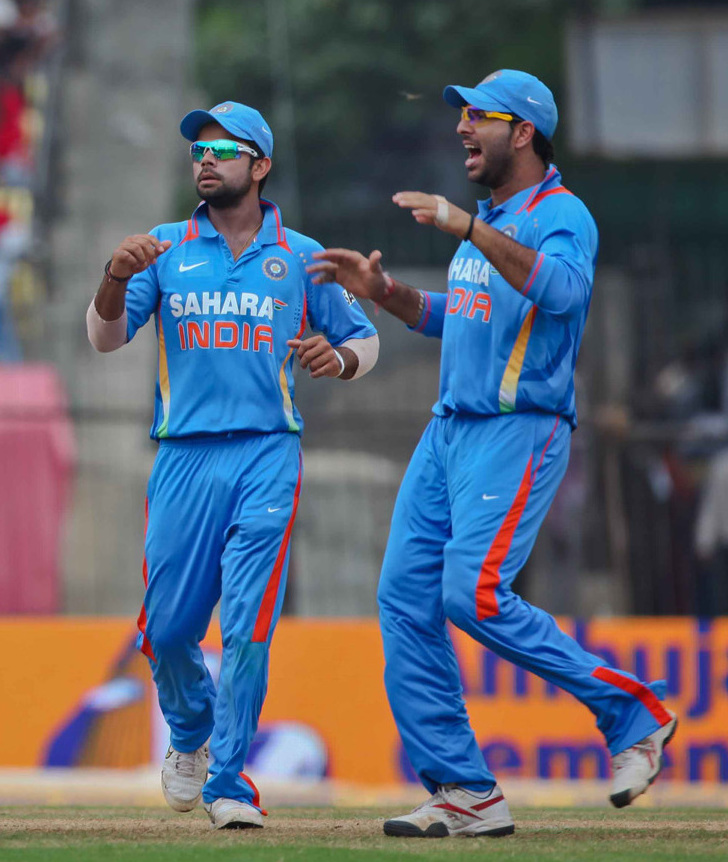
I watched India’s opening one-day win in New Zealand with two competing feelings. The first was the old pleasure: a white ball moving under unfamiliar skies, batters solving dimensions rather than merely clearing them, and an innings allowed enough time to change its mind. The second was irritation. Why does the sport keep producing enjoyable one-day cricket while its administrators present the format as contractual residue? India’s five-match series began at Eden Park on November 4, with the visitors winning the opener by five wickets, as the schedule and result were summarized in this series guide. That should feel substantial. Five matches once constituted a proper argument between teams. Now it feels like a window discovered between louder properties, promoted just enough to satisfy broadcasters and forgotten as soon as the next tournament graphic arrives.
The format is not dying; its context is
I refuse the lazy claim that young viewers simply lack the attention span for fifty-over cricket. The same viewers follow five-day Test matches when the contest has stakes, consume three-hour films and spend entire evenings watching live streams in which remarkably little happens. Attention is not a fixed biological ration. It is earned by narrative. The ODI’s problem is not duration but administrative ambiguity. Test cricket has history and championship points. T20 has leagues, immediacy and a global event every two years. Bilateral ODIs increasingly have a trophy nobody remembers, rotation presented as innovation and a table that does not clearly lead anywhere. We ask supporters to care intensely without telling them what the series changes.
The BCCI’s own match listings reveal the abundance surrounding Indian cricket. Senior internationals, age-group fixtures, domestic competitions and multiple formats press against one another. Abundance is profitable, but it can also cheapen individual contests. A player rested from one series appears in another; a squad is described as experimental; defeat is excused as preparation; victory is celebrated until the next team sheet replaces it. None of this makes the cricket fake. It makes the meaning unstable. A New Zealand tour should test technique, adaptability and nerve. Instead, the discussion quickly becomes which players are being “looked at” for some future event.
Selection cannot be the only plot
Modern ODI coverage treats every match as an audition. Who can bat at number four? Which seamer handles the old ball? Does the wicketkeeper score quickly enough? These are legitimate questions, but they have swallowed the game itself. When every contest is framed as preparation, the present becomes disposable. I grew up believing a bilateral series was an achievement worth pursuing: conditions were studied, rivalries accumulated, and the trophy carried the memory of several matches. Today a series can be won and immediately reduced to “takeaways.” Cricket has borrowed the language of a corporate meeting and somehow made even victory sound provisional.
New Zealand remains one of the best places to examine an Indian ODI side because the grounds distort familiar assumptions. Boundaries can be oddly shaped, the wind matters, and bowlers must adjust lengths without sulking about the dimensions. Batters who rely on rehearsed arcs have to calculate. Field captains cannot operate entirely from templates. That is precisely why this series deserves more than filler status. India’s win should be considered on its own terms, not merely filed beneath the next global championship. I want combinations to settle long enough for players to acquire responsibility. Rotation is useful when it protects bodies; it is corrosive when it prevents consequences.
The BCCI cannot market everything as premium
The Board’s commercial success creates an unusual obligation. Indian cricket does not suffer from a shortage of inventory or buyers. It suffers from too many products claiming to be unmissable. The IPL is unmissable. A World Cup is unmissable. A marquee Test series is unmissable. Every bilateral tour arrives with the same urgent music. Supporters eventually learn that missing a match has no cost because another begins before the highlights are cold. Scarcity cannot be restored entirely, but hierarchy can. Administrators should say what each competition is for and design the calendar accordingly.
For ODIs, I would tie bilateral results to a transparent league with meaningful qualification or seeding consequences. I would reduce meaningless three-match fragments and favor series long enough to develop tactical memory. Five matches, as in New Zealand, are useful only if the best available players contest most of them and the scoreline matters beyond a sponsor’s podium. I would also protect recognizable touring blocks. A team should arrive, adapt and be tested across formats in a sequence supporters can understand. The current calendar often feels like someone has shaken formats in a bag and poured them onto the year.
There is still a distinct one-day skill
The case for ODIs is not nostalgia. The format asks questions neither Test nor T20 cricket reproduces. A batter must manage risk across phases, rebuild without freezing, and accelerate before the innings becomes irrecoverable. A bowler may attack with a new ball, survive a quiet middle period and return against set hitters. Captains have time to make mistakes and then reveal whether they can correct them. T20 compresses decisions; Tests deepen them; ODIs require transitions. When played well, the game’s most interesting moment is often the one in which nobody knows whether patience is wisdom or delay.
Critics reply that the middle overs are dull. Sometimes they are. So are sessions of Test cricket and passages of football. Not every minute must behave like a trailer. The quieter phase supplies contrast and makes acceleration legible. Administrators damaged the format when they responded to every lull with another field restriction, another ball or another attempt to manufacture hitting. The ODI does not need to impersonate an extended T20. It needs pitches that allow bowlers a role, boundaries that reward placement as well as force, and rules stable enough for strategy to mature.
Players need a reason to remember the scoreline
There is also a welfare issue that the BCCI would prefer us to treat as background noise. A packed schedule does not merely tire players; it fragments meaning for them. If a senior player knows selection for the next major tournament is secure, what emotional weight does the fourth match of a settled series carry? Professionals will compete, but administrators should not rely indefinitely on personal pride to supply stakes they refused to design. Workload management then becomes both necessary and narratively damaging: stars disappear, replacements arrive, and supporters are told to celebrate depth rather than question excess.
I do not blame cricketers for resting. The body is not a public utility. I blame boards for selling every window and then presenting absence as a mysterious modern ailment. India has enough talent to field several competitive sides, but depth should strengthen a team, not excuse a calendar without limits. The national cap means more when selection joins an ongoing contest rather than a revolving laboratory. Give players space to want a series, lose sleep over it and remember it years later.
Enjoy the cricket, then demand better
I will keep watching the New Zealand ODIs because the cricket itself deserves attention. India winning away is not trivial. Conditions expose habits formed on home pitches, and New Zealand teams rarely donate easy afternoons. But enjoyment need not require administrative gratitude. Supporters can applaud a chase and still ask why the series lacks a larger structure. We can admire a player’s form without accepting that his innings exists mainly as evidence for a future selection meeting.
One-day cricket has survived several premature obituaries because its basic architecture is sound. What it cannot survive forever is being treated as the spare room of the international calendar: useful when guests arrive, neglected otherwise. The BCCI has the influence to insist on coherence, fewer disposable matches and a league people can explain without consulting a flowchart. Instead, it often benefits from volume and allows meaning to take care of itself.
The first match at Eden Park reminded me that the format still breathes when players are given a real contest. The next four can build a story if squads remain recognizable and both sides treat the series as something to win, not merely to process. That should be the minimum. India and New Zealand are producing good cricket. The administrators must stop trapping it inside a bad calendar.