Delhi counts votes, vehicles, particulate matter, monuments, unauthorised colonies and, with impressive elasticity, the minutes required to reach the airport. Counting parrots seems like a joke the city would make about itself. Yet a coordinated survey of parakeet roosts is exactly the kind of modest civic exercise I find persuasive. It asks residents to look up from the emergency and notice that the capital is also an ecosystem—noisy, opportunistic and badly planned, much like its human population.
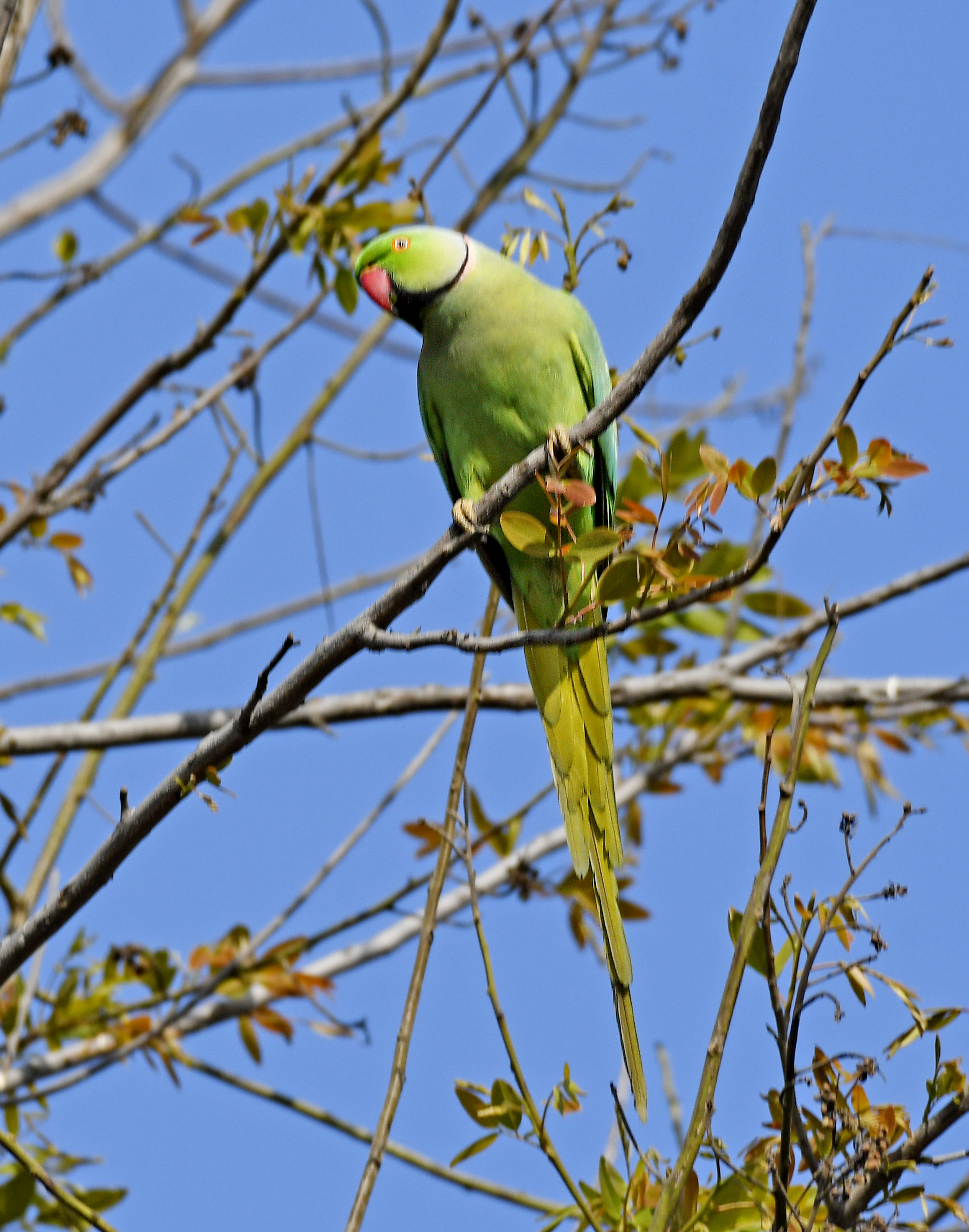
The rose-ringed parakeet is not obscure. It streaks between trees, shouts over traffic and appears on balconies with the confidence of a tax inspector who has found an irregularity. Familiarity makes it invisible. We reserve concern for charismatic rarity while abundant urban species become background decoration until their numbers suddenly collapse or their habits create conflict.
A parakeet count will not clean the Yamuna or fix the air. That is its charm. It does not pretend to solve everything. It creates a baseline, recruits attention and tests whether citizens can gather useful ecological information without requiring a celebrity ambassador and a laser show.
The ordinary bird is data
Urban bird counts usually rely on volunteers observing known roosts around dawn or dusk, when flocks gather and numbers can be estimated. Citizen-science platforms such as eBird India show how repeated public observations can contribute to knowledge about distribution and seasonal patterns. The method has limitations—observer skill varies, sites may be missed, and mobile flocks can be counted twice—but coordinated protocols make the results more useful than casual impressions.
Why count a bird that appears plentiful? Because “I see many” is not population monitoring. Abundance can be intensely local. A few huge roosts create the impression of endless numbers while habitat elsewhere disappears. Repeating a count across years can reveal movement, loss and changes in roost choice. It can also tell planners which trees and green spaces function as nightly infrastructure.
The word infrastructure is deliberate. A mature tree is not beautification. It stores carbon, cools streets, slows rain, hosts insects and provides shelter. Municipal projects routinely value it as an obstacle whose replacement is a decorative sapling and a photograph. Roost data gives ecological function an address. Cutting a heavily used grove can then be recognised as loss, not landscaping.
Parakeets also complicate the usual nature story. They are adaptable, sometimes raid crops and can compete for cavities. In parts of the world where introduced, rose-ringed parakeets are treated as invasive. In their native Indian range, urban success still raises questions about food, nesting sites and relationships with other species. Admiration should not become green-coloured sentimentality.
Delhi is a wildlife experiment pretending to be a capital
The city sits along migratory routes, contains the Ridge and Yamuna floodplain, and supports surprising biodiversity amid concrete. The India Biodiversity Portal offers records and species information that place urban sightings within a wider public-data effort. What strikes me is how little this ecological richness influences everyday planning.
Road widening removes mature canopy, glass buildings become collision hazards, wetlands are described as vacant land, and harsh night lighting redraws behaviour. Then official landscaping plants uniform ornamental species and congratulates itself on greenery. Nature is welcomed when symmetrical.
Parakeets refuse symmetry. They choose roosts for reasons that may include tree structure, warmth, safety from predators and proximity to feeding areas. Their preferences can expose how animals actually use the city, rather than how a landscape consultant imagines they should. A count becomes a small audit of urban design conducted by birds who have not read the tender document.
There are public-health and nuisance questions. Large roosts generate noise and droppings. Feeding can concentrate birds unnaturally and create dependence or conflict. Officials should respond with evidence, cleaning and thoughtful habitat management, not panic or crude dispersal. A city that can tolerate nightly wedding bands should negotiate with parakeets in good faith.
I would also discourage the capture and illegal trade that familiarity can normalise. A wild parakeet on a tree is not a free pet awaiting entrepreneurial rescue. Public counts can teach identification and pride, but organisers should pair enthusiasm with clear guidance about keeping distance, avoiding disturbance and reporting wildlife crime through appropriate channels.
Citizen science needs citizens, not selfie hunters
Volunteer surveys are often praised as democratic science, which is true and incomplete. Participation tends to cluster among people with time, mobility, smartphones and access to greener neighbourhoods. If counts rely only on established birders, the city’s ecological map may reproduce its social map. Wealthier colonies become richly documented; industrial edges and dense settlements remain blank.
Organisers should recruit schools, resident groups, sanitation workers, park staff, market associations and morning walkers across districts. Training can be simple: identify the target species, estimate flock size in agreed intervals, record time and location, and avoid disturbing the roost. Paired observers can improve confidence. Photographs may help verification but should not become mandatory where devices are limited.
Data quality matters because “citizen” is not an exemption from method. Publish the protocol, sites covered, confidence ranges and limitations. Separate a publicity number from a scientific estimate. If next year’s count differs, investigate whether birds changed or coverage did. A beautifully designed infographic is not peer review.
Participants should receive results. Too many civic exercises extract observations and vanish into institutional drawers. Show maps, trends and proposed action. If a roost is threatened, explain whether the data informed protection. People continue volunteering when their time enters a visible loop of knowledge and decision.
The politics of noticing
I can already hear the complaint: Delhi has human suffering and you want officials to count parrots. This assumes attention is a single ration card. Cities capable of building expressways and hosting summits can also monitor common birds. Ecological knowledge is not a diversion from human welfare. Heat, flooding, air quality and access to green space are human concerns, unevenly distributed.
There is nevertheless a danger that harmless wildlife events become reputation laundering. A department can sponsor a cheerful count while approving projects that destroy habitat. Participants should enjoy the birds and retain their scepticism. Ask what protection follows the data. Ask whether tree-felling permissions recognise roosts. Ask why compensatory plantations so often consist of young trees far from the loss.
The count’s greatest contribution may be cultural. Urban residents increasingly understand nature as a destination reached by car. Wildlife exists in reserves, documentaries and weekend photographs. A parakeet census insists that nature is also above the bus stop, arguing in a peepal tree. Conservation begins with this inconvenient proximity.
I like the project because its subject resists grandeur. Parakeets are beautiful but not solemn. They are loud, sociable and slightly thuggish around food. They will not pose as symbols of pristine wilderness. Counting them means studying coexistence with a species that has already adapted to us, perhaps more successfully than we have adapted to it.
Delhi’s bureaucracies routinely produce numbers that obscure experience. A good bird count can do the opposite: turn a familiar blur into individual lives, nightly routes and vulnerable trees. If the total rises, falls or remains stable, the important result is a repeatable practice of attention.
So yes, count the parrots. Count them carefully, publish the uncertainty and protect the roosts that make the city habitable for more than its most powerful residents. In a capital addicted to announcing transformations, there is something refreshingly adult about standing under a tree at dusk and admitting that first we need to know what is there.