Indian sport has turned resilience into a compliment so overused that it now hides institutional failure. We call women athletes resilient when they train without secure grounds, when leagues arrive late, when contracts are brief and when national camps are expected to compensate for an underdeveloped season. The players deserve the word. The administrators often use it as insulation.
Women’s football is my clearest example. India has enough players, coaches, schools and football culture to build a competitive Asian programme. It also has a domestic audience that will watch women’s sport when competition is properly staged; the Women’s Premier League demolished the old excuse that nobody is interested. Yet the Indian Women’s League still feels too often like an event the calendar remembers rather than a durable professional institution.
I do not expect women’s football to receive cricket’s money overnight. I do expect it to receive football’s basic architecture: a stable season, meaningful contracts, medical support, reliable venues, youth pathways and public information. Ambition without those things is not a plan. It is a motivational poster.
A league must be a job, not a camp
The All India Football Federation’s Indian Women’s League page records fixtures, clubs and results. That existence matters; there was a time when a national league itself was the demand. But the next argument is about depth and duration. A professional player needs more than a short tournament. She needs months of competitive football, a contract long enough to plan her life, and confidence that the club will exist in recognisable form next season.
Short seasons create a chain of damage. Clubs hesitate to invest in full-time staff. Players seek other employment or remain dependent on public-sector jobs. Coaches have too few matches to develop systems. Injuries become harder to manage because conditioning swings between camp intensity and uncertain downtime. National selectors then choose from a narrow sample and try to manufacture cohesion in camps.
The answer is not simply adding matches to a spreadsheet. Expansion must be funded. The federation should set gradually rising licensing requirements and help clubs meet them: minimum contract lengths, qualified medical staff, safeguarding rules, suitable training access and youth teams. Punishing a club for failing standards that the ecosystem cannot finance would reduce participation. Never setting standards would institutionalise precarity.
Broadcasting should be treated as infrastructure. A dependable stream with commentary, accurate line-ups and archived highlights is not vanity; it lets families, scouts, supporters and sponsors see the competition. The cost is tiny beside top-level cricket production. Women’s football remains invisible partly because institutions repeatedly decide invisibility is the cheapest option and then cite low visibility as proof of low demand.
The national team cannot live from window to window
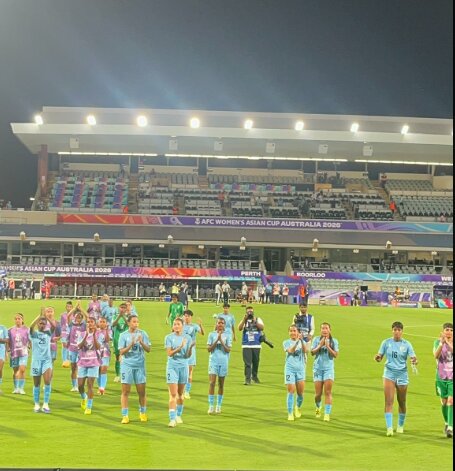
International fixtures bring temporary attention. India’s women gather, play a tournament, and social media discovers them for a week. Then the conversation vanishes. The FIFA women’s world ranking provides a recurring measure of where national teams stand, but rankings are outputs. They cannot substitute for the weekly development environment that creates better players.
Asian women’s football is moving quickly. Japan and Australia are established powers; countries across the continent are investing in leagues, youth development and overseas exposure. India’s advantages—population, a growing sports economy and regions with deep football participation—do not automatically convert into goals. Talent that plays too few high-intensity matches develops more slowly than talent embedded in a serious league.
I would prioritise regular games against varied opposition over occasional glamorous friendlies. The team needs to learn how to dominate weaker sides, survive pressure from stronger ones and solve tactical problems against peers. Those lessons accumulate. A single camp cannot install them like software.
Players also need clearer routes abroad. When an Indian footballer earns a place in a more competitive league, the federation and clubs should help with releases, documentation and coordination rather than treat the move as an inconvenience. Overseas football is not a betrayal of the domestic league. In the medium term, returning players raise standards and expand what younger athletes imagine possible.
Start where girls actually meet the game
Elite reform will fail if girls cannot enter football comfortably. Access is not a mysterious cultural problem. It consists of practical decisions: safe transport, changing rooms, training times that families accept, female coaches, affordable equipment and pitches not monopolised by boys’ teams. Each obstacle looks small to an administrator. Together they form a locked gate.
Schools are essential, but school tournaments alone produce bursts rather than pathways. District associations should run age-group leagues with enough matches to identify and develop players. Clubs in the national women’s league should be required, with financial assistance, to operate youth sides or formal partnerships. The aim is a visible ladder: school or community football, district competition, youth club, senior club and national selection.
We also need more women in coaching, refereeing and administration. This is not merely representational symbolism. Girls and parents are more likely to trust environments where women hold authority, and the sport retains knowledge when former players can move into paid technical roles. Too many athletes retire into a void because certification costs, networking and employment structures were designed without them.
The counterargument is money. Every federation budget is finite, football revenue is fragile, and men’s clubs themselves struggle. I accept all of that. But limited money makes priorities more important, not less. A rupee spent on another ceremonial event is a rupee unavailable for a league match, a physiotherapist or a youth coach. Publish the women’s football budget, targets and delivery. Let supporters judge choices rather than intentions.
Stop comparing every beginning to cricket’s peak
Whenever I argue for women’s sport, someone produces cricket’s audience numbers as a veto. It is a ridiculous comparison. Indian cricket has enjoyed generations of broadcasting, mythology, sponsorship and administrative power. Women’s football is asked to prove equivalent commercial value before receiving the consistent exposure from which value grows. No business would evaluate a sapling by comparing its shade with an old banyan tree, yet sports officials do it with solemn faces.
The WPL’s success does offer a lesson, though not the lazy one that every women’s league will instantly become rich. It shows that packaging, recognizable teams, quality players, strong broadcast and a protected window can rapidly alter public perception. Football can adapt the principle at its own scale. Put the matches where people can attend, announce the schedule early, tell player stories without reducing them to hardship, and make following the table easy.
I want journalists, including those of us who criticise, to cover tactics and performance rather than only institutional neglect. Players deserve to be analysed as athletes. But sustained sporting coverage requires sustained sport. One cannot build a weekly conversation around a competition that appears briefly and then disappears.
My proposal is modest enough to be achievable and ambitious enough to matter: a progressively lengthened IWL calendar; minimum paid contracts; central support for travel and production; club licensing tied to medical and safeguarding standards; formal youth leagues; and a transparent four-year national-team fixture plan. None of this needs a billionaire’s whim. It needs administrative persistence.
India’s women footballers have supplied persistence for years. They have played wherever a ground, tournament and contract could be assembled. I admire them, but admiration is not the currency in which rent is paid or hamstrings are rehabilitated. The next stage of Indian women’s football should not be another story about overcoming the system. It should be the less cinematic, more valuable story of a system finally doing its job.