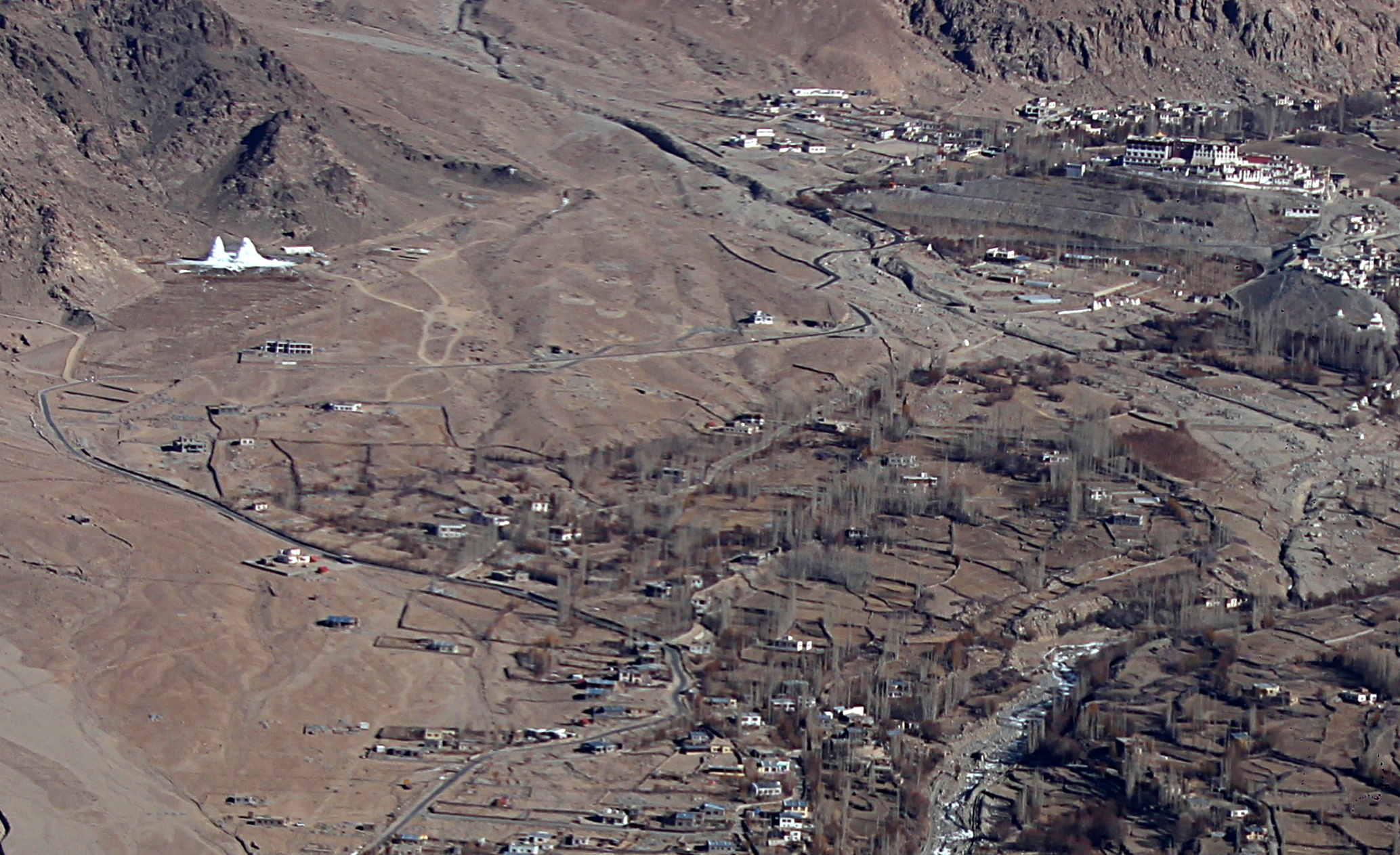
An ice stupa looks like a work of land art—a white cone rising from Ladakh’s winter landscape, improbable enough to attract photographers. Its practical purpose is less romantic and more important. Water that might otherwise flow away during winter is piped and frozen into a tall structure. As temperatures rise in spring, the ice melts and can support planting when natural streams remain low. It is an attempt to move water through time.
The idea is associated with engineer Sonam Wangchuk and communities that have built versions in Ladakh. Project information is available through the Ice Stupa initiative, while broader reporting on India’s environment and Himalayan water challenges can be found through The Indian Express’s climate coverage. I am drawn to the story not because it offers a miracle, but because it refuses the helplessness that often accompanies climate discussion.
Adaptation is usually unglamorous
Climate policy is dominated by large numbers: national emissions, gigawatts, degrees of warming and billions in finance. Those numbers are essential, yet a farmer encounters climate change as a stream arriving late, a crop failing or a spring producing less water. Adaptation must eventually become local and physical. Someone has to decide where a pipe runs, who maintains it and which field receives water first.
The ice stupa translates a planetary crisis into those questions. Its design uses gravity and winter cold rather than an energy-intensive refrigeration system. The conical shape reduces the surface area exposed to sunlight relative to the volume stored, allowing ice to persist longer. The elegance lies in matching a technique to local conditions.
But elegance should not become mythology. Ice stupas depend on suitable elevation, temperature, water flow and community maintenance. They cannot replace glaciers, reverse regional warming or solve every village’s needs. Presenting them as a universal cure would burden a useful intervention with impossible expectations.
The community is part of the technology
Photographs focus on the structure. The actual system includes agreements: access to winter water, labour for laying pipes, decisions about location and rules governing meltwater. A technically successful stupa can still fail socially if benefits are captured by a few landowners or maintenance responsibility remains vague.
Good adaptation begins with mapping who needs water and when. Women, tenant farmers and households with smaller plots must be included in decisions, not consulted after engineers choose a site. Local institutions should keep simple records of construction cost, melt timing and agricultural use. That evidence allows the next structure to improve.
Young people can gain technical and organisational skills through the work. Climate adaptation is often described as an expense; it can also create meaningful local employment. The goal should not be to freeze communities in a picturesque past. It should be to help them choose whether and how to remain.
Stories can distort useful inventions
Human-interest reporting loves a lone inventor. A charismatic figure makes a complex subject easy to narrate. Sonam Wangchuk’s role deserves recognition, but no water system is maintained by one person. Villagers, students, monks, technicians and local organisations turn an idea into an annual practice. When coverage excludes them, it creates the false impression that innovation descends from genius rather than accumulating through cooperation.
The other temptation is visual exoticism. Ladakh is photographed as empty beauty, although people live and work within the landscape. An ice stupa becomes a spectacular object rather than part of a farm economy. The best reporting should return in spring, ask whether water arrived at the intended moment and speak to people whose crops depended on it.
Failure deserves coverage too. A pipe may freeze, a structure may melt early or a site may prove unsuitable. Documenting those outcomes does not discredit the idea. It distinguishes experimentation from publicity. Climate adaptation will require many trials; pretending each one succeeds makes learning harder.
Policy should fund portfolios, not miracles
Government support can help communities test ice storage, restore traditional ponds, improve channels, monitor springs and change crop choices. No single measure should consume the entire adaptation budget. Water security comes from overlapping systems that fail at different times.
Funding programmes should be accessible to small local groups, with technical assistance and proportionate reporting requirements. A village should not need a consultancy merely to apply. At the same time, public money requires outcome records. How much water was stored? How long did it last? Who used it? What did maintenance cost? Simple measurement protects both taxpayers and communities.
Scientists should work with residents on hydrology and climate projections. Local memory identifies changes that instruments may have missed, while measurement can test assumptions. Neither form of knowledge should be romanticised or dismissed. Partnership is slower than a headline and more useful.
A modest invention can carry a large lesson
The ice stupa’s most valuable message is not that human ingenuity will automatically rescue us. That comforting story can excuse delay on emissions. The message is that adaptation becomes credible when it is specific. It identifies a seasonal mismatch, uses available conditions and creates something people can operate.
India will need thousands of such responses: heat shelters designed around local work hours, flood warnings connected to trusted messengers, drought-resistant crops that farmers can afford, urban drains maintained before rain and coastal plans that address livelihoods. None will trend as reliably as a dramatic disaster. Together they determine how much suffering climate change produces.
I also value the emotional effect. Climate anxiety often leaves young people oscillating between denial and doom. Building something does not erase the crisis, but it restores agency. Students who help create an ice stupa see physics, ecology and public cooperation intersect. They learn that environmental work is not confined to international conferences.
The structure eventually melts. That is not its failure; melting at the useful time is the design. There is poetry in that, though I hesitate to overload a water system with metaphor. What matters is whether seedlings receive moisture and a community gains another tool for an unstable future.
I want us to celebrate ice stupas without turning them into tourist props or proof that adaptation alone is enough. Ladakh still needs serious glacier research, responsible development, emissions reduction and water planning. The cone of ice is one answer to one part of a much larger problem. Its modesty is precisely why it matters. It does not promise to save the planet. It helps people do practical work while the world decides whether to stop making their problem worse.