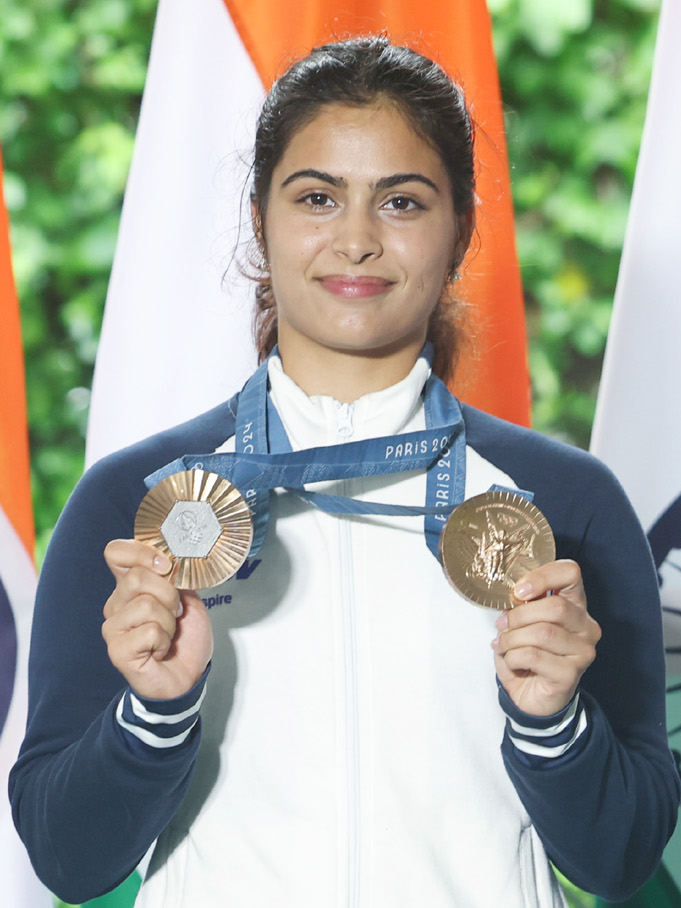
For a few days in Paris, Manu Bhaker made Indians learn the vocabulary of pistol shooting. We discussed qualification, finals, series and composure as though we had followed the sport all year. She won two bronze medals, one individually and another with Sarabjot Singh, and became the face of an Olympic campaign that badly needed steadiness. Then the national attention span performed its usual vanishing act.
The official Olympic athlete record for Bhaker preserves the results more reliably than our collective memory, while the International Olympic Committee’s Paris medal database situates those performances in the wider Games. The facts are not my grievance. The rhythm of our interest is.
We consume Olympic athletes as festivals
India does not entirely ignore non-cricket sport. We binge it. Every four years, television channels discover wrestlers’ villages, shooters’ routines and hockey’s history. Brands produce stirring films. Politicians arrange photographs. Viewers become instant experts in events they will not be able to watch legally or conveniently six months later. This is attention as a festival rather than a habit.
Bhaker’s achievement should have created sustained curiosity about domestic shooting competitions, junior pipelines and the difficult transition from promise to senior consistency. Instead, coverage largely followed the celebrity arc: endorsements, appearances and the next mega-event. I do not begrudge her any commercial reward. Athletes outside cricket should earn far more from their fame. But celebrity coverage is not sports coverage.
A shooting federation’s selection policy, coaching structure and tournament calendar matter even when no medal ceremony is imminent. So do equipment costs, ammunition access and the concentration of facilities in certain regions. These are the systems that determine whether the next Bhaker reaches an Olympic final. They rarely attract a fraction of the scrutiny devoted to a cricketer’s practice-session injury.
Broadcasters shape what the public can love
Fans are often blamed for choosing cricket, as though audiences independently receive every sport in equally attractive packages and reject all but one. They do not. Cricket offers regular schedules, familiar leagues, abundant highlights, statistics and storytelling. Many Olympic disciplines surface as unstable streams, brief reports or results stripped of context.
You cannot build attachment without continuity. Viewers need to recognise rivals, understand stakes and know when the next event occurs. A federation may upload a final with poor commentary and then wonder why it did not become prime-time entertainment. Broadcasters may buy a multi-sport property and bury early rounds while promoting only an Indian medal match. The market then cites low interest as proof that the original neglect was rational.
Public broadcasters have a particular role. Not every competition will produce immediate advertising returns, but consistent coverage can build a national sporting archive and audience literacy. Private platforms could package shorter events creatively, with explainers that respect newcomers without patronising established fans.
Funding must reward systems, not only podium forecasts
India’s targeted support for elite athletes has improved. Personal coaches, international exposure and sports science can make the difference at the highest level. Yet a podium-focused model can become circular: fund those already closest to medals, celebrate success, then wonder why the base remains thin. Grass-roots ranges, trained coaches and affordable entry matter as much as the final year of elite preparation.
Accountability is essential because federations cannot use the romance of amateur sport to avoid transparent selection and spending. Athletes should have published criteria, appeal mechanisms and calendars announced early enough to plan training. Funding data should distinguish athlete support from administrative overhead. Asking these questions is not negativity; it is how a sport earns durable trust.
Bhaker’s own career offers a warning against simplistic narratives. Olympic disappointment can be followed by renewal; success is not a straight line created by motivational slogans. Athletes need room to change coaches, rebuild technique and fail without being treated as national investments that have defaulted on a loan.
Cricket is not the villain here. It became dominant because institutions produced a superb, continuous product and generations of stories. Other sports do not need cricket to shrink. They need schedules, access and journalism large enough to let them grow. The comparison becomes useful only when it turns envy into institutional ambition.
I want the next young shooter to know Bhaker not merely as a woman on an Olympic poster but as part of a living competitive tradition. I want fans to see her between Games, when form fluctuates and technique evolves. Medals open a door; institutions decide whether anyone can keep walking through it. Paris gave Indian shooting an extraordinary invitation. Our attention should not wait until the next opening ceremony to reply.