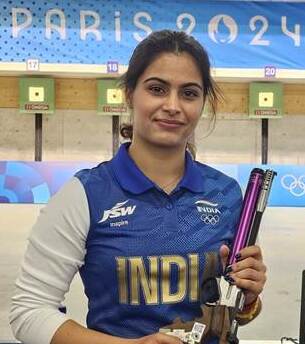
Indian sport has perfected the ceremonial embrace. An athlete wins an Olympic medal, politicians produce garlands, brands discover perseverance and news channels briefly learn the rules of an unfamiliar event. Then the calendar turns and cricket resumes its permanent occupation of the national imagination. Manu Bhaker’s two bronze medals at Paris 2024 were too significant to be processed this way. The official Olympic results record her individual podium and the mixed-team bronze with Sarabjot Singh; the mixed-team event summary preserves the actual competitive detail. She became the first Indian woman to win two medals at one Olympics. That achievement was not a charming interruption between cricket series. It was evidence of world-class repeatability in a sport where a tiny technical or mental error can erase years of preparation.
We love the podium and ignore the process
Shooting is difficult television for an audience that has not been taught how to watch it. The decisive movement is minute, the score can appear abstract and the athlete’s internal battle is invisible. That should be a challenge to broadcasters, not an excuse for neglect. Cricket became culturally legible because generations of commentary explained swing, field settings and match situations. Shooting deserves similar work: short technical features, domestic-event coverage, athlete profiles and commentators who can translate pressure without reducing everything to “nerves of steel.” An Olympic analysis hosted in the Olympic library notes both the extraordinary attention Bhaker received and the persistence of gendered framing around women athletes. That tension matters. Visibility is not automatically understanding.
Bhaker’s story was irresistible because Paris followed disappointment in Tokyo. The danger is that we turn the arc into a simplistic morality play: failure, resilience, redemption. Athletes do not owe us such tidy narratives. Equipment can malfunction, form can fluctuate and the margin between a medal and an early exit can be microscopic. Tokyo did not reveal a character defect, and Paris did not magically certify virtue. What changed involved coaching, preparation, experience and performance on particular days. When coverage insists on personal redemption, institutions escape examination. We ask how the athlete found inner strength but not whether federations supplied stable coaching, international exposure, sports science, equipment support and transparent selection.
Money without continuity is not a system
India has invested more seriously in elite Olympic sport, and I will not pretend otherwise. Targeted funding, training support and international competition have improved. The problem is continuity across the pyramid. A medal can unlock sponsorship for one famous athlete while the next promising shooter still struggles to access ammunition, ranges, travel and qualified coaching. Shooting is equipment-intensive. It cannot expand through inspirational speeches alone. State associations vary greatly in competence, and families frequently absorb early costs before an athlete becomes visible to public programmes. If India wants recurring success, it must reduce the role of luck in who survives those first years.
Schools and colleges could help, but only if sport is treated as education rather than an extracurricular indulgence tolerated before exams. Not every institution needs an expensive shooting range. Regional centres, shared facilities and structured talent programmes are more realistic. What matters is regular access and a route from participation to advanced coaching. Girls face additional barriers: travel restrictions, safety concerns, household expectations and the suspicion that serious sport is a temporary hobby. Bhaker’s visibility can alter aspiration, but aspiration without nearby opportunity produces frustration. Government and federation plans should publish where facilities exist, how athletes qualify for camps and what support is available at each stage.
Coverage must survive ordinary results
The media’s responsibility begins when there is no medal. A shooting World Cup, national championship or selection trial contains real stories about form, rivalries and emerging talent. Yet coverage often appears only if an Indian wins, preferably with a photogenic backstory. That makes every event a referendum on national pride instead of a sporting contest. Cricket reporters are permitted to analyse a player through lean seasons; non-cricket athletes vanish after two disappointing results. I want more beat reporting and less patriotic tourism. Journalists should know the federation’s governance, selection policy and coaching changes as well as they know an athlete’s childhood sacrifice.
Fans also need permission to discuss performance critically without becoming abusive. Equality does not mean treating every loss as heroic, but criticism should be informed by the event and proportionate to the stakes. Women athletes receive a particularly ugly mixture of adoration and intrusion: their appearance, family, marriage and social-media presence become public property. Bhaker has carried attention with remarkable composure, but composure should not be an entry requirement for dignity. The same audience that praises mental strength can contribute to the noise an athlete must then manage. Supporting sport means learning restraint as well as cheering.
A medal is evidence, not a development plan
I would like Bhaker’s Paris medals to alter three habits. First, broadcasters should commit to a minimum calendar of Indian shooting coverage, with explanatory production rather than bare feeds. Second, federations and public programmes should release accessible information about facilities, selection and funding. Third, sponsors should build multi-athlete portfolios instead of concentrating on a champion after the market has already validated her. These are not glamorous demands. That is precisely why they matter. Systems are constructed from commitments that remain after the felicitation stage has been dismantled.
Cricket’s dominance is not a conspiracy. It is the product of history, storytelling, accessibility, commercial investment and sustained excellence. Other sports will not grow by scolding people for enjoying it. They will grow when audiences are invited into their rhythms and given reasons to return. Manu Bhaker supplied the hardest ingredient: an unforgettable performance under Olympic pressure, twice. The rest of Indian sport should not ask her to keep manufacturing miracles so that shooting receives airtime. It should use the attention she earned to build an audience and a pipeline sturdy enough to exist between Games.