
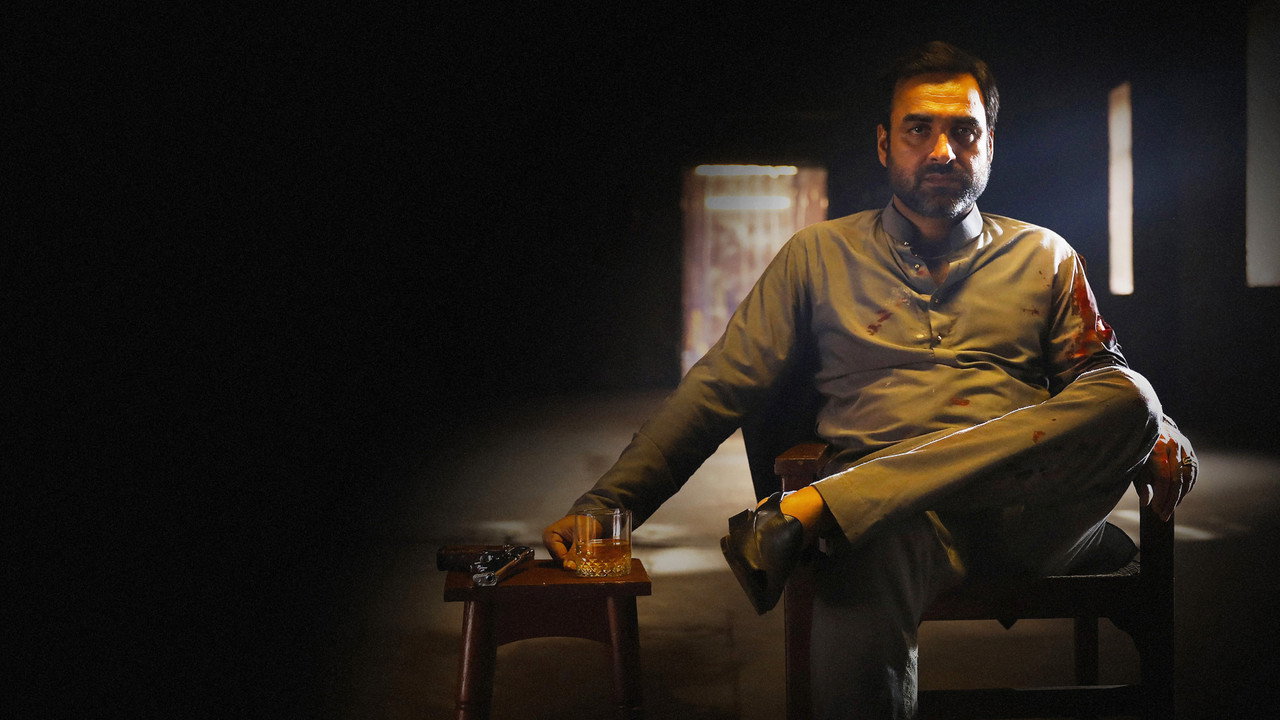
The success of Mirzapur: The Movie is the sort of result that makes an industry executive reach for the most dangerous object in entertainment: a lesson. A popular streaming world has travelled to cinemas, audiences have followed, and the box office has rewarded the move. The temptation will be to conclude that India has discovered a new franchise pipeline—first build devotion on a platform, then sell the climax on a giant screen.
I think that conclusion is both understandable and mostly wrong.
The film’s commercial performance is not a matter of wishful fandom. Bollywood Hungama’s running box-office page records a substantial theatrical run, while its report on the ₹200-crore India milestone captures why trade circles will study it. I am less interested in disputing the numbers than in disputing the lazy creative logic likely to follow them.
Mirzapur did not become valuable because it contained enough violence, swagger or meme-ready dialogue to fill a multiplex. It became valuable because streaming gave viewers time to inhabit a place, learn its hierarchies and form attachments that were not limited to a single hero. The format was not merely a delivery pipe. It shaped the storytelling.
That matters because loyalty is not the same as portability. A viewer who accepts a slow-burn subplot at home may not want the same rhythm in a theatre, while a newcomer will not be moved by a reunion whose force depends entirely on memory. The filmmakers therefore have to serve two audiences without patronising either: regulars who know every betrayal and first-timers who need a reason to care now. That is a writing problem, not a marketing problem, and no opening-weekend enthusiasm can solve it on the creators’ behalf.
A bigger screen is not a bigger story
Cinema and episodic television create different kinds of appetite. A series can pause with a minor character, spend an hour on a feud’s aftertaste or let dread accumulate across evenings. A film must produce momentum, compression and a satisfying shape in one sitting. Neither form is superior. But moving a story from one to the other is adaptation, not promotion.
A successful conversion must identify what was essential in the series and what merely became familiar through repetition. The geography, moral grime and unstable alliances may survive the move; every subplot and fan favourite need not. Cutting beloved material is not necessarily a betrayal. It may be the price of giving the film a clean dramatic spine. Conversely, retaining a character only for applause can flatten that character into a cameo. The hardest decisions will be the ones that make the movie feel complete even to somebody who has never opened the show.
What worries me is Bollywood’s historic weakness for copying the visible feature of a success while ignoring the invisible engineering. A hit comedy produces a row of noisy comedies. A period blockbuster produces armour by the truckload. A streaming-to-theatre success may now produce feature films based on every platform property with a recognisable thumbnail. The pitch deck will call it “built-in audience.” The audience may call it homework.
I watch the whole streaming pile, and I can tell when a show’s mythology has become an obligation rather than a pleasure. If viewers need a recap, a character chart and three seasons of emotional memory before buying a ticket, the film is no longer inviting an audience; it is checking membership cards. Existing fans deserve continuity, but a theatrical film also needs enough independence to justify leaving the sofa.
There is a further trap in confusing recognition with affection. People may know a title because an algorithm kept placing it on a home page, because clips circulated, or because its dialogue became shorthand online. That does not mean they are eager to spend an evening and a ticket on it. Even committed fans have different degrees of attachment: some love the world, some follow one performer and some simply enjoyed the show when it was conveniently available. A theatrical proposition has to earn a fresh decision from all of them.
The industry conversation tracked by outlets such as Variety’s streaming coverage has long shown that platforms and studios are searching for intellectual property that can travel. That search is rational. Production is expensive, discovery is difficult and familiarity reduces marketing risk. Yet risk reduction in financing can become risk avoidance in storytelling. A known world is useful only if creators still have something new to say inside it.
The real opportunity is traffic in both directions
There is, however, a more interesting lesson available. Indian entertainment no longer needs to treat film, television and streaming as rival castes. A character can begin in a series, move into a film and return in another form. A theatrical story can support a smaller spin-off without being diluted into content slurry. Audiences are perfectly capable of crossing formats when each stop offers a distinct experience.
The key word is distinct. A film should not feel like three episodes stapled together, complete with a mid-point engineered where the app once expected viewers to click “next.” Nor should it abandon the texture of the series in pursuit of drone shots, louder gunfire and an item number that arrives like a studio note with choreography. Scale is not spectacle if it merely makes familiar gestures more expensive.
The cinema can contribute qualities that are not reducible to size. A packed room can turn a silence into collective tension and a punchline into an event; a concentrated running time can force a conflict toward consequences that an endlessly renewable series might postpone. Those are creative opportunities. They require filmmakers to design for attention in a room, not simply transfer the brand to a new screen. If the only theatrical addition is more ammunition and a wider frame, the adaptation has misunderstood both its source and its destination.
I would impose three tests before turning any streaming property into a movie. First, can the central conflict be understood without an entrance examination in previous seasons? Second, does the story demand communal viewing—laughter, tension, awe—or is “cinematic” simply a synonym for a larger budget? Third, will the film alter the world of the franchise rather than preserve it for the next instalment?
These tests would also improve the business conversation. “Fans will come” is not a strategy unless producers can say which fans, what they are coming for and what the film offers beyond access to the next plot point. A movie that changes the balance of power, closes a major relationship or reveals a different side of the world has an event-sized promise. One that cautiously returns every piece to its original square may protect future options, but it cheats the present audience. Franchise management should not be mistaken for drama.
If the answer to all three is yes, make the film. If not, make another season and stop being embarrassed by the medium that created the audience.
There is also a consumer issue hiding beneath the celebration. Viewers already pay for subscriptions, data and cinema tickets. Studios should not engineer narratives so that a person must chase one story across multiple paid services and theatrical windows merely to receive an ending. Cross-platform storytelling can expand a world; it can also become a toll road. The distinction depends on whether each work feels complete.
Completeness does not require sealing off every sequel. It means resolving the promise that brought people to this particular work. A viewer can leave curious about the future without feeling that the final reel was an advertisement. This is especially important when stories migrate between services, because availability changes and not every fan has equal access to every screen. The more complicated the route through a franchise becomes, the stronger the obligation on each instalment to provide its own beginning, escalation and emotional payoff.
I am glad a streaming-born Indian franchise has demonstrated theatrical muscle. It unsettles old hierarchies and opens doors for performers and writers who did not emerge from the traditional star system. That is worth cheering. But success becomes artistically useful only when the industry asks the right question.
The question is not, “Which series can we turn into a movie next?” It is, “What story becomes better when told as a movie?” Bollywood has enough franchises. What it lacks, too often, is the discipline to know when a familiar world has earned another visit—and when it is simply charging admission to nostalgia that is only six years old.