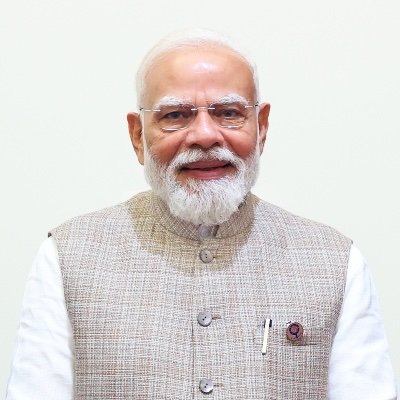
I have never found anniversaries especially persuasive. Politics is full of leaders who survived for decades while leaving behind little more than portraits, renamed roads and memoirs that nobody voluntarily finished. Narendra Modi completing 25 years in executive office—first as Gujarat chief minister and then as prime minister—is worth examining for a different reason. He has altered what Indian voters expect a government to attempt. That change is more consequential than the ceremonial arithmetic of years.
The government’s admirers understandably point to roads, digital payments, welfare delivery, sanitation, electrification and India’s more confident international posture. The Opposition replies with unemployment, prices, social friction and institutional unease. Both lists contain subjects deserving scrutiny, but treating them as competing grocery bills misses the larger transformation. Before Modi, a government could defend modest achievement as the natural limit imposed by India’s size. Under Modi, scale has become an obligation. A scheme that reaches a few districts is now a pilot, not a triumph. I consider that a genuine democratic gain.
The politics of administrative expectation
The useful part of Modi’s political vocabulary is not any single slogan. It is the insistence that the Indian state can execute. The old Congress culture often treated scarcity, leakage and delay as weather: regrettable, permanent and nobody’s responsibility. Citizens were trained to be grateful when a benefit survived the journey from Delhi to the local office. Technology did not magically abolish patronage, but direct transfers, digital identity and public dashboards made the state easier to audit and harder to romanticise.
In his anniversary speech, Modi again presented reform as conviction rather than an emergency response. The Indian Express account of the address records his emphasis on resilience, learning and the developed-India target. Critics are entitled to call 2047 branding excessively grand. I would rather have a government that risks being measured against an ambitious destination than one that declares every pothole an inheritance from history and every improvement a favour.
That does not mean announcements equal achievement. They emphatically do not. The most dangerous habit among BJP supporters is converting every target into a result before the first tender has been issued. Viksit Bharat will not be delivered by repeating the phrase at conferences. It requires better municipal government, faster courts, usable schools, reliable power, more productive farms and factories capable of competing without permanent protection. A political project becomes serious when its friends are willing to ask whether the machinery matches the brochure.
Reform has moved from apology to aspiration
For much of the post-liberalisation era, reform was spoken about like an embarrassing medical procedure. Governments liberalised quietly, compensated loudly and hoped nobody noticed. Modi’s stronger contribution has been to attach reform to national confidence. Infrastructure, manufacturing, formalisation and technological capacity are presented not as concessions to economists but as instruments of sovereignty. That rhetorical shift matters because durable reform needs a constituency larger than a seminar room.
The prime minister’s recent economic pitch described India as a source of stability in a fractured world. According to reporting on his Bloomberg New Economy Forum remarks, he tied authority to empowering citizens rather than making them dependent on the system. That is the right principle. Its application, however, must become more consistent. Too many permissions still depend on official discretion; too many small businesses spend their energy decoding compliance; too many urban residents pay taxes to several authorities while none accepts responsibility for the street outside.
I give this government credit for creating physical and digital public infrastructure at a pace its predecessors rarely imagined. I also think it must now graduate from building platforms to improving institutions. A highway can be inaugurated. Judicial capacity, regulatory predictability and classroom quality cannot. They demand years of unglamorous management. Modi’s political machine is excellent at turning measurable outputs into public stories. His legacy will depend on whether it can bring equal intensity to outcomes that resist drone footage.
The Congress comparison is unavoidable
Congress supporters dislike comparisons with the UPA years, usually calling them selective or stale. Yet the party itself keeps offering nostalgia as analysis. It wants voters to remember an imagined age of institutional grace while forgetting policy paralysis, coalition vetoes and the casual assumption that the commanding heights of commentary belonged to one ideological club. Congress did enact important reforms and rights-based legislation. A serious BJP supporter should acknowledge that. But the party has failed to build a convincing twenty-first-century governing proposition from those achievements.
Its default response to Modi remains moral denunciation. He is said to be too dominant, too visible, too political and too successful at defining the terms of debate. Some concerns about centralisation are legitimate. Cabinet government should be more than a photograph, Parliament should debate major legislation thoroughly, and federal consultation should not be treated as weakness. But Congress cannot substitute complaints about Modi’s political talent for an account of what it would do differently. Restoring an older elite’s sense of comfort is not a development model.
What strikes me is how often the Opposition criticises the very ambition it later imitates. National logistics, manufacturing incentives, digital delivery and large infrastructure were dismissed as publicity until opposition-ruled states began advertising their own versions. This is healthy competition, even when accompanied by theatrical denial. Modi has shifted politics toward execution, and rivals must now demonstrate capacity rather than merely assemble social coalitions and issue manifestos of entitlements.
A legacy cannot run on one man forever
The strongest counterargument to my view is that Modi has made the system excessively dependent on Modi. I take that objection seriously. A government that claims institutional transformation must show that delivery survives beyond the leader’s personal monitoring. BJP governments in states vary enormously in quality. Some ministers communicate only by praising the prime minister. Such habits may secure internal peace, but they weaken administrative ownership and make succession needlessly frightening.
The next phase should therefore be about distributed competence. Mayors need real authority. State leaders need room to innovate. Ministries should publish failure honestly instead of disguising every missed target with a new acronym. The party must promote people capable of disagreeing constructively, because loyalty without judgment is merely expensive applause. Modi’s stature is secure enough to tolerate this. Indeed, building a bench would be stronger evidence of leadership than ensuring every achievement is narrated in the singular.
There is another unfinished task: jobs. India cannot declare victory because employment data can be arranged into a favourable slide. Young people experience the economy through wages, examinations, apprenticeships and the dignity of predictable work. Manufacturing growth matters only if it deepens supply chains and skills. Startup celebrations cannot obscure the millions who need ordinary, durable employment rather than venture-capital mythology. The government deserves the benefit of the doubt for recognising manufacturing as strategic; it deserves pressure on whether incentives create domestic capability.
The fair verdict
My verdict after 25 years is favourable but not devotional. Modi broke the fatalism surrounding the Indian state. He made infrastructure politically glamorous, national ambition respectable and administrative scale a standard by which governments are judged. He also concentrated expectations so heavily around himself that the system’s next test is whether it can perform without permanent presidential-style supervision.
Those who despise him will reduce the period to darkness. Those who worship him will claim the destination has already been reached. Neither account interests me. The India of 2026 expects faster delivery, cleaner transfers, visible infrastructure and a government that speaks confidently about power, technology and growth. That expectation did not arise from nowhere. Modi deserves substantial credit for it.
But credit is not immunity. The developed nation he invokes will require freer enterprise, stronger institutions, deeper human capital and a governing party confident enough to hear bad news. Twenty-five years establish endurance. The harder achievement would be leaving behind a state whose competence no longer depends on the endurance of one extraordinary politician. That is the legacy Modi should now pursue.