Every few years, somebody rediscovers Mumbai’s dabbawalas and asks the same faintly insulting question: when will they become an app? The assumption is that a system cannot be modern until it acquires venture capital, a dark-pattern checkout screen and a founder photographed beside a whiteboard.
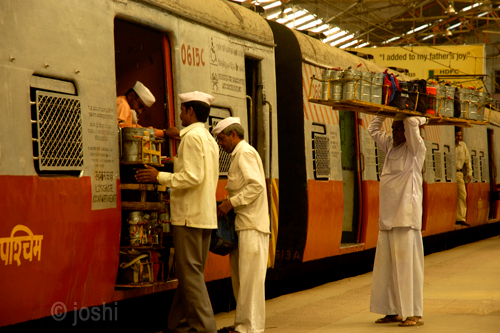
The Britannica overview of dabbawalas explains the delivery network, while the Mumbai Dabbawala association’s website presents the organisation in its own terms. What fascinates me is not a myth of perfection. It is the way the system coordinates people, trains and coded markings in a city where digital services routinely fail because a map pin landed on the wrong gate.
I am not romanticising hard labour. Dabbawalas work in heat, rain and dangerous traffic. Earnings and social security matter more than management-school admiration. My point is that technology should serve this institution rather than forcing it to impersonate a food-delivery platform.
Trust is infrastructure
Start-ups speak endlessly about networks as though they invented them. The dabbawala system is a network built from repeat relationships. Customers know who collects the lunchbox. Workers know building guards, station rhythms and local shortcuts. Exceptions are handled through human memory and accountability.
An app can improve payments, customer communication and route records. It cannot automatically reproduce trust. Indeed, platforms often weaken responsibility by interposing menus, support tickets and anonymous contractors. When something goes wrong, everybody is “looking into it.”
The dabbawalas’ coding system is sometimes presented as primitive because it is painted rather than scanned. That misses the design objective. A good operational system is legible to the people using it, resilient without perfect connectivity and quick under pressure. Sophistication does not require a battery.
Admiration can become exploitation
Corporate audiences have long enjoyed inviting dabbawalas to explain efficiency. I wonder how often applause becomes better pay. Turning workers into inspirational case studies can be another way of extracting value from them. If companies admire the model, they might fund insurance, safety equipment or training rather than another conference panel.
The same caution applies to tourism and media. Bright images of lunchboxes moving through Mumbai are irresistible. But the story includes unstable demand, changing office patterns and younger workers’ aspirations. A tradition survives only if it provides a decent livelihood. Heritage without income is costume.
Remote work and food-delivery apps changed the customer base. The sensible response is adaptation: new routes, business deliveries, digital billing and partnerships that preserve worker control. The foolish response would be handing the network to a platform whose main innovation is taking a percentage.
Modernisation without surrender
I would like simple interoperable booking, optional tracking for unfamiliar customers and digital records that help resolve disputes. I would also like occupational insurance, safer carts, weather protection and access to affordable credit. None requires converting workers into algorithmically managed gig labour.
Policymakers should notice what makes the system work: suburban rail capacity, walkable access around stations and dense mixed-use neighbourhoods. The dabbawala story is therefore also an urban-planning story. Destroy those conditions with hostile station design or endless car infrastructure and no app will compensate.
Mumbai’s dabbawalas matter because they puncture our childish equation of technology with progress. A QR code can be useful. So can a painted symbol understood instantly by the person who needs it. A system is modern when it solves contemporary problems reliably and treats its workers with dignity.
The dabbawalas need tools, protection and customers. They do not need a TED Talk explaining that they were a start-up all along.