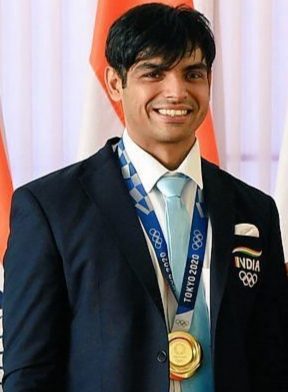
When Neeraj Chopra finally crossed 90 metres in Doha, I felt relief before excitement. That reaction surprised me. Ninety metres had become a strange national password, as if an Olympic champion, world champion and serially consistent elite athlete needed one more number to validate his career. World Athletics records his performances on its official athlete profile, where the body of work is more persuasive than any single throw. Yet the milestone mattered because it revealed the scale of his persistence. It also exposed our favourite sporting habit: converting an individual’s discipline into a comforting story about the system. Neeraj is evidence that an Indian athlete can master a global event. He is not evidence that India has built hundreds of environments capable of producing another Neeraj.
We cover the number, not the craft
Javelin is technically demanding and physically violent. The run-up must build speed without losing alignment; the crossover steps, block, release angle and shoulder position have to arrive in sequence under competitive pressure. To casual viewers, an athlete simply runs and throws. Neeraj’s brilliance lies partly in making the chain look clean. His consistency at major championships is especially remarkable because throwing events punish tiny errors. The Olympics athlete page records the medals that made him a household name, but medals are the visible tip of years spent managing training loads, injuries, travel and technique. I wish Indian coverage lingered longer on that expertise instead of asking whether the latest distance proves he is finally complete.
Cricket coverage assumes its audience can learn nuance. We discuss a batter’s trigger movement, a seamer’s wrist position and a captain’s matchup. In athletics, broadcasters too often reduce analysis to inspiration. The athlete came from modest circumstances, worked hard and made India proud. All admirable, all insufficient. Treating non-cricket athletes as motivational posters is another way of not treating them as professionals. Neeraj does not need us to marvel that someone from India can understand javelin. He needs an ecosystem in which coaches, physiotherapists, biomechanists and competition planners are recognised as normal parts of elite sport.
A champion can hide a thin field
India has developed encouraging javelin depth compared with its past, and Neeraj’s visibility has clearly pulled young athletes toward the event. But one successful cluster should not allow administrators to declare victory. Talent identification remains inconsistent. Many school grounds lack safe throwing areas, qualified coaching or equipment. Athletes outside major centres often depend on a parent, a local coach and improbable travel arrangements. Nutrition support arrives unevenly. Injury management can be reactive, and a badly handled elbow or shoulder problem can erase a career before the public learns the athlete’s name.
I do not expect every district to own a biomechanics laboratory. I do expect India to build regional hubs with transparent entry standards, trained coaches and links to sports-science services. Equipment libraries could let young throwers progress without families buying each heavier implement. Competition calendars should offer enough high-quality meetings for athletes to learn how to perform under pressure. Selection policies must be published early and applied consistently. These are dull administrative tasks. That is precisely why they matter. Sporting nations are not created by emotional montages; they are created by adults completing dull tasks on time.
Money should follow pathways, not only medals
India has improved its support for elite athletes, and I will not erase that progress. Targeted funding, international exposure and specialised coaching have helped top performers prepare with greater seriousness. Governments, federations and private initiatives deserve credit when support works. The weakness is the narrowing funnel below the elite tier. Once an athlete becomes a medal prospect, doors open. The harder policy question is how a promising fifteen-year-old becomes good enough to enter that circle without bankrupting a family or pleasing the right official.
Corporate sponsorship behaves rationally: it seeks visibility, medal probability and a recognisable face. Public funding must do what sponsorship will not. It should finance coaching education, local competition, women’s access, safe accommodation and long rehabilitation periods. It should also publish outcomes. How many athletes used a centre? How often were facilities available? Which coaches were certified? What happened to athletes after junior success? Accountability cannot mean punishing every failed medal attempt. Sport involves failure. It should mean knowing whether money purchased a functioning pathway or merely a building with a minister’s plaque.
Women and lesser-known events need room before success
Neeraj’s fame has expanded attention for athletics, but attention still flows toward whoever is already winning. Women throwers, jumpers, walkers and middle-distance runners often enter public view only at a major championship. By then, audiences are asked to care instantly and abuse instantly if a medal does not appear. I want coverage that follows seasons rather than only finals. Tell us when an athlete changes technique, returns from injury or posts a personal best at a domestic meet. That continuity builds knowledgeable support and reduces the cruelty of judging careers through one Olympic afternoon.
The counterargument is that audiences choose cricket freely, and media companies cannot manufacture interest. Of course viewers have agency. But preferences are also shaped by availability and repetition. Cricket is easy to follow because schedules, statistics, personalities and debate surround us. Athletics appears as an occasional patriotic assignment. Put high-quality domestic meets on accessible streams, publish start lists, explain qualification standards and provide usable photographs and interviews. Curiosity needs an invitation. Neeraj supplied the most generous invitation Indian athletics could have imagined; institutions must decide whether to use it.
Ninety metres is a beginning for everyone else
I hope we stop using the 90-metre mark as a burden now that it has been crossed. Distances fluctuate with conditions, form and risk. Championship sport is about beating the field on the day, not satisfying a nation’s round-number obsession. Neeraj’s most valuable quality may be competitive steadiness: he repeatedly puts himself in medal contention even when the perfect throw does not arrive. Young athletes should learn that excellence is not a viral moment but the capacity to reproduce technique amid uncertainty.
For administrators, the lesson is harsher. India cannot keep calling its best athletes once-in-a-generation while doing too little to make generations overlap. A champion should leave more than medals. He should leave better coaches, crowded junior competitions, smarter injury care and a public able to appreciate the event. I celebrated 90 metres. Then I wondered about the child holding a javelin for the first time on a field without a proper sector, a strength coach or money for travel. If we make her success depend on another miracle, we have admired Neeraj without understanding him.