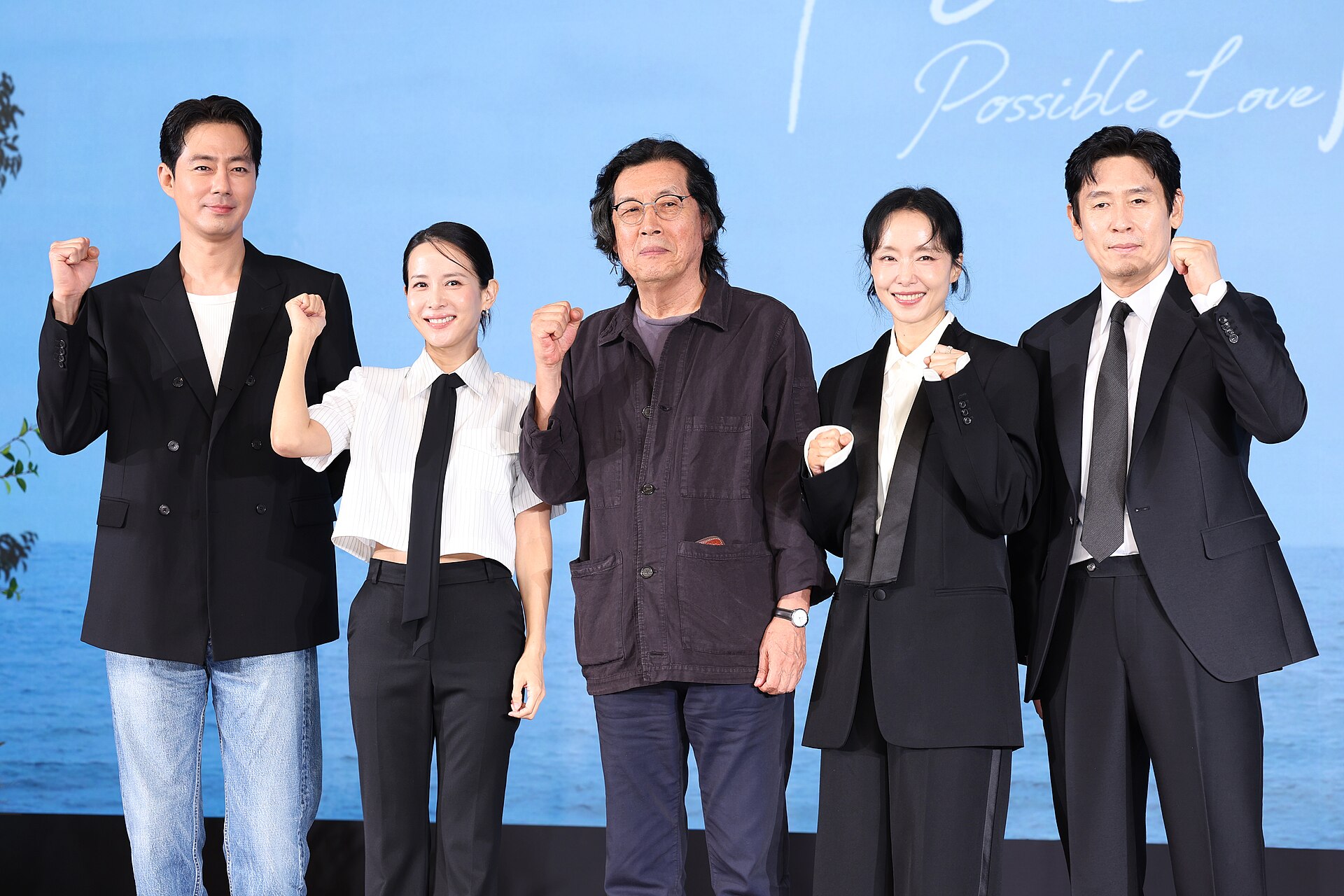
Streaming platforms spend astonishing sums trying to prevent me from feeling a second of uncertainty. The next episode starts automatically. The interface explains what is trending. The thumbnail changes according to whatever version of me the algorithm believes will click. Then a film like Lee Chang-dong’s Possible Love arrives and reminds me that uncertainty is not a defect. It is often the point.
The film’s 6 November streaming date and premise appear in the Associated Press fall-film guide. Its release sits beside an unusually loud slate catalogued in the November cinema calendar. I am drawn to the contrast: four lives observed with patience against an industry convinced that only universes, sequels and instantly legible hooks can hold attention.
Slow is not the same as empty
Whenever a contemplative film reaches a major service, viewers divide into camps. One announces that nothing happened. The other implies that failure to admire the film reveals a moral or intellectual deficiency. Both reactions bore me.
Something does happen in slow cinema: attention changes. We stop consuming plot as a sequence of rewards and begin noticing gesture, avoidance, spatial distance and the burden of what characters do not say. The work demanded is different, not inherently superior. Some evenings I want a thriller. On others, I want a film that does not chase me around the room waving incident.
Lee’s cinema trusts awkward duration. A conversation can outlast its social comfort. A face can remain unreadable. That refusal to provide emotional captions feels almost rebellious on a platform built around prediction.
The algorithm dislikes ambiguity
Streaming interfaces sort culture into moods with the confidence of supermarket shelving. “Emotional,” “dark,” “inspiring” and “binge-worthy” appear as if works possess one chemical property. Ambiguous films create a merchandising problem. Their appeal cannot be reduced easily to a premise, and their rewards cannot be clipped cleanly into promotional fragments.
That does not mean audiences reject them. Indian viewers have embraced Korean dramas, Malayalam films, documentaries and subtitled series whenever discovery mechanisms and word of mouth align. The old claim that the mass audience cannot handle patience is usually made by executives unwilling to market patience.
Platforms possess the data to build thoughtful contexts: director collections, short introductions, interviews and links between films. Instead, they often dump a prestigious acquisition into the catalogue, celebrate themselves for taste and let the algorithm bury it beneath louder inventory.
What four strangers tell us
The premise of intersecting lives risks sounding familiar. Its value lies not in novelty of diagram but precision of observation. Modern urban life produces constant proximity without guaranteed intimacy. We know colleagues’ food orders, strangers’ opinions and influencers’ bedrooms while remaining uncertain about the people nearest us.
Possible Love treats connection less as destiny than labour. That resonates in India, where family structures promise belonging but often regulate the terms on which belonging is granted. Love may be available, but it arrives entangled with class, duty, shame and the fear of appearing foolish.
I appreciate a film willing to leave emotional transactions unresolved. Real relationships rarely supply the scene in which motive is explained, music rises and everyone achieves useful closure before the credits.
The counterargument: time is scarce
A reasonable viewer will say that after work, commuting and domestic labour, entertainment should not feel like another assignment. I agree. Nobody owes a difficult film attention. Critics become ridiculous when we treat fatigue as philistinism.
But choice requires genuine visibility. If platforms recommend only fast, familiar content, they cannot later cite viewing data as proof that viewers chose it freely. Design shapes consumption. Autoplay, rankings and homepage placement are editorial decisions disguised as neutral convenience.
I want services to offer a “watch slowly” mode: no countdown, no next-title assault, no promotional overlay before the final image has finished. The technology already knows how to keep me watching. It could learn how to let me watch.
Global cinema without tourism
Korean culture is now marketed globally through an efficient bundle of music, beauty, food and screen entertainment. The danger is that international audiences consume national cinema as branded tourism. Lee’s work resists that flattening because it does not offer easy cultural souvenirs. Its people are specific without becoming explanatory exhibits.
Indian viewers should welcome this. Our cinema also suffers when international discussion reduces it to weddings, poverty or maximalist spectacle. Watching another culture attentively is practice for demanding that ours be watched with equal seriousness.
Silence can survive streaming
I do not expect Possible Love to dominate the homepage. I expect it to linger for viewers who find it at the right moment. That long tail used to be streaming’s artistic promise: not merely instant global release, but durable access to work outside theatrical economics.
The platforms have increasingly behaved like television networks with larger warehouses. Yet films like this preserve another possibility. A catalogue can be a library, not only a conveyor belt.
My argument is not that quiet films are morally better. It is that a healthy screen culture makes room for different tempos. Silence is not absence. Ambiguity is not a technical fault. And viewers are not laboratory mice who must receive a plot pellet every few minutes. Sometimes the most generous thing a film can do is wait for us to look.