
Bollywood has developed a nervous tic around scale. When faith in writing wobbles, the industry reaches for larger sets, louder scores, wider releases and a budget number repeated as though it were a review. Ramayana arrives surrounded by the maximum version of this instinct: major stars, global technical ambition, an IMAX promise and a story that carries more cultural recognition than any marketing department could manufacture.
I am not hostile to spectacle. Cinema should occasionally make us feel that the screen is larger than the room. Variety’s reporting on IMAX’s regional expansion identified Ramayana as part of its Indian slate. That is a meaningful industrial achievement. Indian films should possess the tools and confidence to compete for premium screens. But technology can enlarge an image; it cannot deepen an emotion.
My test is unfashionably simple. When Ranbir Kapoor appears, do I see Rama or do I see a star performing reverence? When Sai Pallavi appears, is Sita allowed interiority or merely photographed as virtue? When Yash enters as Ravana, does the performance find intelligence, vanity and menace, or does the film surrender to entrance music? The answers will determine whether this is cinema or a very expensive procession.
Familiarity makes adaptation harder
Some producers assume that a universally known story reduces the burden on a screenplay. The opposite is true. Familiarity exposes every lazy choice. Viewers already know the major turns, so suspense must come from moral texture, rhythm and perspective. An adaptation has to reveal something without behaving as though it has corrected the tradition that gave it life.
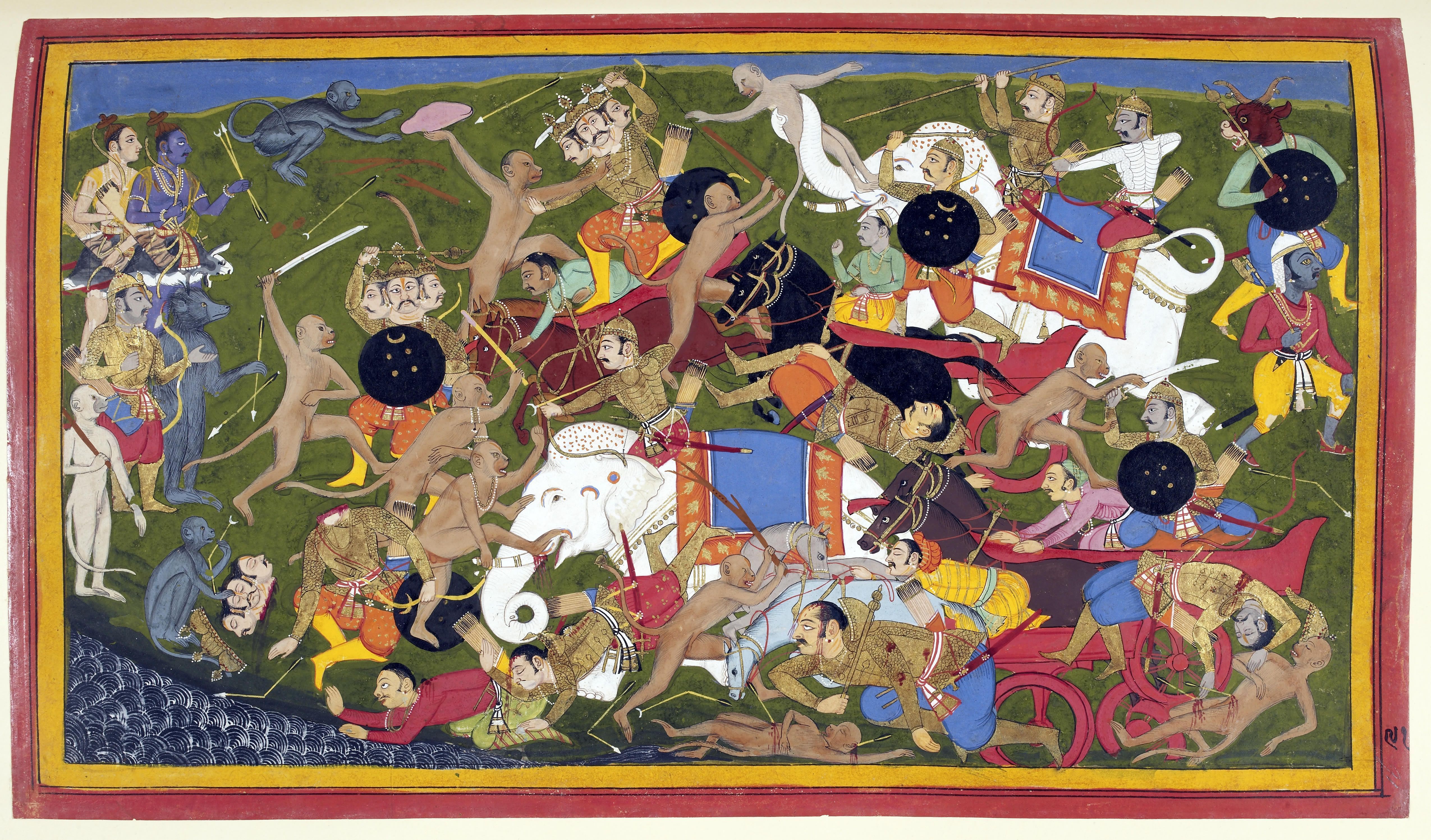
The Ramayana is not one fixed packet of plot. It has travelled through languages, performance traditions, paintings, television, scholarship and household memory. A filmmaker must choose. Which episodes receive time? Whose uncertainty matters? How is divinity represented without eliminating drama? The most dangerous approach is to claim universality while quietly assembling a generic fantasy-action template.
Nitesh Tiwari has shown an ability to handle accessible emotion, but scale can bully directors into reverence. Every scene becomes an announcement. Every exchange arrives under a swelling choir. Yet the epics survive partly because they contain intimate dilemmas: duty colliding with desire, loyalty becoming painful, a promise producing consequences its speaker could not contain. Those moments require actors, silence and precise writing.
I would rather see one convincing conversation in exile than ten digital armies without weight. Our older mythological cinema often had limited resources but understood iconography and performance. Its artifice was visible, yet emotion crossed the gap. Contemporary visual effects should not make filmmakers ashamed of theatrical simplicity when simplicity serves the scene.
Star casting must justify itself
Ranbir Kapoor is a gifted actor. He is also a beneficiary of an industry that offered him room to fail, recover and experiment in a way outsiders rarely receive. Both statements can be true. The problem begins when lineage is treated as proof of suitability. Rama is not a prize awarded for career longevity. The role requires stillness without blankness, authority without swagger and goodness without the deadening polish of a brand ambassador.
Sai Pallavi is the casting that interests me most because she has repeatedly resisted cosmetic uniformity. Sita is too often written as a sequence of virtues endured by a woman rather than a person making choices within constraining circumstances. Pallavi’s intelligence as a performer can resist that flattening, provided the screenplay gives her material.
Yash faces another trap. His screen persona thrives on controlled excess. Ravana can absorb grandeur, but merely importing the grammar of a mass hero would impoverish the antagonist. A villain who knows he is in a trailer is less frightening than a ruler whose pride has an internally coherent logic. I want performance, not a series of poster poses.
The supporting cast may ultimately determine the film’s world. Epics feel inhabited when secondary figures possess motives and relationships beyond delivering information to the leads. Lakshmana, Hanuman, Kaikeyi, Bharata and Mandodari cannot be decorative satellites. If the screenplay treats them as functions, the story’s moral universe will shrink despite the enormous canvas.
Religious respect is not the enemy of criticism
A film based on sacred material will attract viewers for whom the experience is devotional as well as cinematic. That deserves respect, not condescension. It also does not make craft criticism illegitimate. Asking whether dialogue is clumsy, pacing is bloated or a performance is unconvincing is not an insult to the epic. It is an assessment of people who chose to adapt it commercially.
Producers should resist using cultural importance as a shield against reviews. Bollywood has sometimes marketed a film’s subject as evidence of the film’s quality. Patriotism, piety and historical pain become advance bookings against criticism. I refuse that bargain. A worthy subject can produce bad cinema, and a critic’s job is not to award marks for intention.
At the same time, reviewers should avoid the easy sophistication of sneering at popular belief. The audience’s emotional investment is not stupidity. A serious critic asks how the film works with that investment—whether it exploits, enriches or merely decorates it. Condescension is as lazy as propaganda.
The industry needs ambition with discipline
Ramayana’s production can strengthen Indian technical capacity. Large projects train crews, encourage effects infrastructure and expand international distribution relationships. Those benefits are real even if the film itself is imperfect. But the lesson Bollywood usually learns from a hit is superficial. It copies the surface—mythology, scale, multiple parts—rather than the underlying craft.
If the film succeeds, I expect a queue of announcements containing gods, warriors, giant budgets and release dates three years away. Most will be designed from posters backwards. The industry should instead invest in screen development, previsualisation, language work and casting beyond the usual family networks. Spectacle is a discipline before it is a number.
Audience patience also has limits. Dividing a story into parts can provide breathing room, but it can equally become a business model that withholds emotional completion. Each instalment must possess its own dramatic architecture. “Wait for Part Two” is not a conclusion; it is a subscription demand.
I want Ramayana to work. Hindi cinema could use a grand popular film whose seriousness is not confused with grimness. I want children to encounter wonder, older viewers to recognise without feeling pandered to, and performers to disappear beneath roles that arrive carrying centuries of imagery. But goodwill is not immunity.
The film’s true competition is not Hollywood fantasy or another Diwali release. It competes with the Ramayana already present in the audience’s imagination. No effects house can outspend memory. The only route past that obstacle is specificity: human gestures, lived relationships, moral tension and actors who cease advertising themselves. Give me that, and I will gladly applaud the scale. Give me scale alone, and I will see exactly what it cost—and how little it bought.