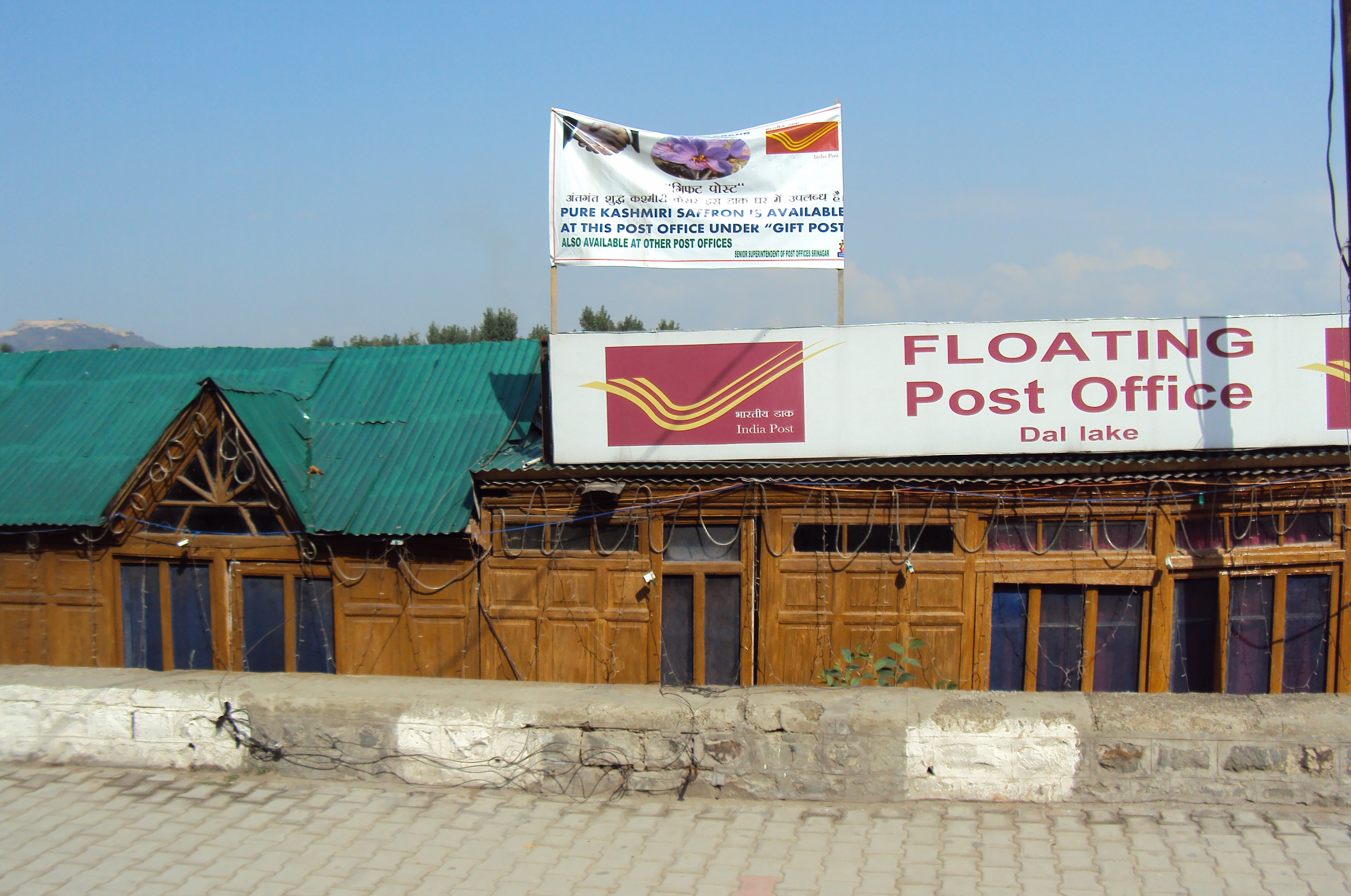
The floating post office on Srinagar’s Dal Lake is almost offensively photogenic. A red sign, a houseboat, mountains, shikaras and the possibility of sending a postcard bearing a distinctive cancellation: the tourism copy writes itself. Visitors pose, social media declares it unique, and everyone enjoys the pleasing collision of bureaucracy and water. India has managed to make a post office look whimsical, which may be our most improbable administrative achievement.
But the joke becomes less interesting once one remembers that people live and work on the lake. Mail, savings and official transactions do not become optional because an address requires a boat. The Indian Express account of the institution notes that postal workers use shikaras for delivery. A more recent report on its continuing operation describes it as a working public service, not merely an attraction. That distinction is why the story matters.
Novelty is ordinary life viewed from elsewhere
Newsrooms love “only in India” stories because they can be consumed without consequence. A floating post office is filed beside unusual weddings and oversized vegetables. The reader is invited to smile at national eccentricity. Yet most apparently eccentric infrastructure is a practical response to geography. Boats serve as school transport where roads cannot. Mobile clinics travel because patients are dispersed. A postal counter floats because the community’s spatial logic differs from the planner’s default.
Calling the institution quaint can obscure the labour involved. A postcard mailed by a tourist is a souvenir. A pension, deposit or document delivered to a resident is access. Postal workers navigate weather, lake conditions and addresses that do not fit the numbered-street imagination. Their work involves local knowledge no application can instantly replace. The system functions because human beings translate a national network into a specific landscape.
I have a weakness for infrastructure that adapts rather than demands that citizens rearrange their lives to suit a form. Indian administration frequently prefers the latter. A resident is told to travel to a distant office, bring a document another office no longer issues, and return when the correct official is present. The floating post office reverses that relationship. The state moves, at least partially, toward the public.
The postal network does more than carry letters
Urban professionals often speak of India Post as though email rendered it ceremonial. That view confuses one service with the institution. Post offices provide savings products, payments, identity-linked services, insurance and delivery across locations commercial networks find unattractive. Trust built through repeated physical presence matters, particularly for older residents and people uncomfortable with digital interfaces. The counter is not simply a place where envelopes go to retire.
Digital systems can strengthen this network, but they should not become an excuse to withdraw human access. Connectivity fails. Devices break. Authentication does not always work. A person may need help understanding a transaction. The strongest public model combines digital efficiency with assisted service. A postal worker carrying a connected device by shikara may sound like a metaphor designed for a government advertisement. It is also a sensible form of last-mile administration.
The institution’s philatelic appeal has economic value. Visitors buy stamps and postcards, giving an old service a fresh reason to be encountered. I am not opposed to tourism; I am opposed to tourism becoming the only lens. Revenue from curiosity can support preservation and local employment. The danger begins when the functioning post office is curated as a prop while resident needs are neglected.
Dal Lake itself faces environmental stress. An Associated Press report on Kashmir’s lakes described pollution, invasive plants and declining water levels. The floating post office therefore sits within an ecosystem whose deterioration affects livelihoods, mobility and the institution’s future. A postcard image freezes clean water and graceful boats; public policy must deal with sewage, weeds, unplanned construction and climate pressure outside the frame.
Heritage is a verb
We are fond of declaring things heritage after allowing them to become fragile. Preservation then means a plaque, a fresh coat of paint and occasional dignitary visits. Living heritage requires maintenance and relevance. The post office should retain postal and financial functions, train successors, document its working knowledge and remain accessible to lake communities. Its value lies in continuing to operate.
That includes treating postal staff as professionals rather than picturesque characters. Safety equipment, reliable boats, weather protocols and fair staffing are basic requirements. So are modern communications and secure handling systems. The charm should belong to visitors; workers deserve competence. Too many human-interest stories romanticise hardship so thoroughly that fixing it begins to look like destroying authenticity.
I would also like clearer historical interpretation at the site. Explain how postal service developed on the lake, how addresses and routes work, what residents use the office for and how the institution changed after the 2011 relaunch. Let local voices narrate it. A small exhibit could turn a photograph stop into an encounter with Kashmir’s social geography. The story is richer than “world’s only”, a claim that is itself disputed by postal curiosities elsewhere.
That last point illustrates our hunger for superlatives. Highest, oldest, only, largest: we use these words because ordinary usefulness seems insufficient. If another floating post office exists somewhere, does Srinagar’s become less valuable? Of course not. Its importance arises from the relationship between service and community. Marketing wants a record. Citizenship needs continuity.
What this small institution teaches
First, last-mile public services should be designed around actual terrain and behaviour. Uniformity in standards need not mean uniformity in delivery. Second, physical institutions can remain valuable in a digital economy when their roles evolve. Third, tourism should support working communities rather than convert them into backdrop. Finally, environmental protection and service delivery are connected: damage to the lake is damage to its social infrastructure.
The story also punctures the fashionable claim that innovation must involve venture capital, artificial intelligence or a word ending in “tech”. A boat carrying mail to people on a lake is an old solution, continuously adapted. Innovation can be institutional memory meeting geography. Its success is measured not by valuation but by whether somebody receives what they need.
I would happily send a postcard from the floating post office. There is pleasure in a physical object travelling through this elaborate network. But I would try to remember that my postcard is the least important item in the building. Around it exists a public counter, a savings relationship, a delivery route and a set of workers whose local knowledge makes the national state tangible.
The floating post office survives because it is both symbol and utility. Symbols attract attention; utility earns loyalty. We should resist the temptation to choose between them. Photograph the sign, buy the stamp and enjoy the absurd beauty of bureaucracy afloat. Then look beyond the frame. The real curiosity is not that a post office sits on water. It is that, in a country where citizens are so often asked to travel toward power, this small piece of the state still travels toward them.