
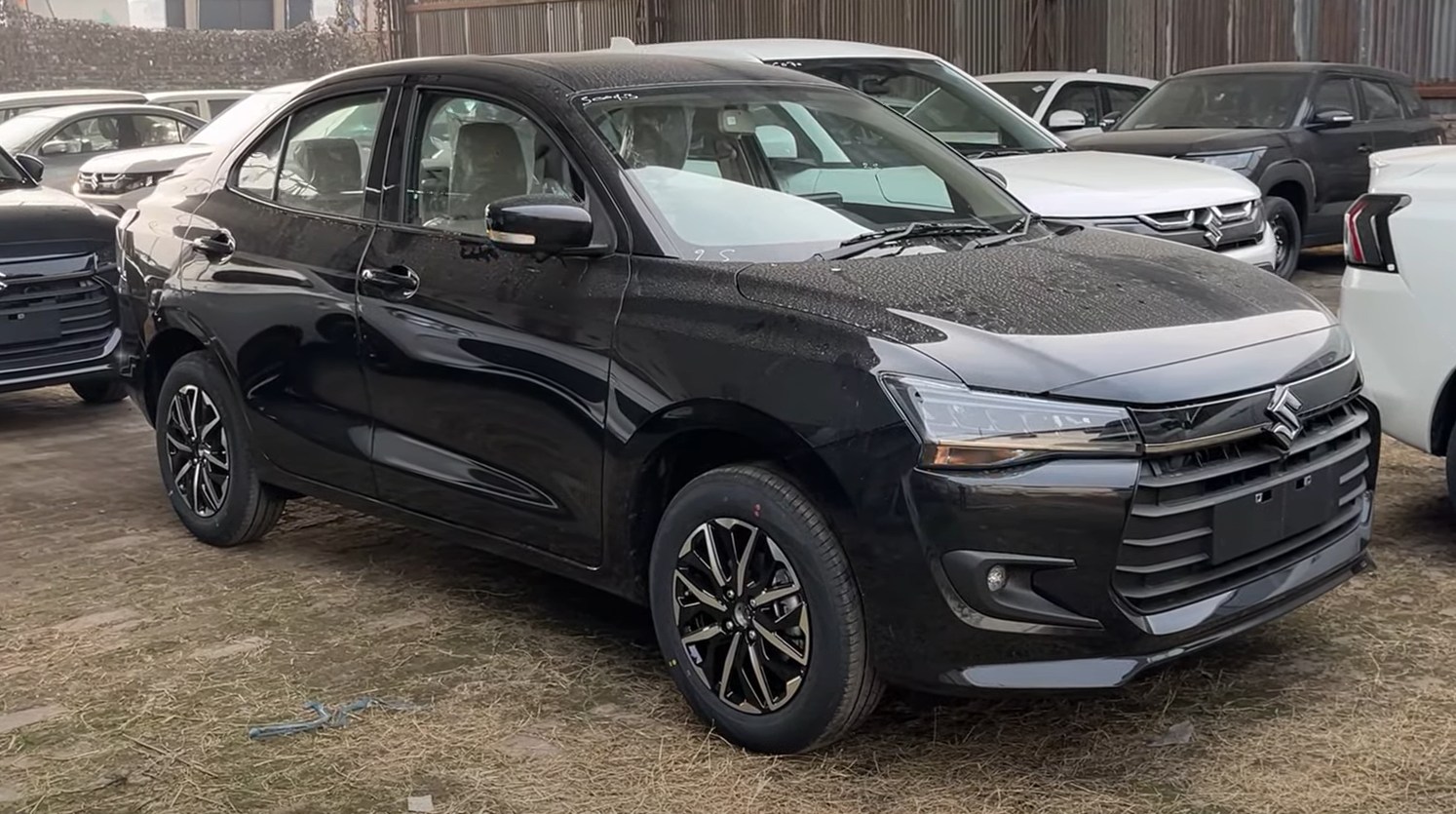
Indian buyers have been trained to apologise for choosing a sedan. The salesman points at ground clearance, the neighbour mentions road presence, and soon a perfectly rational family is financing a pseudo-SUV with more plastic cladding than additional ability. The current Maruti Suzuki Dzire makes that ritual harder to justify. It earned five stars for adult and child protection in Bharat NCAP testing, with the base LXI included in the tested specification according to Autocar India’s report. Six airbags, electronic stability control and core safety equipment are standard. For a company long criticised over crash performance, this is not a cosmetic update. It changes the value argument.
I have no interest in awarding Maruti a lifetime medal for finally meeting expectations. Safety should not be a luxury feature, and Indian consumers pushed manufacturers toward better structures and equipment. But when a mass-market leader responds, credit is useful because it changes incentives. The Dzire proves a light, efficient, affordable sedan can achieve a strong test result without becoming an overpriced technology display. Competitors now have less room to claim that safety necessarily belongs to heavier, costlier vehicles.
Buy the car you will use
Most urban and intercity driving does not require an SUV. It requires manageable dimensions, comfortable seats, predictable controls, decent luggage capacity and fuel efficiency. The Dzire supplies those virtues in a sub-four-metre footprint. Its boot is separated from the cabin, its rear seat is usable, and its low loading height helps ordinary luggage. You do not gain moral courage by stepping into a taller vehicle.
The sedan also rides and handles with a coherence many compact SUVs imitate poorly. Autocar’s first-drive review praised bump absorption, steering and everyday balance while noting limitations such as rear headroom. That matches what matters to me: not lap-time heroics, but a car that settles after a bump and goes where the driver expects. Raised vehicles can be excellent, but height adds compromises in mass, aerodynamics and body control. Buyers should demand a concrete benefit before paying for them.
Ground-clearance anxiety is not invented. Indian roads contain absurd speed breakers, broken shoulders and monsoon craters. Yet millions of Dzires have survived them, including taxis driven with neither tenderness nor philosophical restraint. Sensible approach angles and driver judgment solve most situations. If your daily route truly requires rough-road capability, buy accordingly. Do not purchase theoretical expedition equipment because your housing society has one aggressive ramp.
The mid trim is where sense usually lives
Manufacturers design variant ladders to turn desire into incremental spending. Add a touchscreen here, alloy wheels there, and the buyer who entered for value leaves with a sunroof and a longer loan. The Dzire’s standard safety kit makes resisting easier. I would choose the lowest trim that provides the convenience features I genuinely use—typically power equipment, a competent audio system, steering controls and perhaps automatic climate control. I would not pay heavily for decorative wheels or a sunroof in a compact sedan.
A factory touchscreen can be convenient, particularly with Android Auto and CarPlay, but it should not decide the purchase. Aftermarket units exist, although buyers must protect wiring integrity and warranty. A 360-degree camera is useful in tight parking, not essential for everyone. Automatic transmission deserves a more practical calculation: the AMT may feel less polished than a torque converter or CVT, but its simplicity and price can make sense in congestion. Test it in slow traffic rather than judging a salesman’s empty-road demonstration.
The engine is not exciting, and I say that without complaint. A three-cylinder petrol tuned for efficiency will announce itself under load. Enthusiasts may miss the smoother old four-cylinder unit. Families using the car for commutes and periodic highway trips may prefer lower consumption. Buyers should test the vehicle with passengers and air-conditioning, because solo acceleration clips conceal the conditions in which compact cars work hardest.
Safety ratings need intelligent reading
Five stars do not make occupants invulnerable. Ratings apply to defined tests, speeds and configurations. Tyres, seat-belt use, child seats and driving behaviour remain decisive. Bharat NCAP’s result is strong evidence of crashworthiness within its protocol, not a force field. I worry that marketing turns scores into bravado, the opposite of their purpose. A safer structure gives occupants a better chance when prevention fails; it does not excuse speeding.
Standard equipment matters as much as the headline. Six airbags and stability control across trims prevent a two-tier safety market in which lower-income buyers receive a weaker car. This should become normal. Manufacturers must also ensure replacement parts and qualified repairs preserve structural performance after a collision. A five-star shell repaired casually with poor welding may not behave like the tested vehicle.
Prospective owners should budget for good tyres and replace them by condition, not merely tread optimism. They should use rear seat belts on every journey and install child restraints correctly. India’s safety debate often jumps from crash rating to crash rating while ignoring behaviour. The best-value accessory is not chrome; it is the habit of belting every occupant before movement.
Maruti’s real advantage remains boring
The company’s service network, parts availability and resale strength are boring until something breaks in a smaller town. Then they become luxury features. Many rivals produce attractive cars but cannot match the confidence that a workshop and common components are nearby. This advantage can make Maruti complacent, and customers should scrutinise service estimates rather than sign blindly. Still, ease of maintenance has tangible value over eight or ten years.
Fuel efficiency matters for the same reason. Owners experience petrol cost every week; they experience a panoramic sunroof mostly during the test drive. The CNG option may suit high-mileage users with accessible stations, though boot compromise and queue time must be considered. Private buyers with modest annual use should calculate the break-even rather than worship the lowest rupee-per-kilometre figure.
Resale value can reduce lifetime cost but should not dominate enjoyment. Buying only what the next owner wants is a strange way to use a car. Choose a practical colour if you like it, maintain records and avoid modifications that damage reliability. The Dzire’s broad market means resale should remain healthy without elaborate strategy.
The SUV badge is not a financial plan
A comparably equipped compact SUV may offer easier ingress, a higher seating position and styling buyers prefer. Those are legitimate reasons. My objection is to treating the body style as automatically superior. For the same budget, the sedan may deliver a higher trim, better efficiency, a larger usable boot and lower running costs. A buyer financing the difference should ask what daily function the money purchases.
There is also an arms-race problem. Everyone buys taller vehicles for visibility, making everyone else feel compelled to do the same. The result is more mass and less visibility for smaller road users. I am not proposing a sedan mandate. I am asking buyers to separate preference from manufactured insecurity. “Road presence” is often sales language for occupying more space than required.
The Dzire is not perfect. Rear headroom can constrain tall passengers, the engine lacks refinement under acceleration, and cabin materials prioritise cost. Drivers wanting strong performance or luxury should look elsewhere. But a weakness acknowledged is not necessarily a deal-breaker. Value emerges when a car’s strengths align with the owner’s actual life.
For years, safety was the strongest argument against recommending certain Maruti models without reservation. The new Dzire addresses that objection while retaining the qualities that made the nameplate successful. I would buy a sensible mid trim, skip ornamental upgrades, use the saved money for insurance, tyres and fuel, and enjoy a car that does not pretend to cross a mountain range on the school run. Five-star crash performance has made the honest sedan newly persuasive. It has also exposed how much extra Indian buyers pay merely to sit higher in traffic.