
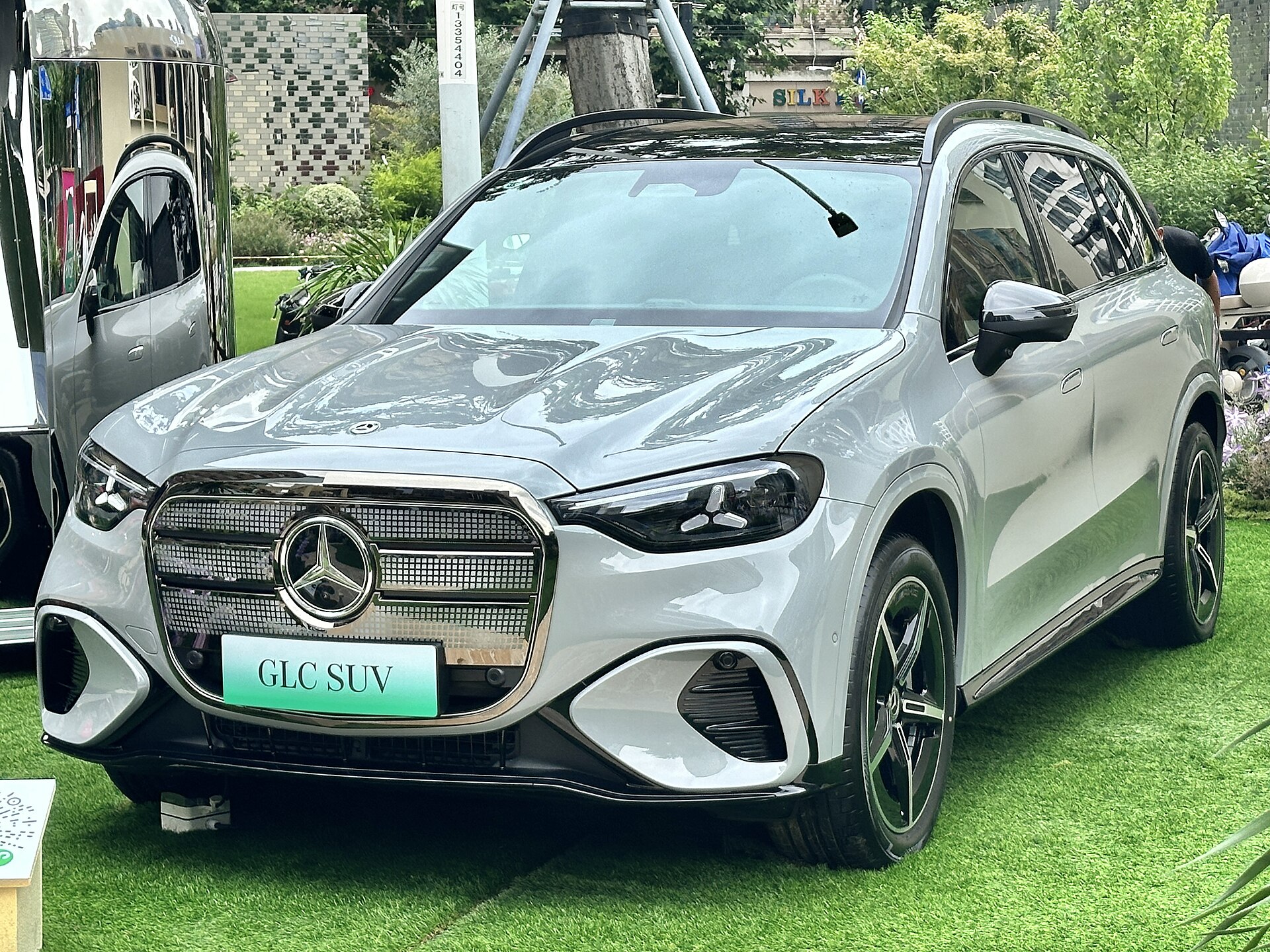
The new Mercedes-Benz GLC Electric arrives in India at a reported starting price of ₹78.5 lakh, locally assembled, with a 94kWh battery and the sort of performance figures that once belonged to sports cars. CarWale’s November launch report lists the price and equipment, while Autocar India’s preview details the 400 4Matic specification and claimed range. My advice is simple: if you want one, buy the least theatrical version Mercedes will sell you.
Luxury-car catalogues are designed to make restraint feel like failure. The buyer begins with an excellent motor vehicle and ends by adding larger wheels, cosmetic packages, illuminated surfaces and materials too delicate for the person who will actually clean them. The GLC Electric appears strong enough in its fundamentals that most optional garnish will make it costlier, harsher or more troublesome without improving the job.
I have driven enough Indian roads to know that horsepower is rarely the limiting factor. Tyre sidewall, service access, charging location and the driver’s willingness to avoid craters matter more. A 482-horsepower SUV does not need visual proof of aggression. It needs wheels capable of surviving Bengaluru.
The engineering case is convincing
A large battery, dual motors and all-wheel drive give the GLC the effortless response expected at this price. The claimed range above 700 kilometres on the WLTP cycle should not be confused with guaranteed Indian reality, but it creates a useful buffer. Even after highway speed, climate control, heat, load and cautious charging limits take their share, many owners should have enough for ordinary intercity use.
The two-speed transmission is more interesting to me than the headline acceleration. It suggests Mercedes has worked on efficiency across a wider speed range rather than simply fitting enormous power. Electric luxury should mean quiet competence, not repeated demonstrations that passengers’ necks are poorly secured.
Local assembly matters because it can moderate price and improve parts planning, although nobody should mistake ₹78.5 lakh for mass-market localisation. This remains an expensive vehicle whose insurance, tyres and body repairs will reflect the badge. Buyers moving from a conventional luxury SUV must calculate total ownership rather than congratulate themselves on saving petrol.
The cabin’s screens, massage functions and driver assistance will attract showroom attention. Fine. But the essential luxury features are excellent seats, predictable controls, low noise and suspension that isolates broken surfaces without floating. A car used daily should reduce cognitive load. If I must enter a submenu to perform a routine action, the screen is not luxury; it is unpaid administration.
Do not order wheels for the photograph
Large wheels are among the industry’s most successful scams. They photograph well, fill arches and allow the brochure to use words such as dynamic. In India they can worsen ride, increase tyre cost, reduce range and become more vulnerable to pothole damage. The smallest factory-approved wheel with the tallest sensible sidewall is often the intelligent choice.
Dealers may say the larger package improves stance. Stance does not comfort your family over an expansion joint. Nor will it reimburse a damaged tyre in a town where the exact size is unavailable. Luxury should include the freedom not to plan a journey around rubber inventory.
The same suspicion applies to aggressive exterior packages. Black trim and sculpted bumpers do not make an electric family SUV meaningfully quicker. They may reduce approach clearance or increase replacement cost after a minor scrape. Buy paint you like and protection where necessary; do not finance a costume.
I would prioritise a spare-wheel solution if offered, robust floor mats, a practical charging cable and the best service package whose exclusions I had actually read. These things sound dull because they solve ownership rather than showroom desire.
Charging is part of the purchase price
No buyer should sign until the home-charging site has been surveyed. Not “the building has electricity.” I mean cable route, sanctioned load, parking rights, metering, earthing, installation responsibility and permission from the housing society. A luxury EV without reliable overnight charging is an expensive lesson in optimism.
Apartment residents must get commitments in writing. Sales staff can be wonderfully confident about what a resident welfare association will permit because they will not attend the meeting. Resolve the issue before paying the booking amount.
Public fast charging is improving, but the GLC’s range should not tempt owners to depend on it for routine life. Chargers can be occupied, broken or placed behind gates with peculiar opening hours. The best EV experience remains boring: arrive home, plug in, wake with adequate range.
For highway travel, the vehicle’s fast-charging ability matters only when the station can deliver it. Plan around reliable operators and backups. A claimed maximum charging rate is a laboratory ceiling, not a roadside entitlement. Mercedes should integrate live charger status, payment and route planning cleanly; premium software ought to eliminate app-juggling.
Reliability includes software and bodywork
Electric powertrains contain fewer routine service items, but modern luxury EVs are not simple machines. They are networks of sensors, modules, cooling circuits, powered furniture and software. A motor may be reliable while a door handle, display or driver-assistance sensor creates repeated visits.
Ask about battery warranty terms, usable-capacity thresholds, accident inspection and replacement-module policy. Ask what happens after driving through deep water, an Indian use case brochures prefer not to illustrate. Obtain insurance quotes that cover battery and charger risks clearly.
ADAS features should be evaluated on local roads rather than admired through their level number. Lane markings disappear, motorcycles occupy imaginative positions and construction diversions arrive without warning. Assistance that nags unpredictably will be disabled, making its brochure sophistication irrelevant.
The GLC Electric’s initial allocation reportedly sold strongly, which does not prove value so much as pent-up demand among buyers who want a familiar luxury form without tailpipe emissions. I understand the appeal. It looks like a car rather than a manifesto, offers abundant range and carries a service network premium buyers recognise.
My verdict is favourable with discipline. The underlying vehicle appears compelling: fast, refined, spacious and capable of making most daily travel effortless. The danger lies in allowing a configurator to turn a rational luxury EV into an overdressed liability.
Buy the version with the best ride. Install charging before delivery. Price insurance and tyres. Choose features that remove inconvenience, not those that advertise expenditure. At nearly eighty lakh rupees before the extras begin marching in, the car already has nothing to prove. The owner should feel the same.