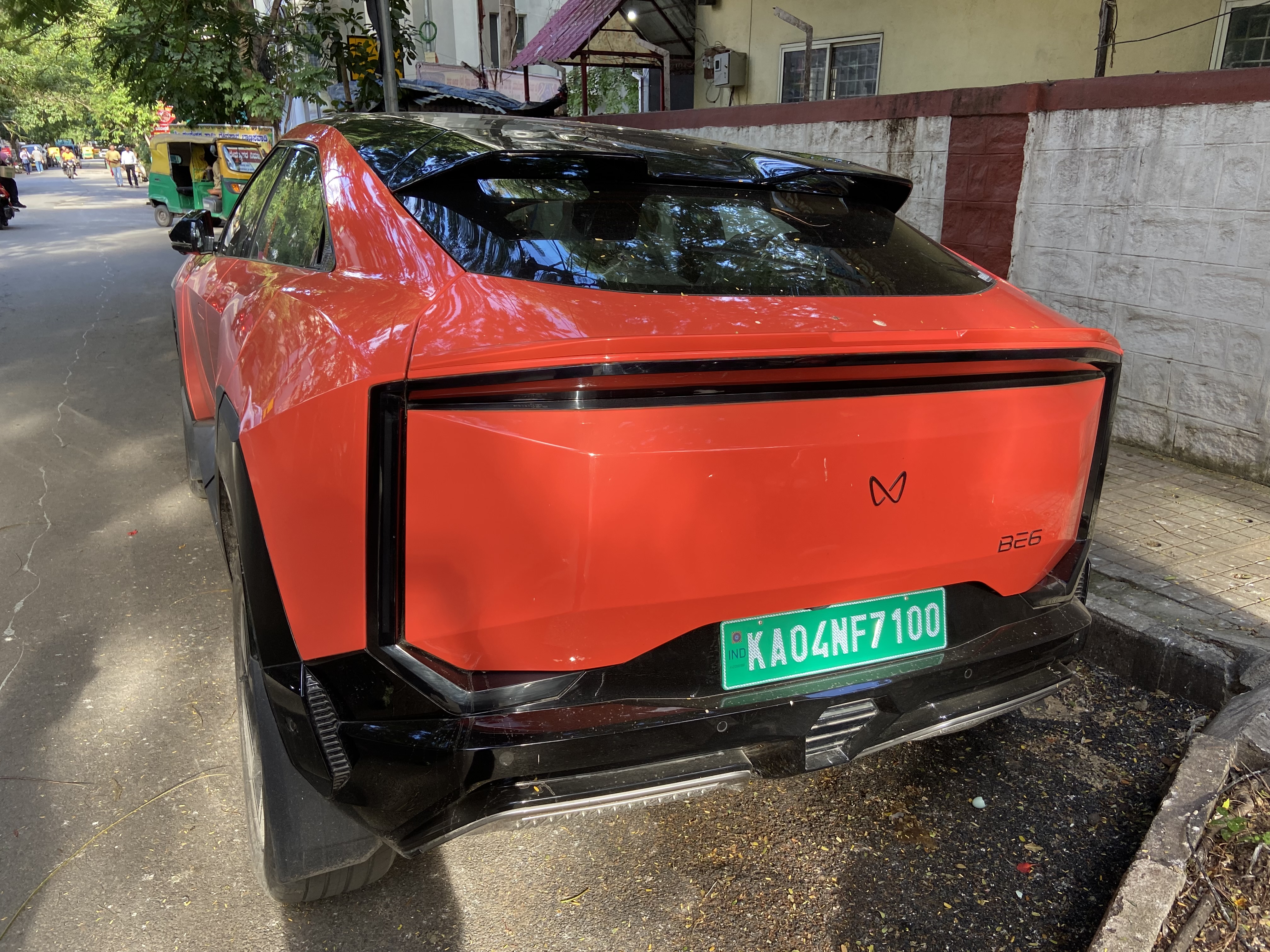
The Mahindra BE 6 is one of those rare Indian cars that feels as though the design team won several arguments. It is dramatic, quick and technologically ambitious. It does not apologise for being electric or attempt to resemble a familiar petrol SUV with the grille erased. I like that confidence. I like less what happens when an interesting car enters the Indian variant machine and emerges with packs, sub-packs, option ladders and showroom explanations requiring graph paper.
Mahindra’s official electric-SUV site outlines the vehicle and its technology, while Autocar India’s BE 6 coverage provides specifications, variants and road-test context. My view after driving enough new cars to distrust launch choreography is simple: the BE 6’s fundamental appeal exists below the most expensive trim. Buyers should resist paying lakhs for decorative proof that they bought the top one.
The engineering is the real event
The dedicated electric platform matters more than the illuminated details. A born-electric architecture allows better packaging, a long wheelbase, a flat floor and chassis tuning that does not carry every compromise of a converted petrol car. Rear-wheel drive also changes the way the car puts down power and steers. These are attributes an owner can feel after the novelty of animated lighting fades.
The BE 6 is quick enough in any sensible version. Indian roads do not become wider because a brochure prints a faster acceleration time. Usable performance means predictable response in traffic, safe overtaking and stability at highway speed. Beyond that, additional power mostly increases the frequency with which passengers ask you to behave.
Ride quality, seat support and visibility are more consequential. The coupé-like roof and dramatic cockpit create style but also compromises. Rear passengers may find access or outward visibility less generous than in a conventional SUV. Thick pillars and unusual window lines require a careful test drive in real traffic. A ten-minute loop around a dealership cannot reveal whether your parents will enjoy climbing in.
Buy the battery decision, not the badge decision
For an EV, the meaningful upgrade is often battery capacity and charging capability. A larger usable pack can reduce journey planning, preserve buffer during hot weather and make highway travel less stressful. But it also costs more and adds weight. A city user with reliable home charging may never recover the premium in practical benefit.
Buyers should map a normal week and the longest regular trip. If daily driving is modest and charging happens overnight, the smaller battery may be entirely sufficient. If intercity use is frequent, the larger pack may deliver more value than every luxury feature combined. Range should be judged conservatively, with air-conditioning, passengers and highway speeds included.
Do not buy around a once-a-year fantasy expedition. Renting or choosing another vehicle for an exceptional journey can be cheaper than carrying expensive battery capacity every day. Conversely, do not minimise a genuine weekly highway need because the salesman promises an ideal figure. Ownership begins where certification cycles end.
Top trims are a tax on anxiety
Manufacturers understand that buyers fear missing out. Features are bundled so that one desirable item drags several frivolous ones behind it. You may want a complete safety package or ventilated seats and discover that they live beside larger wheels, ambient-light theatrics and powered functions that add complexity without improving the drive.
Larger wheels are a classic trap. They look better in photographs and usually worsen ride comfort, tyre cost and pothole anxiety. On an EV, they can also affect efficiency. I would choose the smallest wheel compatible with the braking package and spend the savings on good insurance, a home charger and future tyres.
Powered door handles, elaborate screens and motorised conveniences are impressive in a showroom because they perform on command. After years of dust, heat and monsoon water, simplicity becomes luxury. Every actuator is a future diagnostic conversation. I am not predicting failure; I am saying buyers should assign a maintenance value to complexity instead of treating features as free gifts.
Software must outlive the launch
The BE 6’s digital cockpit is central to its identity. That makes software support as important as mechanical reliability. Owners need stable phone pairing, accurate range prediction, responsive cameras, dependable navigation and updates that fix problems without creating new ones. A beautiful interface that freezes at a toll plaza is merely expensive décor.
Mahindra must communicate update policies, change logs and support channels clearly. Dealers are accustomed to mechanical complaints; software faults require different diagnosis. “It will be fixed in the next update” cannot become the electric equivalent of “they all make that noise.” Owners deserve timelines and escalation.
Connected features also raise subscription questions. Buyers should know which services remain free, what data the car transmits and what happens when connectivity expires. A vehicle should retain essential functions without a server’s permission. The ownership life of a car is far longer than that of many apps.
Service capacity is part of the car
Mahindra’s greatest test is not producing an exciting first drive. It is supporting thousands of sophisticated EVs beyond metropolitan launch centres. Technicians need high-voltage training, diagnostic equipment and parts. Accident repairs require battery assessment and body expertise. Insurance estimates must not turn minor damage into months off the road.
Prospective buyers should visit the service facility, not just the showroom. Ask where battery repairs are handled, how long common body parts take, whether a replacement vehicle is available and how roadside assistance manages a depleted pack. The quality of those answers tells you more than a product specialist’s tablet presentation.
Reliability data will emerge only with time. Early adopters should expect occasional software or fit-and-finish issues in a new architecture. That does not make the car bad; it means the price should reflect the customer’s participation in the learning curve. Manufacturers often ask early buyers for patience while charging them full confidence.
The sensible configuration
I would prioritise six airbags, electronic stability control, a complete driver-assistance suite if well calibrated, the battery appropriate to real use, comfortable tyres and a properly installed home charger. I would pay for ventilated seats in hot cities and a good surround-view camera if visibility demands it. I would not pay heavily for cosmetic packages, giant wheels or extra screens whose main purpose is to impress passengers for one week.
Driver-assistance features require a real test. Indian lane markings, motorcycles and erratic merging can expose poor calibration. A system that warns constantly will be disabled, making its specification meaningless. Safety technology must reduce workload without creating alarm fatigue.
Families should conduct a full test with every regular occupant. Load luggage. Install the child seat. Enter a tight basement ramp. Check the charging-port position against the planned parking spot. Cars are purchased in showrooms but judged in inconvenient spaces.
A genuinely good car does not need maximalism
The BE 6 represents something important: an Indian manufacturer treating an EV as a desirable product rather than a compliance appliance. Its styling will divide opinion, which is healthier than universal indifference. Its performance and platform show serious engineering intent. I want it to succeed because competition improves every electric car sold here.
That support does not require worshipping the highest trim. The automobile industry has trained buyers to equate “fully loaded” with wise, even when half the load is unused. Value is not the number of icons illuminated at delivery. It is how much useful car remains after depreciation, tyre changes, software updates and five summers.
Choose the BE 6 if its seating, visibility, charging and service fit your life. Choose the battery with arithmetic. Choose the trim that contains essential safety and comfort. Then stop. The car’s best qualities—the platform, stance, performance and distinct personality—do not become more authentic because an expensive variant projects another logo onto the ground.
Mahindra has built something bold enough to deserve a rational purchase. That may sound contradictory, but it is the highest compliment I can offer. The BE 6 does not need showroom excess to feel special. Buyers should have the confidence to leave some boxes unticked.