The Mahindra Thar has always sold two vehicles at once. One is a genuinely capable off-roader with proper hardware and a shape that can make a petrol pump feel like an expedition base. The other is a fantasy purchased for office commutes, restaurant valets and the annual possibility of driving over damp grass. The five-door Thar Roxx does not end this contradiction. It industrialises it.
I mean that as praise with conditions. Adding rear doors, space, equipment and road manners turns the Thar idea into something a family can actually use. It also raises prices and encourages buyers to climb a trim ladder loaded with features they may never need. The sensible Roxx is not the loudest one in the showroom. It is a carefully specified SUV bought by someone honest about where it will travel.
If you need the third row, effortless city parking or sedan-like ride, look elsewhere. If you like the character and can accept the compromises, the Roxx is much easier to justify than the three-door Thar. What I cannot justify is spending luxury-car money to create an Instagram prop and then complaining about fuel bills.
Usability is the breakthrough
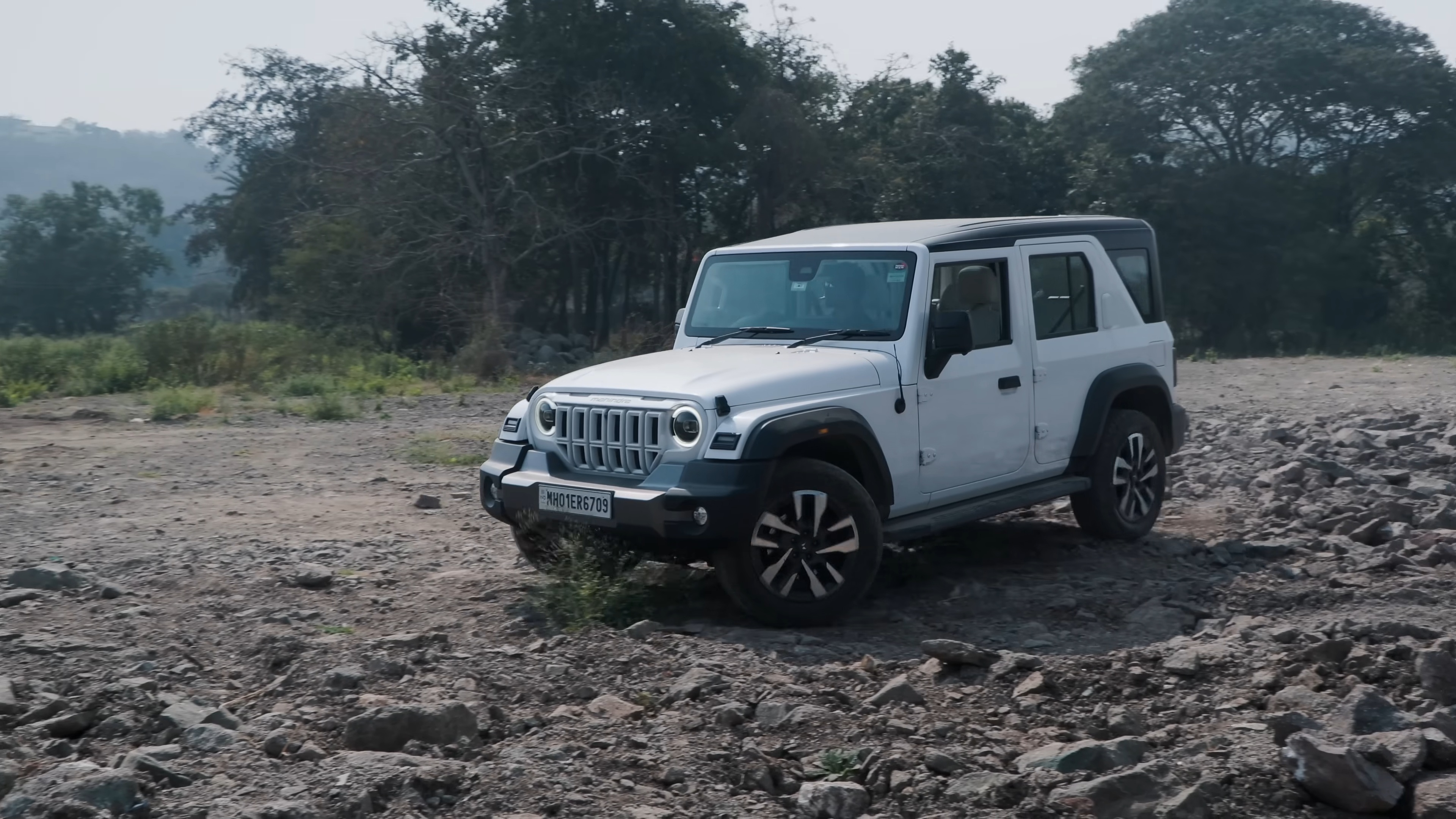
Mahindra’s official Thar Roxx page lays out the engine, drivetrain, equipment and variant range. The important specification is not a screen size. It is the longer, five-door body. Rear passengers no longer perform a small mountaineering exercise through the front door, and luggage capacity becomes compatible with a family trip.
That change sounds obvious, but it alters ownership. The three-door Thar is charming until elderly parents, child seats or airport bags enter the plan. Many buyers accepted inconvenience because the vehicle made them feel something. The Roxx retains enough upright, square-jawed presence while removing the daily punishment. Mahindra has understood that aspiration becomes a much larger market when the family approves.
Road behaviour also matters more than brochure heroics. Body-on-frame SUVs carry weight, height and suspension compromises. The Roxx is not a monocoque crossover, and buyers should test it over broken city roads, fast curves and tight parking spaces rather than circle a smooth dealership block. Steering effort, visibility and ride comfort will affect every day; axle articulation may affect none.
I like that real off-road capability remains available. Low-range four-wheel drive and appropriate electronic aids are not stickers. But only buyers who genuinely travel off tarmac should pay for and carry that hardware. Rear-wheel-drive variants preserve much of the style and everyday ability while reducing price and mechanical complexity. Choosing them is not cowardice. It is accurate accounting.
The variant chart is where discipline goes to die
Mahindra knows how to build a feature staircase. Large screens, premium audio, panoramic roof, powered seats, driver-assistance systems and cosmetic upgrades pull buyers upward one step at a time. By the top, the emotional decision has acquired a startling invoice.
My rule is to buy the powertrain and safety equipment you need before the cabin toys you desire. Six airbags, electronic stability control, a good reversing camera, usable headlights and tyres suited to your driving matter. A panoramic roof in Indian heat is less persuasive, especially in a tall vehicle likely to collect dust. Powered adjustment is pleasant; it does not improve the seat’s underlying shape.
ADAS deserves nuance. On well-marked highways, adaptive cruise and lane support can reduce fatigue. In chaotic traffic, calibration determines whether the system assists or nags. Test it. Do not pay merely because an acronym makes the brochure look imported. And never mistake assistance for permission to look at your phone.
Independent road tests from publications such as Autocar India’s Thar Roxx review are valuable because they expose the vehicle to conditions a showroom cannot. I would read several, then drive the exact engine, gearbox and wheel size I intended to buy. Top trims often ride on larger wheels that look better in photographs and behave worse over potholes while making replacement tyres dearer.
The diesel automatic will appeal to high-mileage users and delivers easy torque, but modern diesel ownership should be chosen with usage patterns and local regulations in mind. Repeated short urban trips can be unfriendly to emissions systems. A petrol automatic may suit lower annual running despite thirst. There is no universal “best engine”; there is only the engine compatible with your driving.
The accessory trap
Thar ownership attracts modification before delivery. Giant wheels, auxiliary lights, metal bumpers, roof carriers and alarming horns appear in catalogues and markets. Most reduce the vehicle. Oversized tyres hurt ride, braking, steering, efficiency and gearing. Heavy accessories add mass. Unapproved lighting blinds others. Structural modifications can create warranty and insurance complications.
If you off-road, buy recovery points, rated equipment, appropriate tyres and training before decorative armour. Know the difference between a tow ball and a recovery point. Travel with another capable vehicle in difficult terrain. A four-wheel-drive system does not repeal physics, and social-media videos rarely include the expensive extraction after the heroic splash.
For ordinary owners, spend on a quality dashcam, practical mats, tyre inflator and perhaps side steps if passengers need them. Keep the factory geometry. The vehicle already looks like a Thar; it does not require a hardware shop attached to prove the point.
Insurance must disclose modifications. Tyres should meet manufacturer load and speed requirements. Accessories must not block airbags or sensors. This sounds joyless until a claim is denied or an electrical splice causes trouble. Reliability is often less about what the factory built than what the owner added on Saturday.
Living with the image
The Thar’s image has occasionally been damaged by the behaviour of a minority who confuse road presence with road ownership. I dislike moralising about a machine, but buyers should know what the badge communicates. Driving courteously is the easiest modification available. Do not tailgate hatchbacks, use auxiliary lamps in traffic or park on pavements because the vehicle can climb them.
There is also a resale assumption that any Thar will hold value brilliantly. Demand helps, but colour, powertrain, condition, accident history and tasteless modifications matter. A clean, near-standard vehicle with service records will be easier to sell than a personalised monster whose next owner must undo your imagination.
Service experience varies by dealer, so speak to local owners rather than extrapolating from the brand’s national reputation. Ask about appointment times, parts and diagnosis. Mahindra’s newer products contain extensive electronics; a rugged silhouette does not mean village-blacksmith simplicity. Extended warranty can be sensible if priced fairly and if you intend long ownership.
The strongest counterargument to the Roxx is the monocoque SUV. For similar money, rivals may offer a smoother ride, easier handling, better efficiency and more polished urban experience. They are correct choices for most families. The Roxx wins only if its character, visibility and genuine rough-road ability matter enough to compensate. Buying it because ordinary SUVs feel ordinary is legitimate, but call the premium what it is: an emotional purchase.
I would choose a mid-level variant with essential safety kit, sensible wheels and the powertrain matched to mileage. I would skip four-wheel drive unless my travel history—not my travel plans—proved the need. That configuration captures the Roxx’s achievement: it turns an enthusiast shape into a usable family vehicle without completely sanding away its personality.
The Thar Roxx is not a rational appliance, and pretending otherwise makes reviews dishonest. It is theatre with engineering underneath. The good news is that the engineering now supports daily life far better. Buy the theatre if you enjoy it. Just do not purchase every costume in the wardrobe.