
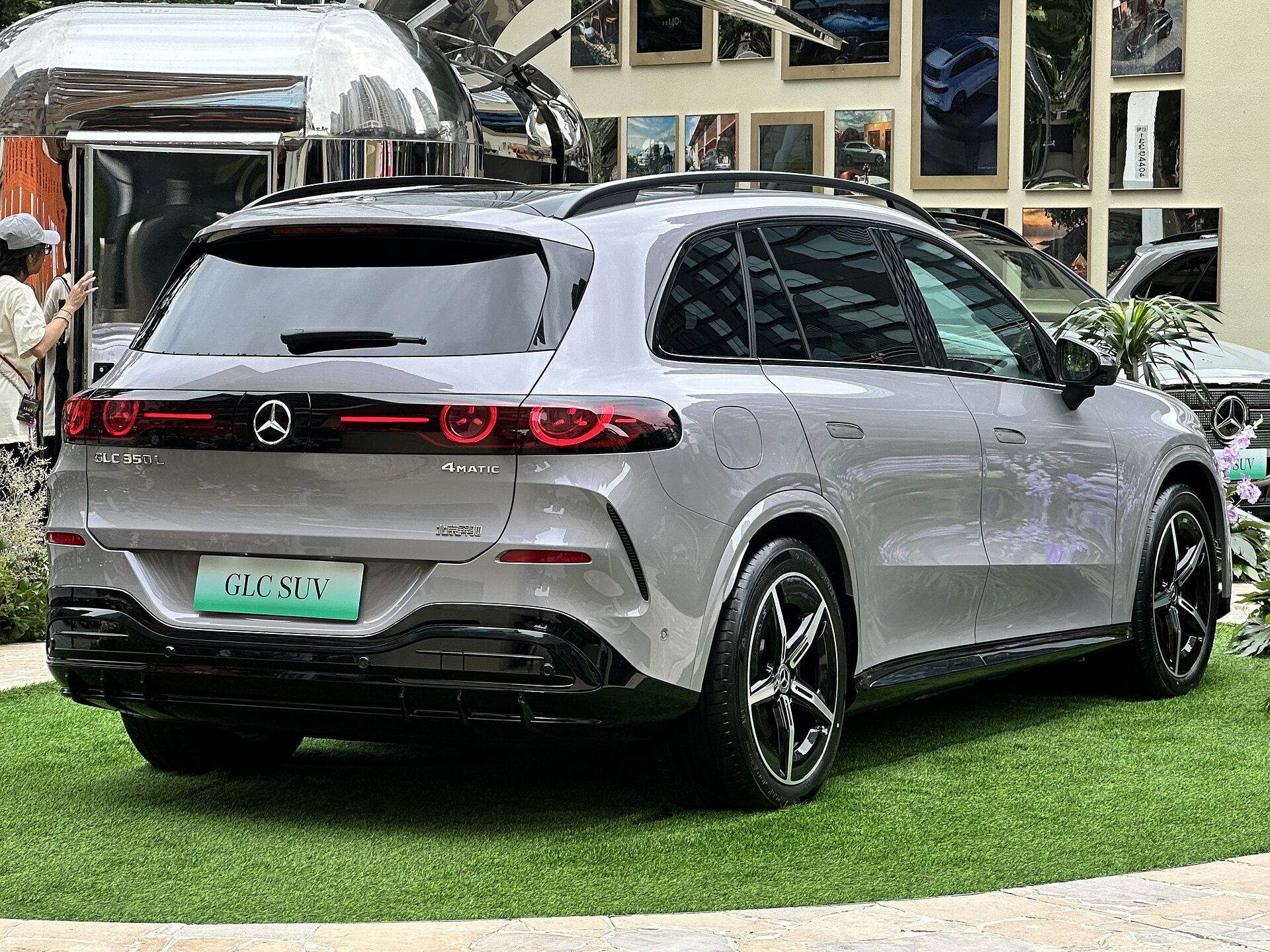
The Mercedes-Benz GLC Electric arrives in India with 490hp, 800Nm, all-wheel drive, a 94kWh battery and a claimed WLTP range of 715km. It can reach 100kph in a claimed 4.3 seconds, which is useful if your daily commute includes escaping a minor geological event. More important, it is locally assembled at Mercedes’ Chakan facility, an industrial decision that deserves more attention than the giant screen across the dashboard. Autocar India’s launch preview details the drivetrain, battery and assembly plan. I do not doubt the engineering. I question the priorities luxury EVs continue to advertise in India. Buyers need reliable range estimates, durable tyres, competent repairs and charging that works when the app says it works. Horsepower is the easiest problem in an electric car.
Performance is now cheap; integration is expensive
Electric motors make large torque figures comparatively easy. Add a motor to each axle, a battery capable of supplying current and software willing to permit it, and a heavy SUV can accelerate like yesterday’s supercar. This remains entertaining—I am not immune to physics—but it is no longer persuasive evidence of a great road car. The harder achievement is integrating weight, ride, steering, braking and thermal management so that the vehicle feels natural at 40kph on a broken urban road.
The GLC Electric’s approximately two-and-a-half-tonne mass is the number I would remember before 4.3 seconds. Weight affects tyre wear, braking, suspension loads and the way a car changes direction. Air suspension and clever control systems can disguise mass, but they cannot repeal it. Indian luxury buyers often use SUVs in cities, with a driver, over speed breakers and through construction zones. I want to know whether the ride stays composed on the standard wheel option, not whether the largest wheel photographs better outside a hotel.
The base configuration is probably the smart one
Mercedes, like every luxury manufacturer, understands that buyers can be persuaded into optional equipment through fear of appearing incomplete. Larger wheels, cosmetic packs, elaborate displays and special upholstery turn a rationally expensive vehicle into an irrationally expensive one. My advice is dull: choose the smallest available wheel, useful driver assistance, a practical interior color and little else. Tyres will cost less, ride will improve and range may benefit. Nobody has ever arrived at dinner and been rejected because the ambient-lighting package lacked sufficient zones.
The 39.1-inch Hyperscreen will dominate showroom demonstrations. It is visually spectacular and may be smoothly integrated. I still prefer physical certainty for functions used while moving. A car interface should minimize the time eyes leave the road. Size does not guarantee clarity, and voice assistants become less intelligent the moment three passengers speak or a mobile signal weakens. The best technology disappears into the task. A dashboard that continuously asks to be admired is interior architecture with self-esteem issues.
Local assembly is the meaningful headline
Mercedes says the electric GLC is being assembled at Chakan only months after its European introduction. That short localization gap is significant. Indian luxury buyers have often received global products late or as costly imports. Local assembly can improve pricing, parts logistics, technician familiarity and the manufacturer’s commitment to the market. It does not mean every component is Indian, and nobody should pretend otherwise, but it embeds more capability than importing a finished vehicle.
The broader November launch list from Autocar India shows how rapidly premium electric offerings are multiplying. Novelty is ending. That means manufacturers can no longer rely on “it is electric” as the full sales pitch. They must compete on efficiency, charging curve, service and residual value. Local assembly should help Mercedes answer those questions, but only ownership evidence will confirm it.
Range claims need an Indian translation
WLTP range is useful for comparison, not prophecy. Indian conditions can help or hurt depending on speed, temperature, traffic, elevation, air-conditioning use, load and driving style. Urban crawling with regenerative braking may be efficient; sustained highway speed, heat and a fully loaded cabin can change the picture. Dealers should provide realistic range bands for city, mixed and highway use rather than repeat 715km as though it were engraved into the battery.
A large battery reduces anxiety but increases charging time if the available charger is slow. The GLC supports very high DC rates under ideal infrastructure, yet owners will often encounter far less powerful units. The vehicle’s charging curve—the rate it sustains across the battery’s state of charge—matters more than its brief peak. I want Indian tests from low charge to 80 percent on chargers buyers can actually find, including the failures, app problems and power derating. A ten-minute laboratory claim is not a road-trip plan.
Tyres and repairs can ruin the premium experience
High-output, heavy EVs consume tyres, particularly when owners enjoy instant torque. Large, low-profile imported rubber can be expensive and occasionally difficult to source. A puncture on an Indian highway is not improved by a prestigious badge. Buyers should ask whether the specified tyre size is stocked across the network, whether a practical alternative is homologated and whether the car includes a usable spare or merely optimism in aerosol form.
Accident repair is another neglected cost. Battery protection, sensors, cameras and intricate lighting make even modest damage expensive. Insurers are still learning EV risk. Mercedes needs technicians able to diagnose modules instead of replacing assemblies until the warning light disappears. Local assembly should improve part supply, but the owner cares about days off the road, not the factory’s press release. Premium service means predictability.
The counterargument: luxury is allowed excess
Of course buyers spending this amount are not optimizing purely for rupees per kilometer. Luxury cars exist partly to offer excess: acceleration, quietness, materials and technology beyond necessity. The GLC Electric’s power may be precisely what distinguishes it from a sensible mass-market EV. I accept that. My complaint is not that the car is fast. It is that manufacturers use speed to distract from unresolved ownership questions.
A genuinely luxurious EV should make charging boring. Its navigation should know whether a charger is functioning, reserve it where possible and condition the battery automatically. The service center should provide a competent replacement vehicle. Software should update without deleting preferences. Range estimates should become more accurate as the car learns. Excess power is fun; excess confidence is luxury.
Wait for the Indian road test
I would not order the GLC Electric solely from the specification sheet. I would drive it over the worst road used regularly, sit in the rear if a chauffeur will be involved, test visibility, examine boot space around charging cables and ask for written warranty terms on the battery and high-voltage components. I would price tyres and insurance before choosing wheels. Then I would compare the car with rivals on actual charging time and highway range, not the showroom’s curated route.
There is much to like. The claimed range is substantial, local assembly is encouraging, the drivetrain is technically advanced and Mercedes understands cabin refinement. If the suspension handles the weight and the charging software works across Indian networks, the GLC Electric could be an excellent luxury SUV. But buyers should not confuse specification abundance with ownership value.
The car industry spent decades selling horsepower as character. Electrification has made horsepower abundant and character harder to find. The GLC Electric must prove itself in the unglamorous details: how it rides, charges, ages and gets repaired. Four hundred and ninety horsepower will make the test drive memorable. The next four years will decide whether the car is good.