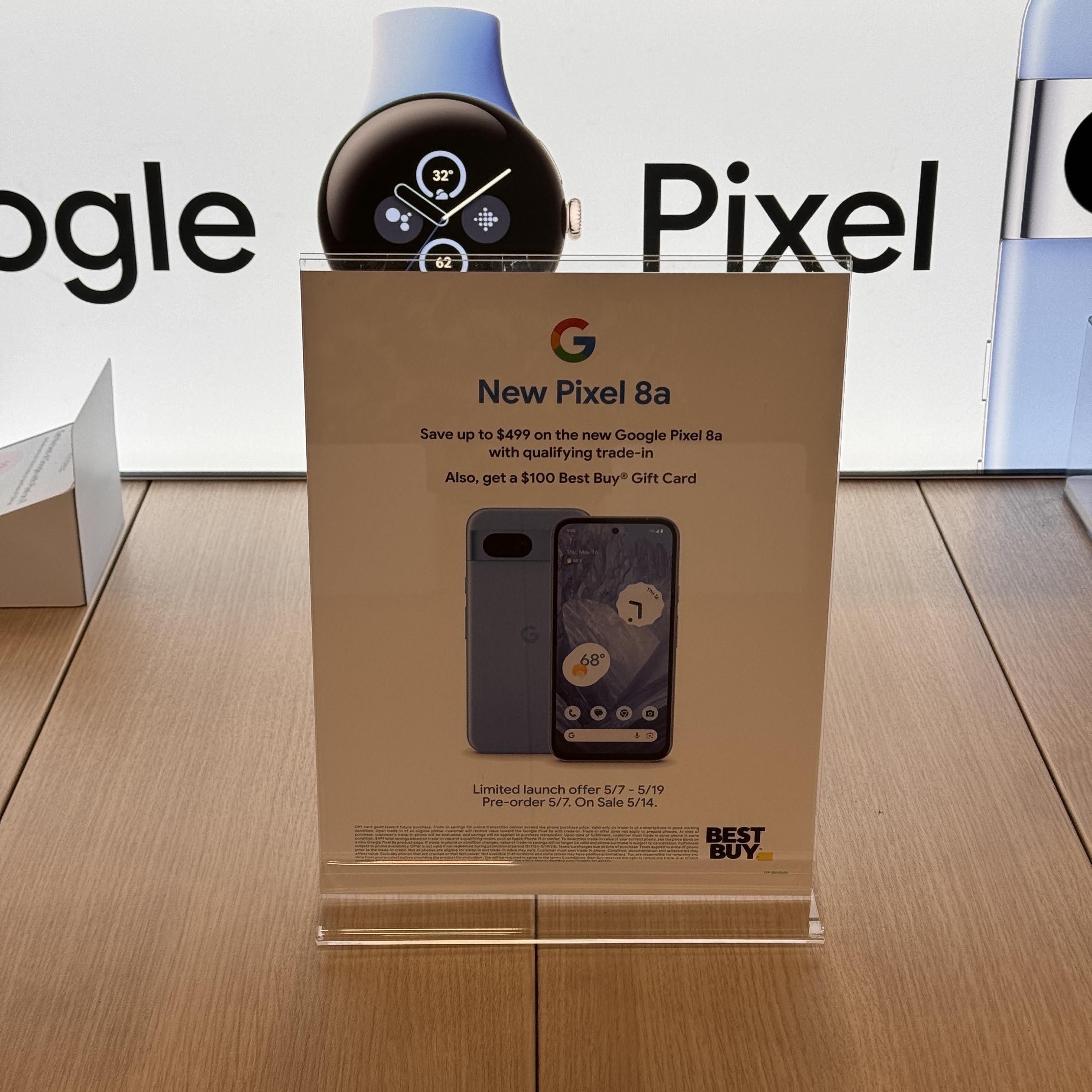
The Google Pixel 8a is the kind of phone reviewers enjoy and owners occasionally have to explain. Its camera produces photographs that make more expensive devices look foolish. Its software is clean, updates arrive promptly and the compact body feels like a protest against phones becoming ceramic serving trays. Then the battery runs low at an inconvenient hour, charging takes its time and the phone grows warm because you used the camera it was purchased for.
I do not dislike the Pixel 8a. I distrust launch-day arithmetic that adds camera quality, update years and artificial-intelligence features while treating service access, heat and charging as footnotes. In India, a phone priced as a premium purchase must survive dust, unreliable signal, hot commutes, payment apps, work calls and the second-year battery decline.
The detailed Gadgets 360 review identifies the same tension: impressive still photography and timely updates alongside heat and slow charging. Google’s own Pixel comparison continues to present the 8a as a value option and promises lengthy software support. The question is whether the hardware experience will remain pleasant long enough to enjoy those updates.
Seven years is not one kind of promise
Software support matters. I have criticised Android brands that abandon perfectly usable hardware after a few years, forcing security-conscious buyers towards unnecessary upgrades. Google’s long update commitment sets the correct direction and pressures competitors.
Yet seven years of software is not seven years of ownership support. Batteries wear. Screens break. Charging ports collect debris and cameras can fail after an unlucky fall. A long-lived phone requires available parts, transparent repair prices and competent service outside a few metropolitan centres.
Google has improved its Indian retail and service presence, but it still lacks the comforting ubiquity of Samsung or the large Chinese brands. The practical question is not whether a service partner exists on a webpage. It is whether an owner in Indore, Kochi or Guwahati can obtain an original battery at a sensible price without surrendering the phone for an uncertain period.
I want manufacturers making long update promises to publish matching parts-availability commitments. If a device receives security patches in year six but a battery cannot be purchased officially, the promise is technically true and practically theatrical.
The camera is excellent because the compromises are deliberate
Pixel photography works because Google has spent years refining computational choices. Skin tones are usually convincing, dynamic range is sensible and moving subjects fare better than on many rivals. The phone often captures the photograph I intended without making me select a special mode.
That consistency is more valuable than a 200-megapixel number printed across a launch slide. Indian family photography involves people who do not remain still, mixed lighting at functions and harsh afternoon sun. The Pixel understands these conditions better than many specification champions.
But sustained camera use can produce heat, and heat affects both comfort and battery longevity. Video recording is where the ownership compromise becomes harder to ignore. A device sold on its imaging credentials should not make the user monitor temperature like a railway engineer.
There is also no telephoto camera. Cropping and software enhancement can do impressive work, but optics remain optics. Buyers should decide whether excellent main-camera reliability matters more than flexibility. For me it usually does, though travellers and parents photographing school stages may disagree.
Slow charging becomes slower in real life
Charging speed sounds like a reviewer obsession until one lives in a city where a normal day can unexpectedly acquire two extra hours. Fast charging changes behaviour. Ten or fifteen minutes while getting ready can provide enough margin to leave without anxiety. The Pixel 8a asks for more planning.
Google’s conservative charging may support battery health, and extreme charging claims from rivals can involve their own trade-offs. I do not need a phone to fill before I finish tea. I do need a premium device to recover meaningfully during a short stop.
Battery life is adequate rather than generous. Mobile networks punish efficiency, particularly where 5G coverage shifts and the modem searches. Reviews conducted largely on stable Wi-Fi cannot reproduce an Indian commute through inconsistent signal zones.
After eighteen months, the difference between adequate and excellent battery life widens. Capacity declines, apps grow heavier and updates introduce new background behaviour. A phone beginning with little reserve can become irritating before its support window reaches the halfway mark.
Clean Android is valuable, but it is no longer alone
The Pixel’s interface remains one of its strongest qualities. There is little duplicate software, notifications are manageable and Google’s useful features feel integrated rather than piled into a carnival booth. Call screening and transcription features can be genuinely helpful, although availability and language support vary.
Competitors, however, have improved. Samsung offers long support on more devices, while Nothing and Motorola appeal to buyers tired of clutter. Chinese brands still include promotional applications and aggressive battery management, but some now allow much of the irritation to be removed.
Buyers should not overpay simply to escape bloatware. A clean interface has value, but the premium must be compared with the cost of slower charging, weaker service coverage or less capable hardware. Software taste is part of ownership, not an exemption from arithmetic.
Artificial-intelligence features are the least persuasive reason to buy. Some are useful, many are demonstrations in search of habits, and cloud-dependent features may change over time. Purchase the phone for what it reliably does now. Treat every futuristic promise as a possible bonus.
Price determines whether the compromise is charming
At full launch price, the Pixel 8a faced devices with faster chips, faster charging, brighter displays and more versatile cameras. During discounts, the equation improves dramatically. Google’s A-series phones often become sensible only after the market corrects the ambition of the sticker price.
I would buy it for a user who prioritises still photography, clean software and a smaller body; does not play demanding games; charges overnight; and lives near reliable service. I would avoid it for a heavy traveller, mobile gamer, frequent video shooter or someone who expects five years of ownership without planning for a battery replacement.
The phone’s IP rating and sturdy construction help, but a case is still prudent. Repair economics can turn one cracked display into an upgrade decision, which defeats the environmental value of long software support.
Google is close to making the ideal Indian long-term phone. It needs better thermal efficiency, faster practical charging, broader repair confidence and launch pricing that acknowledges the competition. Camera intelligence and software polish already provide the soul.
The Pixel 8a reminds me why two-year reviews matter. Launch coverage asks whether a phone is exciting. Ownership asks whether it is dependable when old, warm, nearly empty and no longer the manufacturer’s favourite child. In that examination, the Pixel is likeable and sometimes brilliant—but it still expects its Indian owner to accommodate it more than a premium appliance should.