
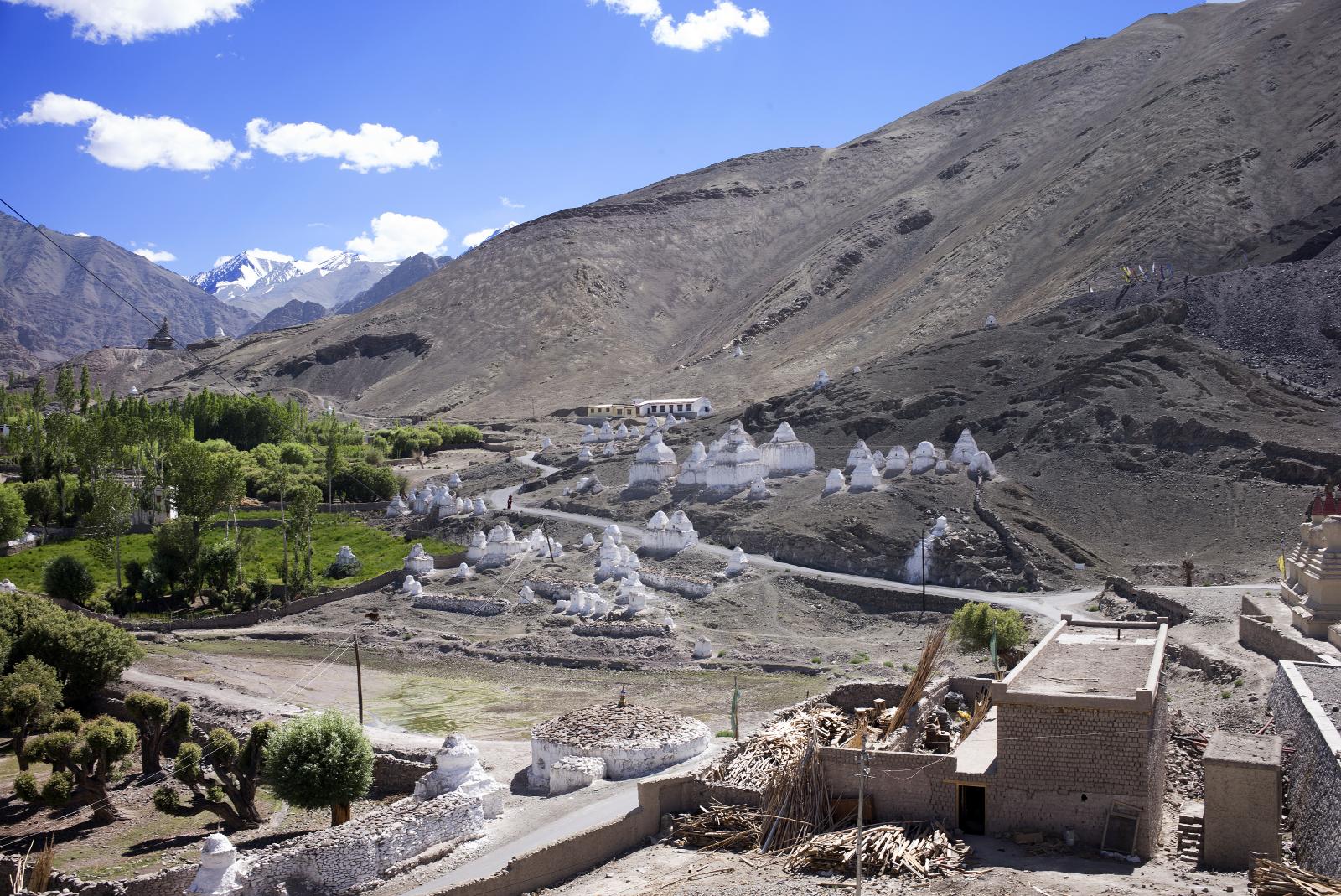
Prerna Dalal went to Ladakh, stayed in Stok village, and decided that the life she had left in the city no longer held the same claim on her. At thirty-five, she had already left a corporate job and begun creating digital content; her short video about spending weeks in the village spread widely. NDTV’s report describes her attachment to Stok, roughly fifteen kilometres from Leh, and her desire not to return to the old routine. Predictably, the internet converted the story into a referendum on quitting jobs. Some viewers saw courage, others privilege, and many saw a scenic answer to an email inbox. I think the most important part begins after the fantasy of escape: staying somewhere means becoming accountable to it.
We romanticize departure because arrival is harder
The “I left corporate life” story is now a digital genre. It has an establishing shot of traffic, a transition to mountains, a kettle, a dog and a sentence about peace. The office becomes spiritually false; the village becomes authentic. Reality is less obliging. Cities contain exploitation and community. Villages contain beauty and difficult labor. A person may be genuinely transformed by moving without the destination becoming a moral superior to everyone who stayed behind.
Dalal’s choice deserves to be heard as her own rather than turned immediately into advice. She did not prove that every unhappy employee should resign. She showed that a life can be reconsidered after the standard milestones lose authority. That is a quieter and more useful idea. Many people cannot leave because they support families, need health care, repay loans or lack portable work. Their constraints do not indicate cowardice. Freedom becomes insulting when described without its material conditions.
Stok is not a backdrop
Stok is a living Ladakhi settlement, not an open set for personal reinvention. It has households, agricultural rhythms, religious life, water constraints, tourism pressures and opinions about outsiders. Anyone staying beyond a holiday enters those systems, whether or not a video acknowledges them. The village owes a visitor no healing. A newcomer owes the village curiosity, restraint and an effort to understand what tourism changes.
Ladakh’s official tourism information, available through the Union Territory administration’s tourism portal, presents a region whose attractions coexist with altitude, climatic fragility and strong cultural traditions. Visitors often consume the landscape as emptiness, which is a peculiar way to describe someone else’s home. Stok’s proximity to Leh makes it accessible, but accessibility can intensify pressure: waste, water demand, traffic, construction and seasonal price changes. Loving a place should include noticing the cost of being there.
A homestay is work, not permanent vacation
Homestay life photographs as tea near a window. Its actual components include cleaning, cooking, booking management, repairs, guest expectations, regulatory compliance and emotional labor. In a high-altitude region, supplies and weather add complexity. If Dalal participates in that work, her story becomes more interesting, not less romantic. Meaning often comes from accepting concrete responsibility rather than escaping responsibility altogether.
Tourists should also examine the word “homestay.” At its best, the model directs income to local households and creates encounters smaller than hotel tourism. At its worst, it becomes a label attached to commercial accommodation, property speculation and externally controlled booking platforms. A newcomer with digital reach can help a local enterprise find guests, but may also capture attention that residents cannot access. The ethical question is not whether outsiders should ever participate. It is how ownership, income and storytelling are shared.
Privilege is not a conversation-ending accusation
Online critics quickly identify privilege in stories of voluntary simplicity. They are often correct. Savings, education, health, family support and a monetizable audience make unconventional choices safer. We should name those advantages because otherwise structural security is repackaged as superior courage. Yet “privileged” should begin analysis, not terminate it. People with options can still make thoughtful or foolish choices. The useful question is what they do with the option.
If Dalal’s presence supports a locally owned homestay, respects land and water constraints, and produces honest accounts that benefit the community, privilege can be used responsibly. If the village becomes scenery for a personal brand selling escape to urban followers, criticism is warranted. We do not yet need to assign a final verdict. Human-interest reporting is allowed to remain curious. The internet’s demand that every person be either an inspiration or a fraud is a poor substitute for knowing them.
The city-versus-village binary serves platforms
Short videos reward contrast. Grey office, blue sky. Anxiety, peace. Artificiality, authenticity. The sharper the transformation, the easier the share. But many people in villages want education, specialized health care, stable connectivity and income opportunities associated with cities. Many urban residents build meaningful neighborhood lives and prefer density. The dream of leaving the city can coexist with the dream of reaching one.
When influencers portray mountain life as pure, they sometimes erase the labor that makes their stay comfortable: local women cooking, drivers navigating, workers maintaining roads, families managing scarce water and public employees keeping communications running. “Simple living” can involve a surprisingly elaborate support system. A more honest story shows the network instead of centering only the person who has opted out.
What staying could mean
Staying is different from extending a trip. It means experiencing winter, boredom, disagreement and the day when the landscape no longer produces awe on command. It means learning local etiquette, perhaps language, and the boundaries of participation. It means accepting that belonging cannot be self-declared merely because a place feels right. Communities grant forms of belonging over time.
I hope Dalal documents that stage: not just the view, but the negotiation. How does she earn? What has she misunderstood? What comforts does she miss? How do residents perceive newcomers? What happens when internet attention sends more visitors? A story of correction and reciprocity would be far more valuable than another montage declaring that the mountains taught her to breathe.
The counterargument: let an uplifting story remain uplifting
Some readers will say I am placing too much policy and ethics on one woman’s personal decision. Perhaps. There is genuine joy in seeing someone recognize that a socially approved life is not compulsory. Mid-career change can require courage, and public examples widen other people’s imagination. Not every hopeful story needs to arrive carrying a development report.
But the story became popular because it stands for more than one decision. It is being consumed as a model of freedom and a judgment on urban work. Once a personal narrative enters that market, context becomes a form of care. I do not want viewers to imitate a relocation they cannot afford or arrive in Stok expecting the village to perform serenity. Nor do I want skepticism to flatten Dalal’s evident happiness. Both sentiment and structure can be true.
Why her choice mattered
Dalal’s story mattered to me because it reveals how many adults are quietly renegotiating success. Salary, property and promotion remain powerful, but they are no longer the only credible measures. People want time, community, physical beauty and work that feels connected to daily life. That desire should not be mocked as a social-media phase. Employers and cities might learn from it: burnout is not solved by motivational email, and urban life becomes intolerable when housing, commuting and public space consume every gain.
Her story also matters because Stok can become visible as more than an image. If readers move past envy, they may ask how Ladakhi communities manage tourism, climate and changing aspirations. They may choose locally owned accommodation, carry back waste, conserve water and stay long enough to listen. A viral story can produce extraction or attention; the difference lies in what follows the click.
I wish Dalal well, but not the empty wellness usually attached to such stories. I wish her demanding neighbors, useful work, an honest winter and relationships that outlast the video cycle. I hope Stok gives her no simple lesson and receives something valuable in return. Leaving a city can be a dramatic act. Learning how to stay is the real one.