Public memorials generally suffer from an unfortunate belief that grief improves when rendered in polished stone. We install a plaque, construct a boundary, forbid casual behaviour and eventually stop noticing the whole arrangement. The dead acquire architecture; the living acquire another place where a guard may blow a whistle.
Mosenyii Yakhro, a nonagenarian in Kigwema, Nagaland, appears to have developed a more intelligent response. After his wife Vivolheri died, he tended a garden around her grave. An Associated Press photo essay describes the place, now called Mosen Viewpoint, and the visitors it attracts. Children come. Tourists come. Flowers grow with insufficient respect for neat human plans. Yakhro complains about overenthusiastic cosmos plants. This is exactly how a memorial should behave.
I hesitate to turn someone else’s bereavement into a lifestyle lesson. Human-interest writing often performs that indignity with cheerful efficiency. A person survives loss or deprivation and is immediately recruited to improve strangers. Yakhro does not owe us inspiration. Yet the garden matters because it offers a different public language for grief—one neither secret nor grandiose.
A monument you can enter casually
The garden’s emotional force comes from permeability. It overlooks harvested rice terraces, sits near village life and welcomes people who did not know Vivolheri. Her grave is not isolated from ordinary pleasure. It becomes the centre of a place where children can visit without being instructed to lower their voices into ceremonial whispers.
That arrangement may unsettle those who divide spaces strictly between mourning and recreation. I find the mixture honest. Anyone who has lost someone knows that memory does not remain inside designated hours. It appears during meals, jokes, errands and weather. Why should a physical memorial pretend otherwise?
Gardens also resist completion. Stone aims at permanence; a garden requires recurring care and accepts seasonal disappearance. Plants overgrow, fail, return and compete. The caretaker does not “finish” mourning. He waters, trims and adjusts. The metaphor is obvious, perhaps too obvious, but nature has never been embarrassed by a good metaphor.
The place has acquired a public name without losing its private origin. That balance is rare. Tourist sites often consume local stories, stripping away context until only a photogenic surface remains. Mosen Viewpoint risks that fate if visitors treat it merely as a background. But the reported presence of village children suggests another possibility: the memorial remains woven into community rather than exported from it.
The archive inside one life
Yakhro’s recollections extend beyond his marriage. The AP account records memories of Japanese soldiers arriving during the Second World War and his habit of learning from a library while working as an office assistant. A man tending a grave garden is also a historical archive, though institutions would probably classify him under “local colour” and move on.
Nagaland’s villages hold memories of war, state formation, insurgency, church life, agriculture and rapid social change. Oral histories disappear when elders die, often without entering official collections. The garden draws visitors to a person whose memory could illuminate far more than the picturesque site.
Universities and local cultural institutions should support community-controlled oral-history projects. The phrase “community-controlled” matters. Extractive research arrives, records testimony, publishes elsewhere and leaves residents with little access. Training young people to interview elders, digitise photographs and curate local archives would keep authority closer to the people whose lives form the material.
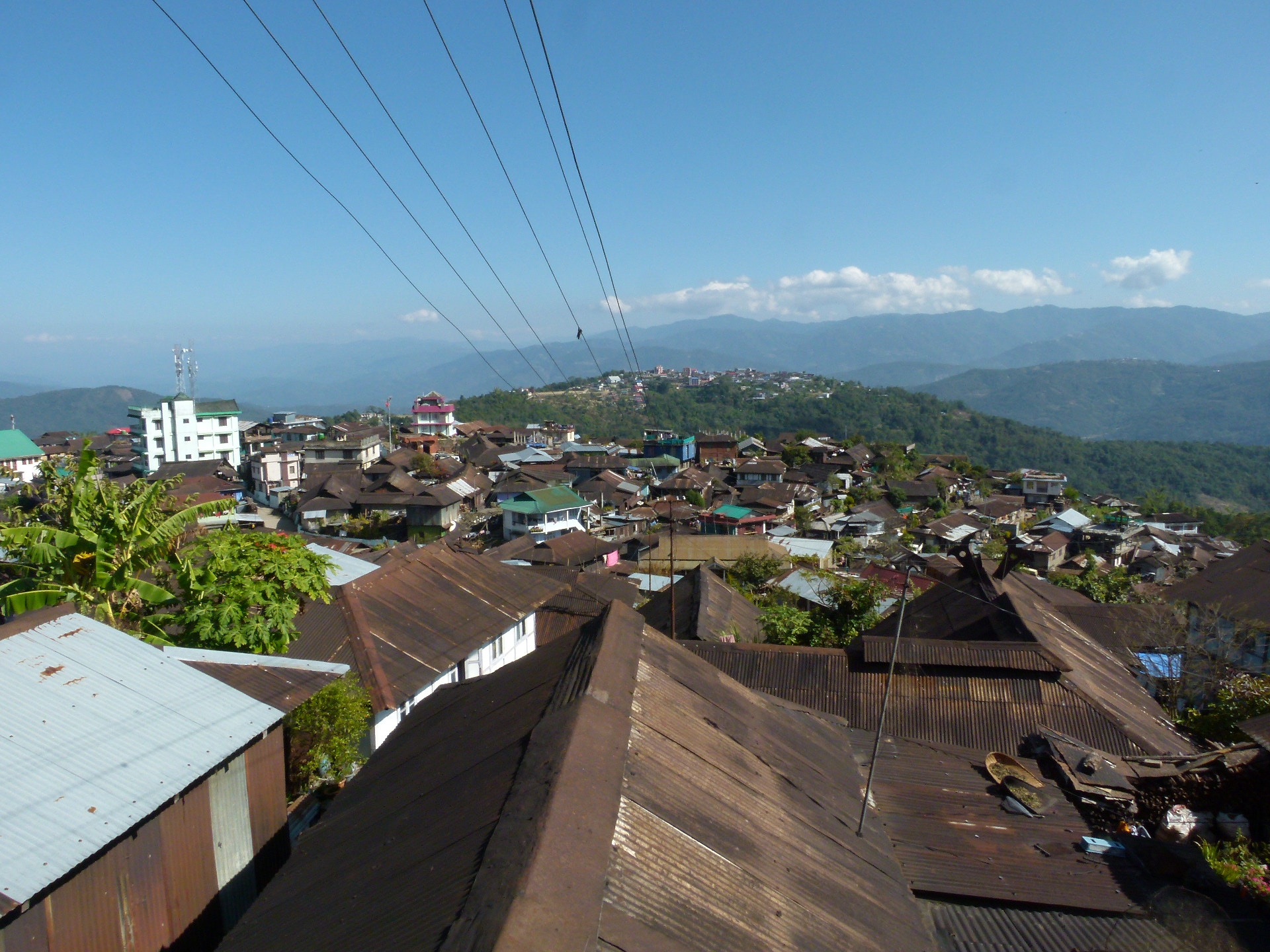
Kigwema itself is historically and culturally specific, not a generic mountain village. Nagaland Tourism’s description of Kigwema situates the village near Kohima and records its heritage. A responsible visitor should learn that context rather than treating the landscape as an anonymous scenic product.
Tourism can preserve or flatten
Offbeat travel coverage loves “hidden gems,” a phrase that usually means a place enjoyed by residents is about to receive litter and drone footage. Mosen Viewpoint’s growing popularity could support local livelihoods and draw attention to Kigwema. It could also transform a tender place into an attraction whose success is measured by footfall.
Small-scale management would help: locally agreed visiting norms, clear waste arrangements, voluntary contributions for maintenance and interpretation written with the family. The objective should not be to professionalise every corner. It should be to prevent attention from destroying the intimacy that attracted it.
Photography deserves special care. The grave is not a prop. Visitors should ask before photographing Yakhro or family members and should resist staging elaborate poses around a memorial. Tourism’s camera can turn hospitality into obligation; a person may feel required to perform his own story repeatedly for strangers.
I would prefer the place remain modest. No giant entry arch, illuminated sign or row of identical souvenir shops is needed. Indian local government has a gift for improving a site until its character becomes unrecognisable. A path, basic safety and respectful information are enough.
Love without a marketing department
The story moves readers because Yakhro’s labour is repetitive and uncommercial. He did not establish a foundation, launch an awareness campaign or commission a commemorative installation. He kept gardening. In an age that encourages every emotion to acquire a public-relations strategy, maintenance looks almost radical.
His planned burial beside his wife makes the garden a shared future as well as a memorial past. That detail could become sentimental in clumsy hands. What saves it is his matter-of-factness. He has already decided where he belongs. Meanwhile, there are plants to manage and a birthday gathering to anticipate.
I am struck by the annual family celebration in the garden. Birthdays and burial places are not opposites here. One honours a continuing life in the space shaped by another life’s absence. The family does not need a theory of grief to understand the arrangement.
Modern urban death is frequently outsourced. Hospitals, funeral providers and distant cemeteries handle the practical stages, while families struggle to find places for remembrance in rented flats and migrating lives. Yakhro’s garden cannot be copied universally, but it reminds us that memorial practice can remain active, social and handmade.
Why this small story deserves room
Newsrooms scroll past stories like this because they contain no conflict that can be updated every fifteen minutes. There is no scandal, celebrity or policy announcement. An old man tends flowers around his wife’s grave. The event lacks urgency and possesses significance.
Such stories expand our idea of public life. India is not only elections, markets, crimes and spectacles. It is also the quiet design of places where memory and community meet. Reporting them well requires restraint: enough detail to make a life visible, not so much interpretation that the subject disappears beneath the writer’s wisdom.
I will not claim Mosen Viewpoint proves that love conquers death. Death remains stubbornly unconquered. The garden does something more credible. It makes absence inhabitable. It allows memory to sit beside laughter, tourism, family gatherings and botanical irritation.
Most monuments tell visitors what to feel. This one grows, gets untidy and leaves them to decide. Vivolheri chose the place where she would be buried. Mosenyii Yakhro turned it into somewhere others could arrive. Between those two acts is a modest philosophy of remembrance—private enough to be true, open enough to remain alive.