
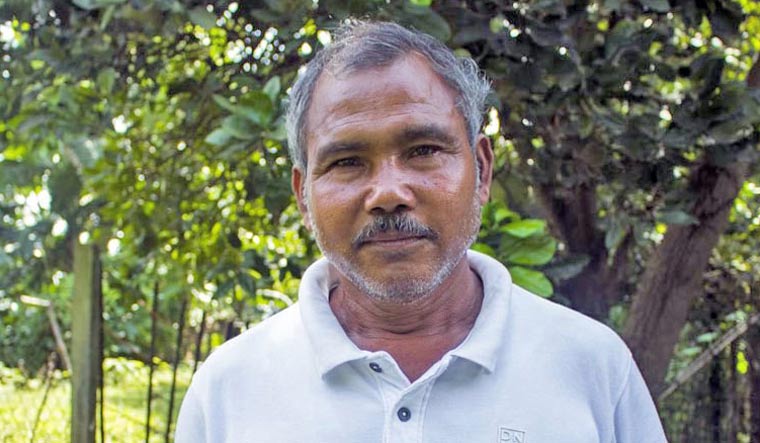
I understand why Jadav Payeng’s story travels so well. One person begins planting on a vulnerable Brahmaputra sandbar and continues until a forest exists where outsiders saw barrenness. It has the shape of a fable and the stubborn physical evidence of real life. Children can grasp it; exhausted adults can borrow hope from it.
Payeng tells the story in his recorded talk about planting a forest. An overview of his life and work recounts the transformation associated with Molai forest. Precise acreage varies across retellings, so I am less interested in turning the forest into a record statistic than in asking what we do with the story after admiration.
Hero stories simplify the ecology
Popular versions often imagine an empty wasteland, one man and a sequence of trees. A river island is not an empty canvas. It is a changing ecological and human landscape shaped by floods, sediment, grazing, wildlife and communities. Restoration is not simply adding the maximum number of trunks.
Payeng’s patient observation matters as much as physical planting. Species must survive local conditions, regeneration must continue and animals must move through the landscape. A plantation designed for a photograph can remain ecologically poor. A forest becomes complex through time.
This distinction matters as India embraces mass planting campaigns. Saplings are countable on the day of an event; survival is harder to celebrate three summers later. Every campaign should publish species selection, land tenure, survival audits and maintenance responsibility. Otherwise planting becomes ceremonial littering with biodegradable props.
Persistence is not a policy substitute
The most dangerous reading of Payeng’s life is that extraordinary individuals can repair what institutions neglect. They can begin, demonstrate and inspire. They cannot provide legal protection, landscape-scale planning or conflict compensation by themselves.
A forest attracting wildlife creates new obligations. Elephants do not recognise the sentimental boundary around a celebrated project. They move through farms and settlements, sometimes damaging crops and frightening families. Conservation that ignores local costs will eventually lose local consent.
Governments must map corridors, compensate losses promptly and involve communities in decisions. A forest cannot remain protected because one man is famous. It needs tenure clarity, monitoring and succession beyond a single lifetime.
The story belongs to place
National profiles frequently detach Payeng from Assam and present him as a universal motivational speaker with a spade. But his work emerged from the Brahmaputra’s instability and from local knowledge of plants, flood and soil. Place is not background; it is the method.
Climate adaptation policy should pay more attention to people who have observed a landscape for decades. Scientific expertise remains essential, but local knowledge can identify changes before a dataset becomes legible. The two should meet as partners rather than competitors.
Universities could establish long-term research around Molai forest: biodiversity, soil formation, carbon, flood effects and human-wildlife interaction. The goal should not be to reduce Payeng’s achievement to a paper. It should be to learn which elements can responsibly inform restoration elsewhere—and which cannot be copied outside their ecology.
Recognition changes a person’s work
Fame can protect a conservation effort by attracting attention. It can also turn a person into a permanently available symbol. Visitors, filmmakers, officials and school projects arrive carrying their own needs. The individual who spent years working without an audience is asked to perform the meaning of that work repeatedly.
We should be careful not to consume Payeng’s time in the name of celebrating how he used it. Support should include practical resources, institutional protection and respect for privacy. An award is meaningful; it is not a management plan.
Media retellings should also resist embellishment. The true achievement is remarkable enough. Inflated acreage, simplified timelines and miraculous language make the story easier to share but harder to trust. Human-interest writing owes its subjects factual discipline, not just affection.
What children should learn
I would absolutely teach this story in schools, but not as “one person can do anything.” That phrase flatters children and excuses adults. I would teach attention, repetition and stewardship. Payeng’s work accumulated because he returned, observed and continued without immediate applause.
Students could pair the story with local ecological work: monitoring a wetland, recording tree survival, mapping waste or learning the names of native species. Planting one ceremonial sapling and forgetting it reproduces the exact culture the story should challenge.
They should also learn collective action. One person may begin a project, but durable conservation requires neighbours, forest workers, scientists and public agencies. Heroism can open a door; cooperation keeps the landscape alive.
Hope must become administration
Environmental news often produces despair because damage occurs at industrial speed while repair feels painfully slow. Payeng’s forest offers a corrective. Slow work can accumulate into a living system. A person’s horizon can extend beyond an election, grant cycle or trending topic.
But hope becomes politically useful only when converted into institutions. Assam and the Union government should ensure clear protection, ecological monitoring and community participation around the forest. Restoration programmes elsewhere should fund maintenance for years, not planting for days. Compensation systems should treat affected residents as partners rather than obstacles.
There is a counterargument that adding administrative machinery can suffocate an organic achievement. I share some of that fear. Bureaucracies can appropriate, over-brand and standardise what they do not understand. The answer is not absence of government; it is limited, accountable support designed with local people and Payeng himself.
Why the story still matters
I return to it because the forest is evidence against impatience. Our culture rewards announcement and immediate scale. Payeng’s work insists that living systems keep another calendar. Trees need seasons; relationships need trust; damaged ground may require decades.
His achievement should enlarge our sense of individual possibility without shrinking our expectation of the state. We can admire one person’s fidelity and still demand competent forest departments, fair land policy and serious climate adaptation.
Molai forest matters not because it proves everyone should go out alone and plant thousands of trees. It matters because someone regarded damaged land as a relationship rather than a lost cause. The honourable response is not merely to tell his story again. It is to ensure that the forest, its wildlife and its neighbouring communities do not depend forever on one pair of hands.