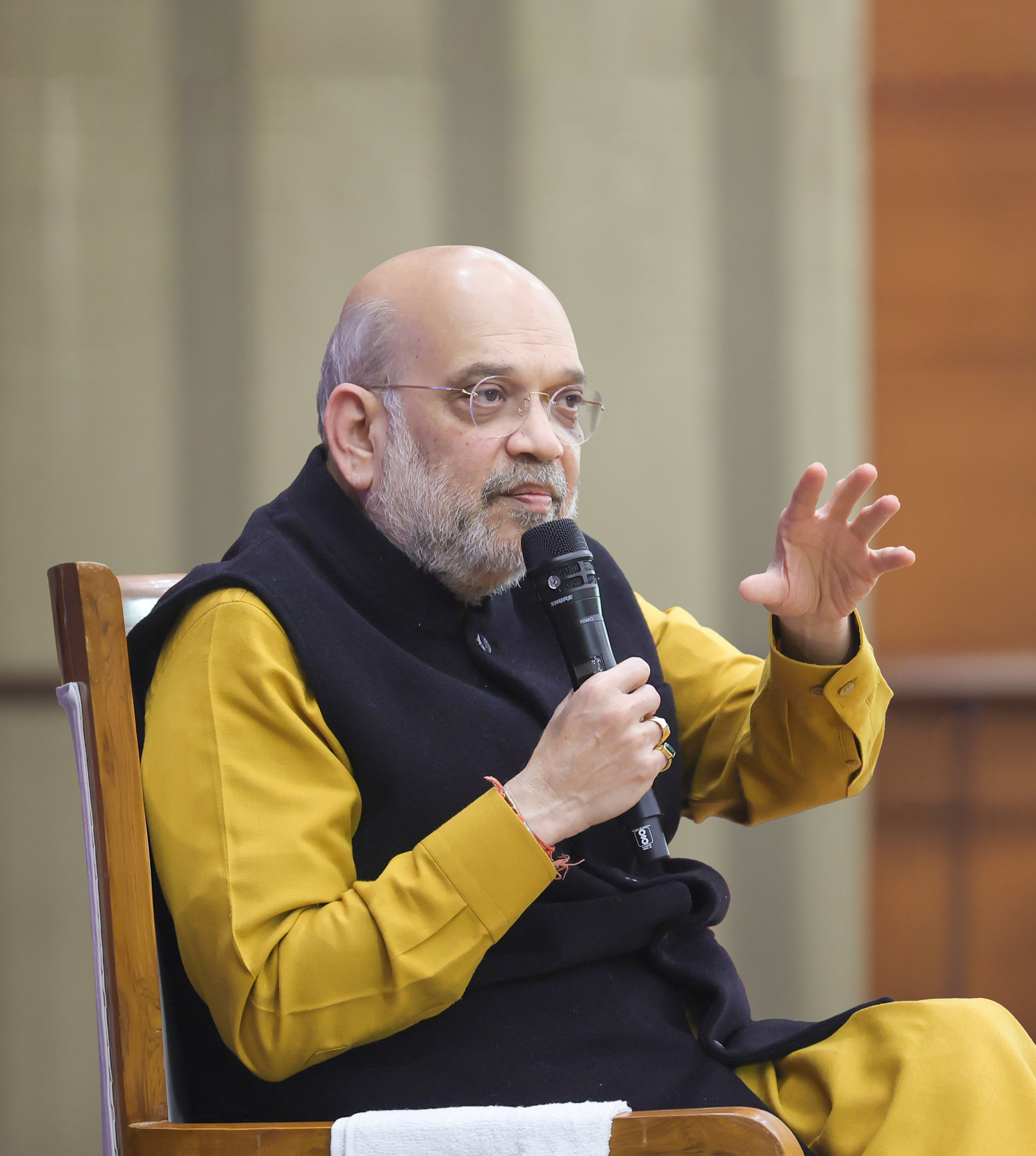
Amit Shah’s promise to implement a Uniform Civil Code in Uttar Pradesh if the BJP returns to power in 2027 is exactly the sort of announcement that sends Delhi’s professional alarm industry into overtime. Before a draft exists, familiar panels will discover the imminent extinction of pluralism. Congress will speak solemnly about constitutional balance while avoiding the awkward question of why equal civil rights become dangerous only when the BJP proposes them. I find this reflexive panic less convincing with every repetition.
The promise was made at the BJP’s Uttar Pradesh executive meeting and reported by The Indian Express. Shah has also spoken of extending UCC measures across NDA-governed states before the next general election, according to another Indian Express report. The direction is therefore clear. The details are not. My support rests on the direction, while my judgment of the policy will depend on those details.
Equality cannot remain an indefinitely postponed seminar
The basic proposition behind a UCC is neither exotic nor hateful: citizens in comparable civil situations should receive comparable legal treatment. Marriage, divorce, maintenance, guardianship and inheritance shape material freedom. When rules differ by religious identity, the differences are not merely colourful cultural expressions. They determine who controls property, who may exit a marriage, whose consent matters and what remedies are available after abandonment.
Opponents often retreat into abstraction. India is diverse, they say, as if supporters of reform had failed to notice. Diversity is real, but it does not answer whether a particular rule is just. A custom can be cherished, harmless and worth preserving. It can also impose unequal burdens. The state already regulates countless aspects of family life, and courts already interpret personal laws through constitutional principles. The choice is not between pristine community autonomy and a suddenly intrusive government. It is between an inconsistent inherited arrangement and a more coherent framework subject to democratic scrutiny.
Congress’s posture is especially unpersuasive. It wants credit for social reform without assuming the political cost of reforming personal law. Its leaders invoke gender justice in broad daylight and discover community vetoes after sunset. This is Congress-era nostalgia at its most polished: preserve an unstable compromise, call inertia “pluralism,” and accuse anyone who acts of disturbing harmony. The BJP’s willingness to place the issue before voters is, in my view, more honest.
Uttar Pradesh is where seriousness will be tested
Uttar Pradesh is not a boutique laboratory. Its population, religious diversity, rural administration and enormous case burden mean that any civil-code reform will encounter almost every practical difficulty at scale. Registration systems must reach villages. Officials must understand transitions between old and new rules. Courts need staffing and training. Citizens require documents, translations and affordable advice. A law that exists mainly as a campaign achievement will create confusion rather than equality.
The state should begin with a public consultation paper, not a triumphant slogan. It should identify the exact problems it intends to solve and publish comparative options. How will existing marriages be treated? Which customs affect substantive equality and which are ceremonial? How will tribal practices be addressed? What rules will govern succession in joint families? Will live-in relationships be included, and if so, for what legitimate administrative purpose? These are not traps set by hostile commentators. They are the ordinary questions of competent legislation.
I would also insist on a long transition period. Citizens should not discover through litigation that an old nomination, will or marriage record no longer produces the expected result. Model forms should be available in Hindi, Urdu and relevant regional languages. Legal-aid camps should precede enforcement. Registrars need clear manuals and independent grievance channels. If the BJP wants UCC to become a durable reform rather than a recurring election prop, implementation must be boringly excellent.
Do not confuse uniformity with bureaucratic appetite
Supporters should be willing to criticise overreach. A code designed to guarantee equal rights does not need to turn every household arrangement into a surveillance opportunity. Registration can protect parties and establish evidence, but disproportionate penalties or intrusive reporting requirements may hurt precisely the women a reform claims to assist. A deserted spouse should not lose remedies because an official form was missed. Children should not bear legal uncertainty created by adult noncompliance.
Nor should uniformity mean flattening every benign practice into one culturally sterile template. The state has a legitimate interest in consent, monogamy where prescribed, minimum age, maintenance, guardianship and equal succession. It has far less reason to dictate ceremonies, names, food or forms of celebration. A mature UCC would distinguish enforceable civil consequences from private cultural expression. That distinction would also answer much of the manufactured outrage surrounding the proposal.
The BJP must resist drafting by applause line. Its political strength creates room for deliberation; it should use that room. Rushed lawmaking would hand opponents a genuine complaint and burden courts with avoidable ambiguities. Listening to criticism is not capitulation to Lutyens Delhi. The government should separate useful objections from the commentariat’s predictable claim that any departure from the old consensus is authoritarian.
The minority-rights argument deserves a real answer
The strongest objection is not that reform is inherently communal. It is that a majoritarian political environment may make minority citizens fear that “uniform” really means “the majority’s law renamed.” That fear cannot be dismissed with a television sneer. The answer must be visible in the text. A code should be drafted from constitutional principles, not copied wholesale from any one religious tradition. Its obligations must apply symmetrically. Its protections must be usable by minorities without requiring them to endorse the BJP’s politics.
An independent expert committee should therefore include family-law practitioners, women’s-rights groups, representatives of multiple communities, tribal-law specialists and administrators who understand registration on the ground. Draft minutes and reasons should be published. The legislature should allow meaningful committee scrutiny. If a provision differs from existing practice, the government should explain the equality interest it advances. Transparency is the most effective rebuttal to claims of hidden motive.
Congress and the INDIA alliance, for their part, should submit amendments rather than apocalyptic adjectives. If they believe a clause harms women or violates constitutional protection, they should identify it and propose better language. If their actual position is that religious authorities must retain final control over civil rights, they should say that plainly. The current tactic—condemn a hypothetical text, then demand consultation while refusing to state reform principles—is political camouflage.
The electoral mandate matters
There is nothing illegitimate about making UCC an election issue. On the contrary, family-law reform affects citizens deeply and should be debated before voting. Shah has given opponents a clear target and voters a clear promise. If the BJP wins after sustained debate, that mandate will not settle every constitutional question, but it will matter. The commentariat cannot demand democratic consultation and then declare the result irrelevant when voters choose the policy it dislikes.
The BJP should campaign on practical benefits: equal inheritance, predictable maintenance, clearer guardianship, simple registration and reduced litigation. It should avoid treating Muslims as the problem to be corrected. The case for a UCC is strongest when addressed to every Indian as a citizen and weakest when packaged as a civilisational reprimand. Reform gains moral authority by expanding rights, not by humiliating a community.
I also want measurable commitments. The manifesto should specify when a consultation paper, draft bill, committee report and implementation plan will appear. It should estimate administrative costs and promise legal-aid capacity. After enactment, the state should publish data on registrations, disputes, processing times and outcomes for women. Otherwise, politicians will count the law’s passage as success while citizens absorb its defects.
A chance to outgrow the old politics
The UCC debate exposes two exhausted habits. The Congress habit is to call delay sensitivity. The BJP habit, when it is careless, is to call passage implementation. Uttar Pradesh offers an opportunity to reject both. A carefully designed code could show that cultural confidence and individual equality are compatible. A sloppy one would deepen suspicion and keep lawyers occupied for a generation.
I support Shah’s promise because equal civil citizenship is a legitimate national objective and because the opposition has offered no credible path beyond permanent postponement. But support is not a blank cheque. The government must protect valid custom, avoid intrusive bureaucracy, provide transition rules and demonstrate that the code is genuinely common. It should welcome judicial review rather than describe every petition as sabotage.
Lutyens Delhi will manufacture outrage whatever the draft says; outrage is now an industry with dependable shifts. The government’s job is not to satisfy that industry. Its job is to produce legislation so clear, fair and administratively sound that ordinary citizens can distinguish criticism from performance. If the BJP does that, Uttar Pradesh’s UCC could become one of the reforms its opponents wish they had possessed the courage to attempt. If it merely adds a slogan to a rally, it will have wasted both a mandate and an idea.