
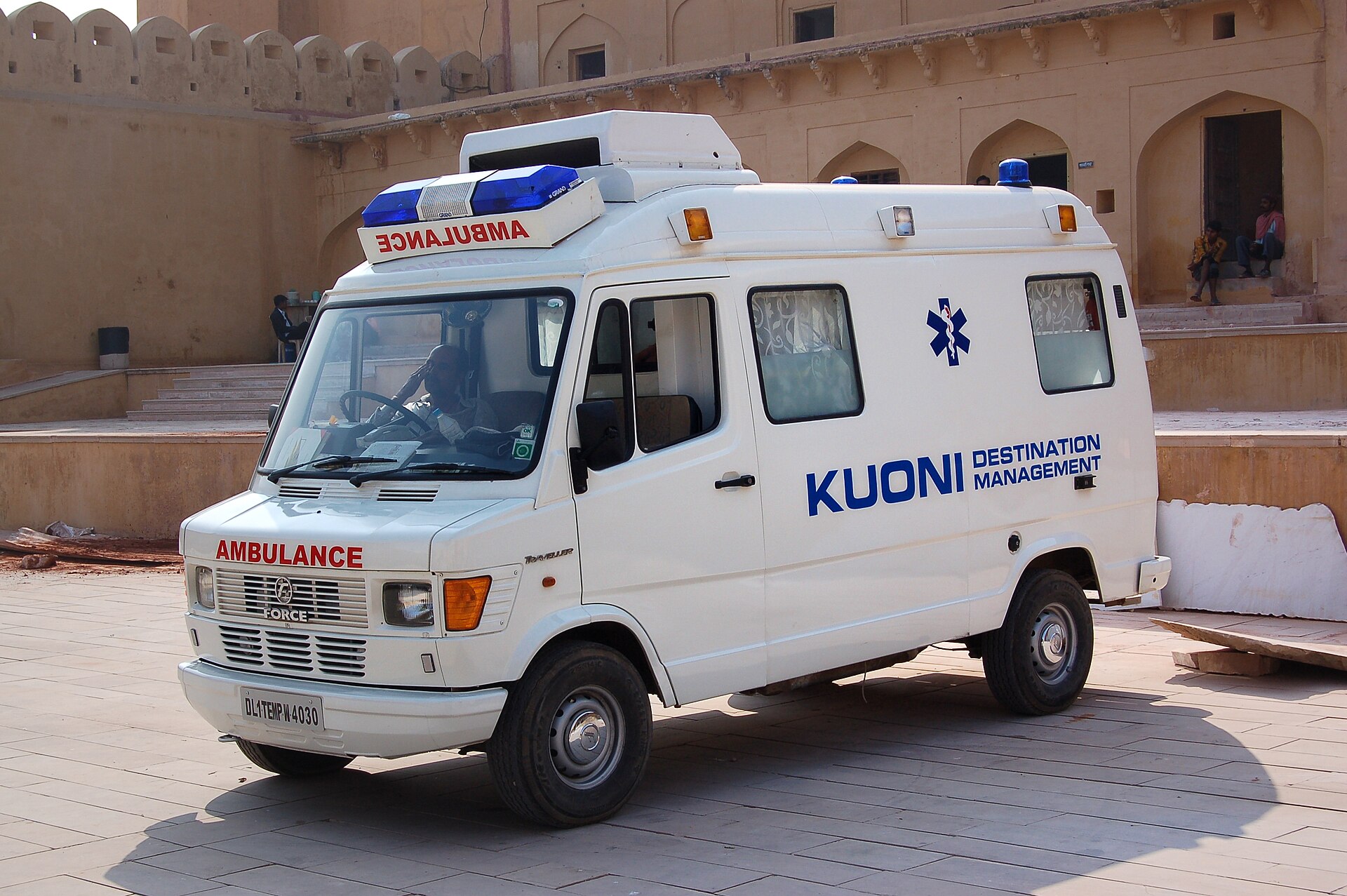
Force Motors plans to introduce an electric vehicle on its Traveller platform, beginning with an electric ambulance, according to a November automotive news listing. This is exactly the kind of electrification India should explore: predictable fleet operations, high urban utilisation, central depots and public-health benefits from reducing diesel exhaust. It is also exactly the kind of announcement that can become dangerous if the vehicle arrives before the operating system around it.
An ambulance is not a private EV whose owner can postpone a trip when a charger fails. Its range estimate is not a lifestyle convenience. A stranded or unavailable ambulance is a clinical risk. The Ministry of Road Transport and Highways maintains the regulatory framework through its official portal, but type approval is only the beginning. Emergency fleets need standards for charging redundancy, uptime and deployment that ordinary vehicle rules do not capture.
I want the electric Traveller to succeed. Diesel ambulances idle near hospitals, operate in dense neighbourhoods and expose patients, staff and pedestrians to noise and fumes. Electric drive offers smooth acceleration and a quieter cabin, both valuable when somebody is being treated in motion. But the greenest press release in India cannot supply one electron during a blackout.
Duty cycle, not claimed range, decides suitability
The central planning question is how ambulances actually work. Some hospital vehicles perform scheduled transfers over known distances. Others handle unpredictable emergency calls, long waits, highway runs and multiple shifts without returning to base. These are different products even when the body shell looks identical.
A battery-electric ambulance makes immediate sense for controlled urban transfer routes with depot charging and backup vehicles. It requires much more caution for high-intensity emergency response where a vehicle may begin the next call without a full charge. Fleet managers need months of route and dwell-time data before deciding battery size and charger placement.
Range must be measured with the medical load operating: air-conditioning, cabin cooling, lights, communications, suction equipment and other electrical systems. Indian summer heat changes both battery performance and climate demand. Add attendants, equipment, traffic and battery ageing. A brochure cycle cannot reproduce this.
Manufacturers should publish an emergency reserve policy. At what state of charge is a vehicle removed from dispatch? How much range must remain after the expected journey? Can medical systems draw from the traction battery without jeopardising mobility, and is their supply isolated safely? These questions are more important than acceleration.
Every critical charger needs a backup plan
Hospital charging cannot consist of one wall box in a parking corner. It needs protected bays, load management, fire procedures, trained staff and maintenance response. If a charger fails at 2 a.m., who has the service-level obligation to restore it? If grid power disappears, can the hospital’s backup system support charging without compromising clinical equipment?
Not every depot requires ultra-fast charging. Slower charging during predictable dwell periods may be cheaper and gentler on batteries. But an emergency fleet needs at least one rapid recovery option and enough connectors that a blocked bay does not disable operations.
Connector placement on the vehicle should account for ambulance parking patterns. Cables cannot cross patient paths or interfere with stretcher access. Charging interfaces must survive dust, rain and hurried handling. A solution designed around a pristine passenger-car bay will fail in a working hospital yard.
India’s public charging network is irrelevant to many ambulance operations unless sites guarantee access. A crew cannot queue behind two private cars while carrying a patient. Partnerships with fuel stations or public agencies could establish priority emergency charging, but the protocol must exist before the need.
Silence is a benefit and a safety problem
Electric drive can make the treatment cabin calmer. Reduced vibration and noise improve communication between staff and may reduce patient stress. For neonatal transport or monitoring, refinement is not a cosmetic luxury.
Outside the vehicle, however, quiet operation requires careful warning systems. Sirens remain obvious during emergency response, but low-speed movement inside hospital campuses can surprise pedestrians. Acoustic alerts, camera coverage and staff training are necessary, especially where crowds and informal parking narrow the route.
Regenerative braking must be tuned for patient comfort. Strong one-pedal deceleration may delight an efficiency-minded driver and disturb somebody on a stretcher. Ambulance calibrations should prioritise smoothness and predictable body control. This is not merely an electric Traveller with medical decals.
Packaging the battery beneath the floor may affect ground clearance, ramp angles and underbody vulnerability. Indian ambulances encounter flooded streets, speed breakers and rough access roads. Battery protection must be tested against actual service environments, and rescue personnel need procedures for collision or thermal events.
Procurement must buy uptime, not vehicles
Government and hospital tenders often focus on acquisition cost and compliance checkboxes. Electric ambulances demand a lifecycle contract. The supplier should guarantee vehicle and charger uptime, maintain critical spares, train technicians and provide replacement capacity when a unit is down.
Battery warranties must reflect intensive fleet use. A mileage limit designed for private cars may expire quickly. Capacity degradation affects dispatch planning long before a battery fails outright, so contracts should specify health thresholds and remedies.
Telemetry can help operators monitor energy use, routes, charging and maintenance, but patient privacy and cybersecurity require boundaries. A fleet manager needs vehicle data; nobody needs a commercial platform casually collecting sensitive journey information. Public procurement should define ownership and retention of data.
I would begin with transparent pilots across varied cities. Publish energy consumption with medical systems active, charger uptime, missed dispatches, maintenance days, driver feedback and battery health. Compare the vehicles with equivalent diesel ambulances on cost, availability, cabin noise and emissions. Do not announce only the kilometres driven and carbon supposedly saved.
A mixed fleet will be sensible for years. Diesel or other long-range vehicles can cover unpredictable and remote missions while electric ambulances handle suitable urban cycles. Purity is not the objective; reliable care with lower emissions is.
Force Motors has an advantage because the Traveller is familiar to fleet operators and body builders. It understands the commercial-vehicle environment better than a startup approaching an ambulance as a technology demonstration. That makes the electric plan credible. It also raises expectations: the company should design the charging and service ecosystem as carefully as the vehicle.
India’s EV transition will be won in such unglamorous fleets, where daily kilometres turn lower operating emissions into real public benefit. Yet an ambulance is the wrong place for optimistic assumptions. Before a hospital places an electric badge on the door, it must know where the vehicle charges, what happens when that charger fails and which backup answers the next call.
The paramedic already works under uncertainty. The powertrain should remove noise and pollution without adding another unknown. Build the vehicle, certainly. Build redundancy first.