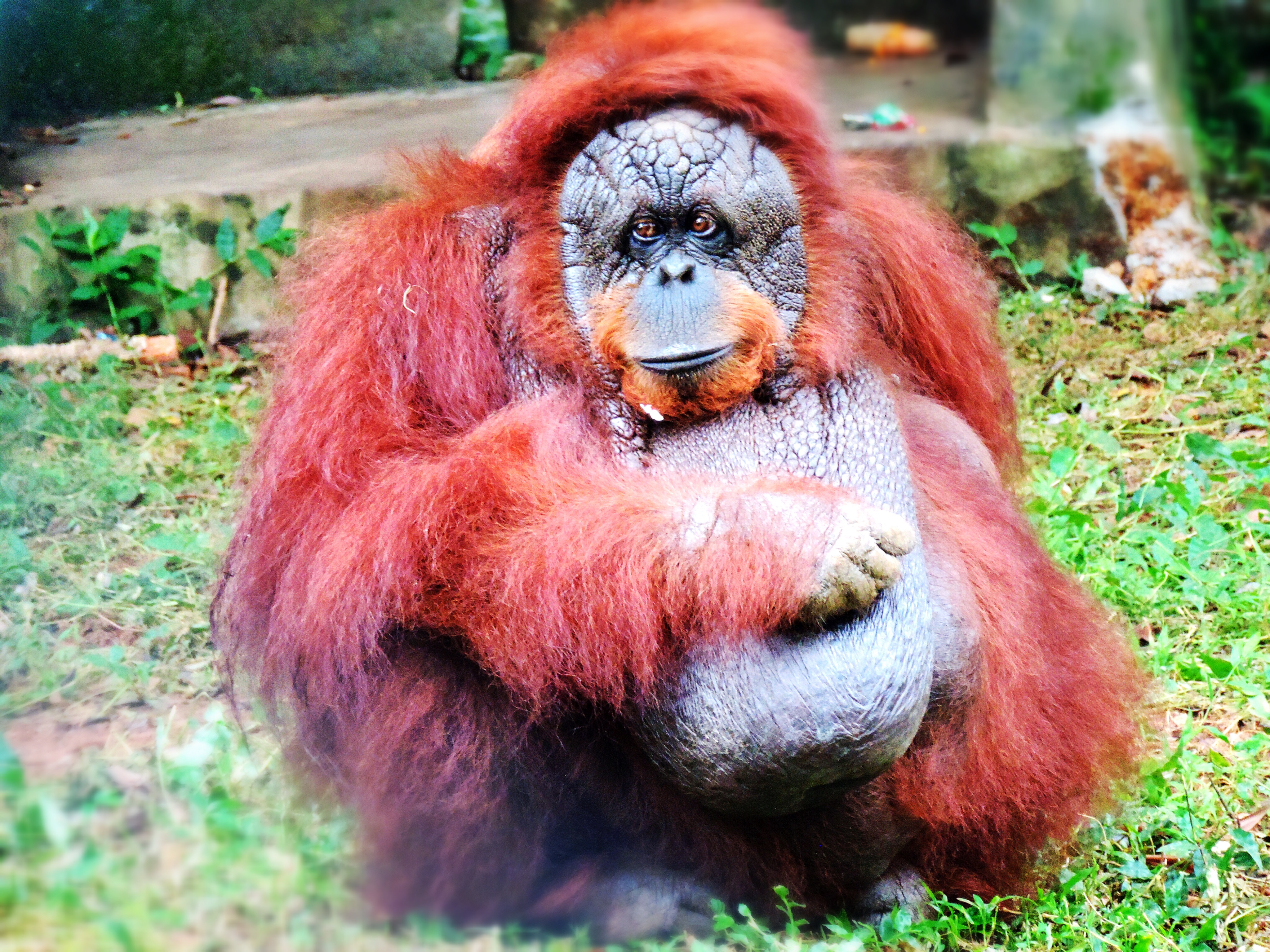
Five baby orangutans turned up where orangutans famously do not: an Odisha forest. The animals were taken to Nandankanan Zoological Park, placed in quarantine and given round-the-clock care. The Indian Express reported the bananas, apples, toys, slings, veterinary checks and CCTV monitoring arranged for them. That inventory makes a comforting story. Humans create a disaster; nicer humans provide fruit. I do not begrudge the comfort. The keepers deserve admiration, and the infants deserve every chance. But the central image should remain grotesque: critically endangered great apes, native to Indonesia and Malaysia, somehow deposited in eastern India because somebody regarded living minds as premium cargo. Calling the incident “unusual” risks making it whimsical. It is unusual in the way finding a chandelier in a drain is unusual—curious until one asks what chain of appetite and damage put it there.
The cute photographs are the final sales pitch
Baby animals trigger care, which is fortunate for rescue and disastrous when converted into demand. Exotic-pet markets sell proximity to rarity. The buyer is not merely purchasing an animal; he is purchasing a story about access. Ordinary wealth buys a car. Exceptional wealth, in this diseased imagination, buys a creature other people may see only in documentaries. Social media intensifies the trade by turning ownership into spectacle. A small primate clinging to a human looks affectionate in a short clip. The missing mother, transport conditions, disease risk and adult animal’s needs remain outside the frame.
The Odisha case prompted legal and conservation questions because orangutans are protected under international wildlife-trade rules. A detailed Indian Express explainer on the rescue and CITES framework described the wider concern that Indian demand, rather than mere transit, is becoming part of exotic trafficking. I am careful not to claim the still-investigated route or intended recipient as fact. The public evidence is already sufficient for the larger point: animals do not migrate from Southeast Asian rainforests into an Odisha forest in travel crates of their own accord.
Rescue begins after an invisible massacre
An infant orangutan is dependent on its mother for years. Removing one from the wild commonly implies violence, separation and a chain of mortality that the surviving animal cannot display. Trafficking statistics count seizures because dead animals hidden en route leave fewer records. For each photogenic rescue, unknown numbers may have died or passed undetected. The five infants therefore should not be treated as five units of contraband. They are witnesses to ecological and social destruction elsewhere.
Orangutans are intelligent, socially complex and long-lived. Their care cannot be improvised through affection. Quarantine protects them and resident animals from disease in both directions. Diet, climbing space, psychological stimulation and social development require specialised knowledge. A zoo that receives trafficked wildlife inherits decades of responsibility from a trader who may have handled the animal for days. This is the business model’s most merciless feature: private profit, public and charitable repair.
India’s enforcement challenge is a logistics challenge
Moral condemnation is easy; ports, airports, roads and online sales are harder. Trafficked wildlife can move alongside legal cargo, through misdeclaration or via routes that exploit fragmented jurisdiction. Customs officers, forest departments, police, airlines and wildlife authorities need shared intelligence and rapid access to species experts. An official confronting an unfamiliar reptile, bird or primate cannot wait for a committee to decide who owns the problem.
Seizure is not the endpoint. Authorities must preserve evidence while protecting living animals, identify appropriate facilities, arrange disease screening and explore lawful repatriation. Those objectives can conflict. Moving an animal quickly may help welfare but complicate evidence; prolonged detention may assist a case but harm rehabilitation. Standard operating procedures, trained response teams and funded quarantine capacity are unglamorous investments. They will save more animals than another awareness poster featuring a tiger.
Legal ownership can disguise harmful demand
Defenders of exotic pets often distinguish registered ownership from trafficking. Lawful documentation matters, but legality does not settle welfare or conservation. Captive-bred animals can still have complex needs that private homes cannot meet. Documentation can be laundered, origins obscured and offspring used to create a respectable surface for continued demand. Regulators need traceability, veterinary standards and meaningful inspections, not amnesty cycles that convert possession into legitimacy without answering where an animal came from.
I am not arguing that every keeper of an unusual fish or bird is a criminal. Broad accusation would be both unfair and useless. I am arguing that the desire for rarity creates a market in which legality is easy to advertise and difficult for buyers to verify. A responsible prospective owner should ask whether the species belongs in private care, whether captive breeding is independently documented, what the adult animal requires and who will assume care for decades. If those questions spoil the thrill, the thrill was the problem.
The internet marketplace needs friction
Online platforms can make obscure wildlife visible to buyers, connect brokers and normalise possession through influencer content. Moderation is difficult because sellers use coded language and shift to private messaging. Difficulty is not exemption. Platforms should cooperate with wildlife authorities, preserve evidence, restrict repeat offenders and make reporting pathways usable. Payment providers and logistics companies also hold clues. A trafficking network is not only a man carrying a cage; it is a chain of communications, money and transport.
Public education must avoid accidentally advertising the trade. Repeating the price of a rare animal or displaying glamorous owner videos can create aspiration. Coverage should centre animal welfare, ecological cost and legal risk. Even rescue content needs care. The babies at Nandankanan are not entertainers. Their quarantine photographs should not become a second round of content extraction from lives already commodified.
Repatriation is morally attractive and practically hard
Returning trafficked wildlife to its country of origin sounds like restoration. It may be the right goal, but origin must be established, health risks assessed and an accredited receiving facility identified. Release into the wild may be impossible for animals taken young, habituated to humans or exposed to disease. Repatriation often means transfer to specialised lifetime care, not a cinematic return to the forest. International cooperation, genetic testing, permits and funding take time.
During that time, keepers perform the least celebrated work: feeding, cleaning, observing stools, adjusting temperature, building trust without creating unhealthy dependence. Their success may look like nothing happening. An infant eats, sleeps, climbs and remains stable. We should honour that competence without using it to soften our view of the trade that made it necessary.
The appropriate ending is not “all is well”
A feel-good ending would show the orangutans healthy, perhaps eventually transferred to suitable care nearer their native range. I want that outcome. I also want prosecutions supported by evidence where laws were broken, routes identified and future shipments intercepted before animals reach a forest or apartment. Rescue without disruption can become a recurring cleanup service for traffickers.
The public can help by refusing exotic-animal content as harmless novelty, reporting suspicious sales and supporting credible conservation rather than selfie encounters. Parents should teach children that loving animals sometimes means never touching them. Wealthy adults, one hopes, can grasp the same lesson.
The five Odisha orangutans matter because their vulnerability makes an invisible commerce briefly visible. They are not mascots for a quirky week in the news. They are displaced infants whose survival now depends on institutions far from the forests evolution prepared them to inhabit. The zoo’s fruit bowls and slings are acts of care. They are also evidence of a bill handed to everyone except the people who created it. I hope the animals thrive. I hope their story remains uncomfortable. Comfort, after all, is what the exotic-pet market sells—to the human buyer, never to the animal.