
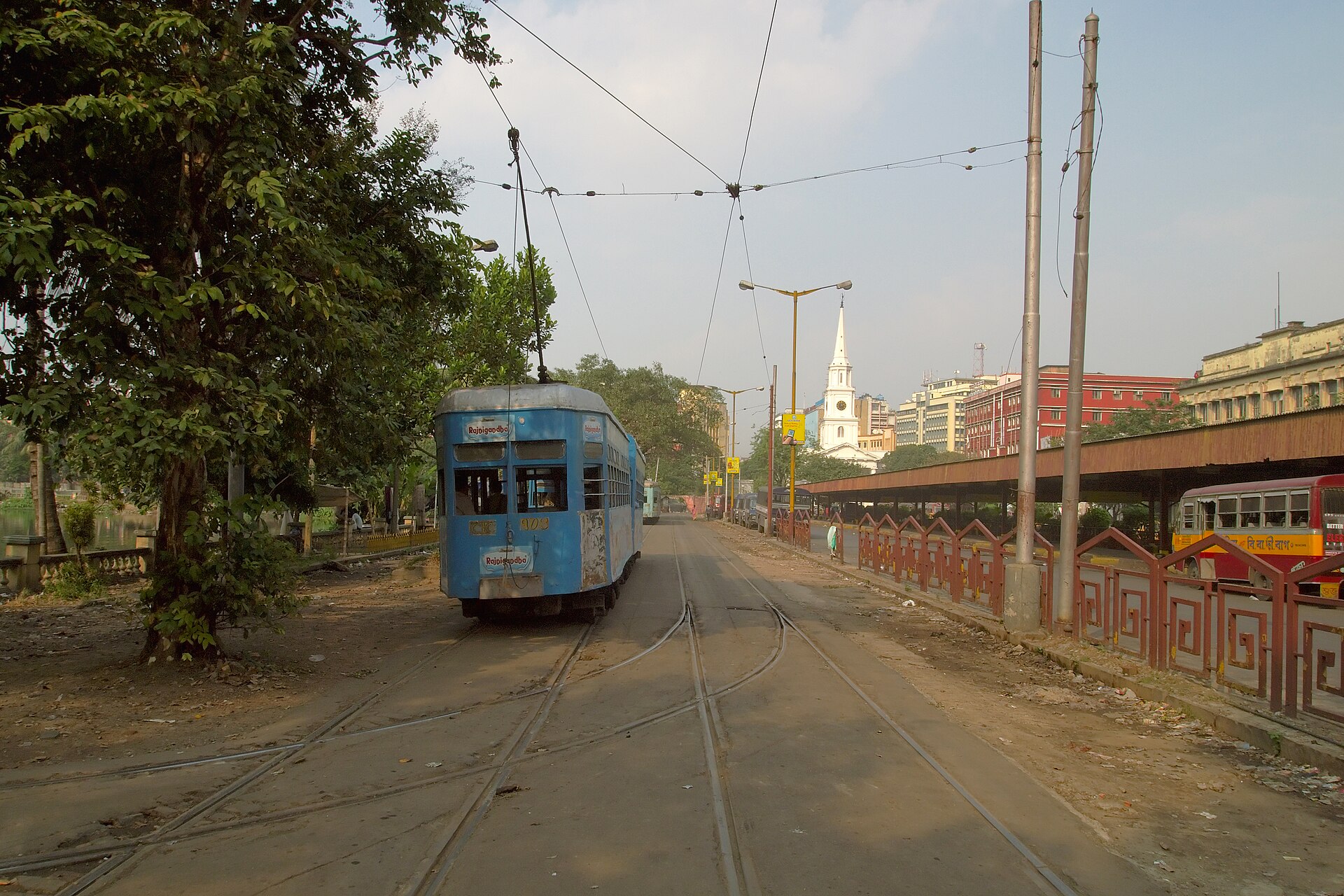
Kolkata’s trams have survived long enough to become everybody’s memory and too few people’s daily plan. The West Bengal government has asked RITES to review routes while considering a broader heritage revival, according to an Indian Express report on the proposal. The history and current revival process are also summarised in the documented overview of Kolkata’s tram system. I want the effort to succeed, but I am suspicious of any revival that begins with nostalgia and ends with a tourist loop. A tram preserved only for weekend photographs is not public transport. It is taxidermy with a conductor. The humane way to honour this system is to make portions of it useful again: reliable frequency, protected movement, modern boarding and integration with buses and the Metro. Heritage should be carried by passengers, not sealed behind glass.
Memory is not a timetable
People speak about trams through childhood: the bell, wooden seats, rain on windows, a route taken with a parent. These memories matter because infrastructure becomes part of personal geography. A city is not only buildings; it is repeated movement through them. Yet affection can become an excuse for avoiding operational questions. How long does the journey take? How often does a tram arrive? Can an elderly passenger board safely? Does the route connect homes to work, schools, markets or Metro stations? If the answers are poor, sentiment will not create ridership.
Kolkata’s congestion is frequently cited as a reason trams cannot work. That argument contains its own defeat. A tram stuck behind private cars is slow because the street allocates movement inefficiently, not because steel wheels are inherently nostalgic. Where corridors have sufficient demand, priority lanes, signal preference and disciplined parking can let high-capacity public transport move more people. The political difficulty is that road space feels free until someone proposes reallocating it. Then every parked car acquires constitutional rights.
Choose corridors, not a museum map
Revival should not attempt to reconstruct every historic route. Cities change, and some alignments may no longer serve enough passengers or fit present networks. Planners should identify corridors where tram capacity, street geometry and passenger demand align. These could connect dense neighbourhoods to Metro stations, railway hubs, hospitals or commercial districts. The selection criteria should be published so residents understand why a line is retained, modified or abandoned.
A small but functional network is better than a large symbolic promise. Begin with corridors that can receive genuine priority and frequent service. Measure travel time, reliability, ridership and operating cost. Expand when results justify it. Heritage sections can coexist with modern service, but they should not consume the entire policy. A city does not honour an old technology by refusing to improve it.
Accessibility is the moral test
Historic vehicles can be beautiful and difficult to use. High steps exclude older passengers, disabled people, caregivers with prams and anyone carrying a heavy load. Modern low-floor trams or accessible platforms are essential if the system is to serve the public rather than enthusiasts. Stops need shelter, lighting, clear information and safe pedestrian access. A wheelchair symbol painted beside an impossible step is not accessibility.
The city can preserve selected vintage cars for special services while introducing vehicles suited to ordinary use. This will provoke complaints that modern trams lack character. Character is not a suspension system. Kolkata’s identity has always evolved through adaptation. A tram with regenerative braking, better ventilation and accessible boarding remains a tram. Indeed, it honours the network more honestly by giving it a future.
Workers carry the living knowledge
Any revival must include drivers, conductors, depot staff and track workers whose knowledge rarely appears in heritage presentations. They know where traffic blocks a route, which points fail during rain, how boarding patterns change and what passengers ask for. Their experience should shape route design and vehicle procurement. They also need training and employment security as technology changes.
Public transport debates often discuss labour only as a cost. But skilled workers are an operating asset. A restored vehicle cannot run safely because a consultant admired its paint. Maintenance capacity, spare parts and technical apprenticeships determine whether service survives after the launch ceremony. Kolkata could create specialist training around electric transit and rail maintenance, linking heritage knowledge to modern employment.
Integration matters more than romance
Passengers think in journeys, not modes. A tram becomes useful when its timing, ticket and stop design connect with buses, Metro and suburban rail. Kolkata should pursue common payment, legible maps and coordinated interchanges. A rider should know whether the next tram will help her catch a train. Real-time information is not excessive technology; it is respect for time.
Fares should remain affordable, but affordability cannot justify infrequency. A cheap service that never arrives is expensive in lost wages and missed appointments. Public subsidy is legitimate because transit reduces congestion, pollution and household transport costs. The subsidy should purchase measurable service: frequency, kilometres operated, accessibility and reliability. Publish those outcomes.
The environmental case needs good operations
Electric trams produce no tailpipe emissions and can move many passengers efficiently. They can contribute to cleaner streets, but only if people use them instead of more polluting alternatives. An empty heritage car circling slowly is not a climate policy. Dedicated lanes and useful routes create the mode shift that gives environmental claims substance.
Track construction and power systems carry costs, and buses may suit flexible or lower-demand routes better. This need not become a religious argument between modes. Use trams where capacity, permanence and corridor demand justify them; use electric buses elsewhere; make both reliable. The objective is mobility, not victory for a fan club.
Heritage is a public relationship
UNESCO recognition or tourism promotion could bring attention and funding, but international approval should not replace local usefulness. The most meaningful heritage is encountered in ordinary life. A child riding to school in a modern tram participates in a longer urban story without requiring a lecture. A worker reaching an office on time gives the system a stronger future than a thousand commemorative postcards.
There is room for archives, restored depots, oral histories and vintage rides. Document the people who built, operated and depended on the network. Preserve vehicles representing different eras. Let enthusiasts contribute knowledge. Then ensure the main service is planned around passengers who do not care about wheel gauges and simply need to get somewhere.
Let the bell signal a future
I care about Kolkata’s trams because their fate reveals how Indian cities treat inherited public goods. We neglect a system, make it unreliable, cite falling use as proof of irrelevance and finally celebrate a decorative fragment after destroying the practical whole. Revival offers a chance to reverse that sequence. It requires money, road-space decisions and administrative attention—far more difficult than issuing a heritage-themed poster.
Keep the routes that can work. Give them priority. Buy accessible vehicles. Train and listen to workers. Integrate tickets and timetables. Preserve vintage cars without forcing every passenger to live in the past. Kolkata does not need to choose between memory and mobility. A well-run tram can carry both. If the revival produces only a picturesque ride for visitors, the city will have saved an image and lost a public institution. I would rather hear the bell because someone is going to work.