
Electric-car registrations in India are finally becoming large enough to feel like a market rather than an enthusiast club. Recent reporting on August EV sales described both strong growth and a widening field of manufacturers. That is good news. Competition should improve prices, choice and service. But every rising sales graph places more pressure on a charging network that remains unreliable in ways no showroom demonstration mentions.
The government’s PM E-DRIVE framework recognises charging infrastructure as part of the transition. Funding and installation targets matter. Yet a charger is not useful merely because it appears on a sanctioned list or map. It must be reachable, operational, compatible, fairly priced and not occupied by a petrol vehicle, a broken fleet cab or a restaurant’s delivery scooters.
I drive EVs regularly, and the difference between theoretical and usable infrastructure is enormous. A corridor may show six charging locations. One is inside a dealership closed at night, another requires an app that will not complete registration, one is derated, one has a single connector already occupied, and another has vanished despite remaining on the map. Technically, the corridor has coverage. Practically, the driver has anxiety.
Reliability is the missing statistic
Operators advertise charger counts because counts are easy. Drivers need uptime. Every public fast-charging network should publish real-time availability, successful-session rates and average repair time. Regulators need not set an impossible perfection standard, but they should require consistent reporting. A charger offline for weeks should not continue to count toward an infrastructure target.
Status data should also be shared through an open standard. Drivers should not need five apps to discover whether five networks are working. Navigation services and vehicle systems should be able to display live availability, connector type, power, price and recent reliability. Roaming agreements should allow payment without creating a new wallet balance at every stop.
Payment remains needlessly complicated in the country that made UPI ordinary. A QR code or card terminal should start a session. Membership can offer discounts, but it should not be compulsory. Operators may worry about authentication and refunds; these are solvable software problems. Asking a stranded family to download an app in weak mobile coverage is not innovation.
Power ratings require honesty. A charger labelled 120kW may deliver much less because of shared cabinets, grid limits, heat or the vehicle’s charging curve. Operators should show the maximum available power before the session and disclose whether two connected cars will split it. Buyers also need education: an EV capable of a certain peak will not sustain that figure throughout the battery. Transparent expectations reduce both anger and queue time.
Urban charging begins with parking
Highway chargers receive attention because they determine road-trip confidence, but most EV charging should happen while cars are parked. That makes apartment rules, workplace parking and distribution-grid capacity central. Many Indian residents do not own an assigned bay or cannot persuade a housing society to permit wiring. A buyer may love the car and still have no dependable place to charge it.
States and municipalities should create model rules for installing chargers in multi-unit housing, including cost sharing, fire-safety standards, metering and dispute resolution. Resident associations need clear grounds to approve or reject an installation; arbitrary bans should not be acceptable. New buildings should include conduits and electrical capacity before residents move in. Retrofitting later is always more expensive.
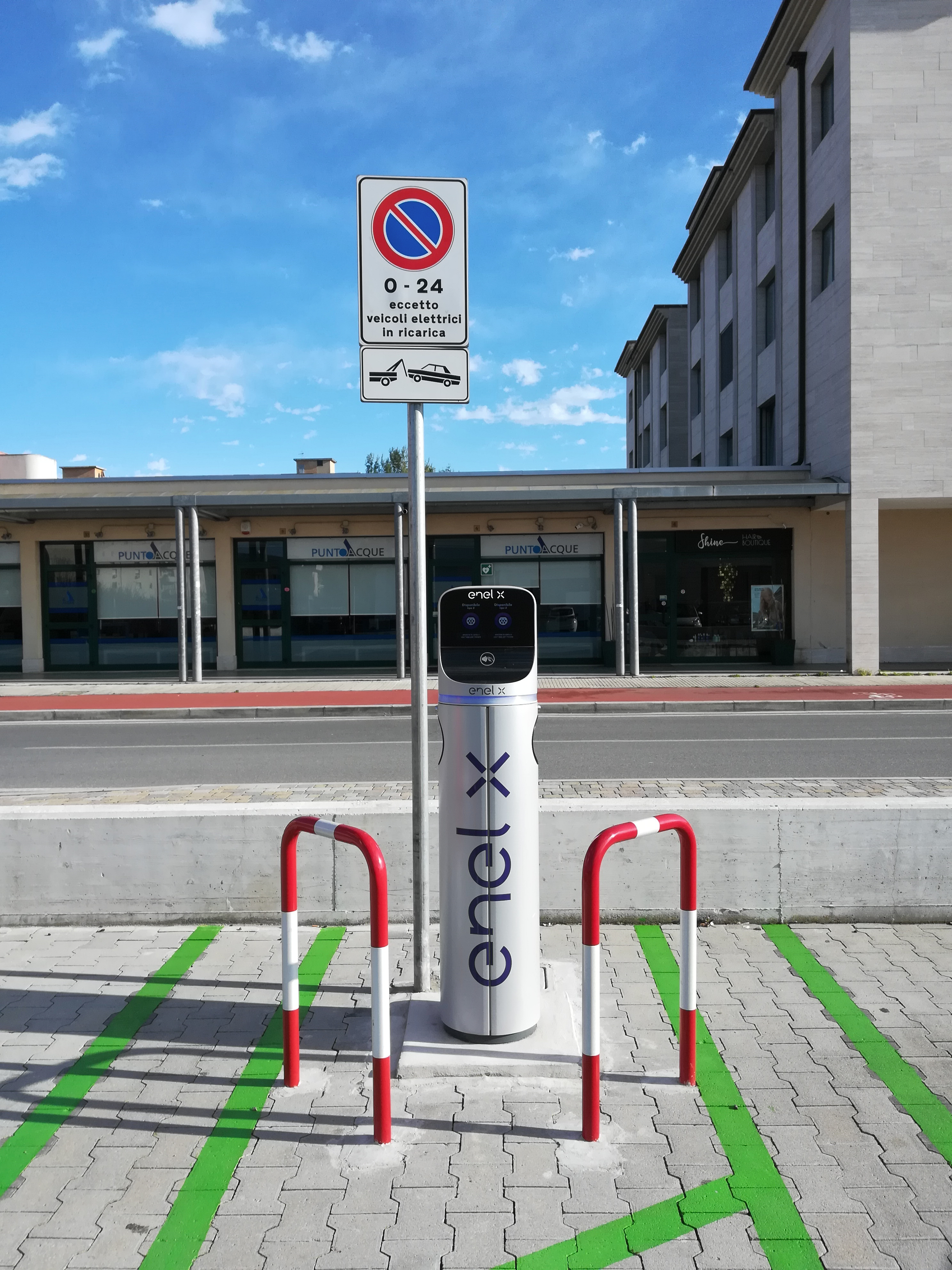
Kerbside and neighbourhood charging will matter for vehicles parked on streets, but it must be designed around Indian conditions. Cables cannot cross footpaths. Chargers need protection from flooding, heat and impact. Pricing must discourage all-day occupation after charging finishes without punishing unavoidable delays. Municipal pilots should measure use rather than install photogenic hardware that nobody maintains.
Workplaces can absorb a large share of charging demand because cars remain parked for hours. Slower AC points are cheaper and gentler on the grid than universal fast charging. Employers, malls and transit hubs should be encouraged to deploy them with transparent tariffs. Infrastructure policy too often equates faster with better. The best charger is the one available where the car already waits.
Showrooms sell the best-case journey
Dealers understandably highlight certified range and charging speed. They should also assess the customer’s parking, daily travel and common routes. An honest EV sale includes a home-site survey, installation timeline, electricity-load check and demonstration of public charging. Delivering the car before the home charger is ready should be the exception.
Range claims need context. Weather, speed, elevation, payload and air-conditioning affect consumption. A useful salesperson explains a conservative highway range at common speeds rather than repeating a laboratory number. Owners are more satisfied when reality beats a cautious estimate than when every journey becomes an argument with the brochure.
Manufacturers should support several reliable charging networks rather than steering owners exclusively toward a branded ecosystem. Plug-and-charge capability, where the vehicle authenticates automatically, would improve the experience, but it requires cooperation and secure standards. India should avoid proprietary islands while the market is still young.
The grid challenge is manageable if planned
EV critics often predict instant grid collapse. The concern is exaggerated at current adoption levels, but local constraints are real. A cluster of high-power chargers can strain a feeder even when the national grid has adequate energy. Time-of-use pricing, managed charging and battery storage can shift demand away from peaks. Distribution companies need visibility into installations rather than learning about them after transformers overload.
Renewable energy strengthens the case for managed charging. Vehicles parked during sunny hours can absorb solar generation; overnight charging can use off-peak capacity. Eventually, vehicle-to-grid systems may help, but India should first make one-way charging dependable. We have a habit of discussing futuristic bidirectional grids while a present-day connector refuses to initialise.
Public funding should reward utilisation and uptime, not only installation. Contracts must include maintenance obligations, spare-parts availability and penalties for persistent failure. Remote monitoring can identify faults quickly, but operators still need technicians capable of reaching sites. Charging is an ongoing service business, not a one-time civil-works project.
The transition needs dull competence
I am optimistic about Indian EV adoption because the products are improving and daily running can be genuinely convenient for people with home charging. The market is moving beyond one or two brands, which reduces dependence and pressures incumbents. But the next group of buyers will be less tolerant than enthusiasts. They will not carry three RFID cards, maintain seven wallet balances or treat a broken charger as an adventure.
India now needs common payment, live data, enforceable uptime reporting, apartment rules, trained technicians and sensible parking enforcement. None will attract the applause of a vehicle unveiling. Together they determine whether an owner recommends an EV.
Sales growth tells us consumers are willing to try. Infrastructure quality will decide whether they stay. The industry should stop celebrating every installed connector as though concrete and cable equal mobility. A charger becomes infrastructure only when a driver can count on it.