India’s scooter market is having a magnificent year, which means manufacturers will soon discover seventeen ways to make a sensible scooter ridiculous. Expect adventure editions with coloured hand guards, dark editions that are impossible to see at night, connected variants that tell your phone what your fuel gauge already knows and top trims priced close to motorcycles with twice the ability. I have driven enough of these machines to offer a radical counterproposal: sell people a comfortable scooter with good brakes, useful storage, dependable starting and a service centre that answers calls.
The numbers show how central scooters have become. Autocar India reported record first-half wholesales and a 39 percent share of the two-wheeler market. Another long-term market analysis documents Honda’s shrinking share and TVS’s sustained gains. This is not a niche urban convenience anymore. Scooters carry office workers, students, parents, delivery riders, shopkeepers and entire households’ small logistics. Their importance deserves more serious product thinking than a new sticker pack.
The Activa’s greatness is also its trap
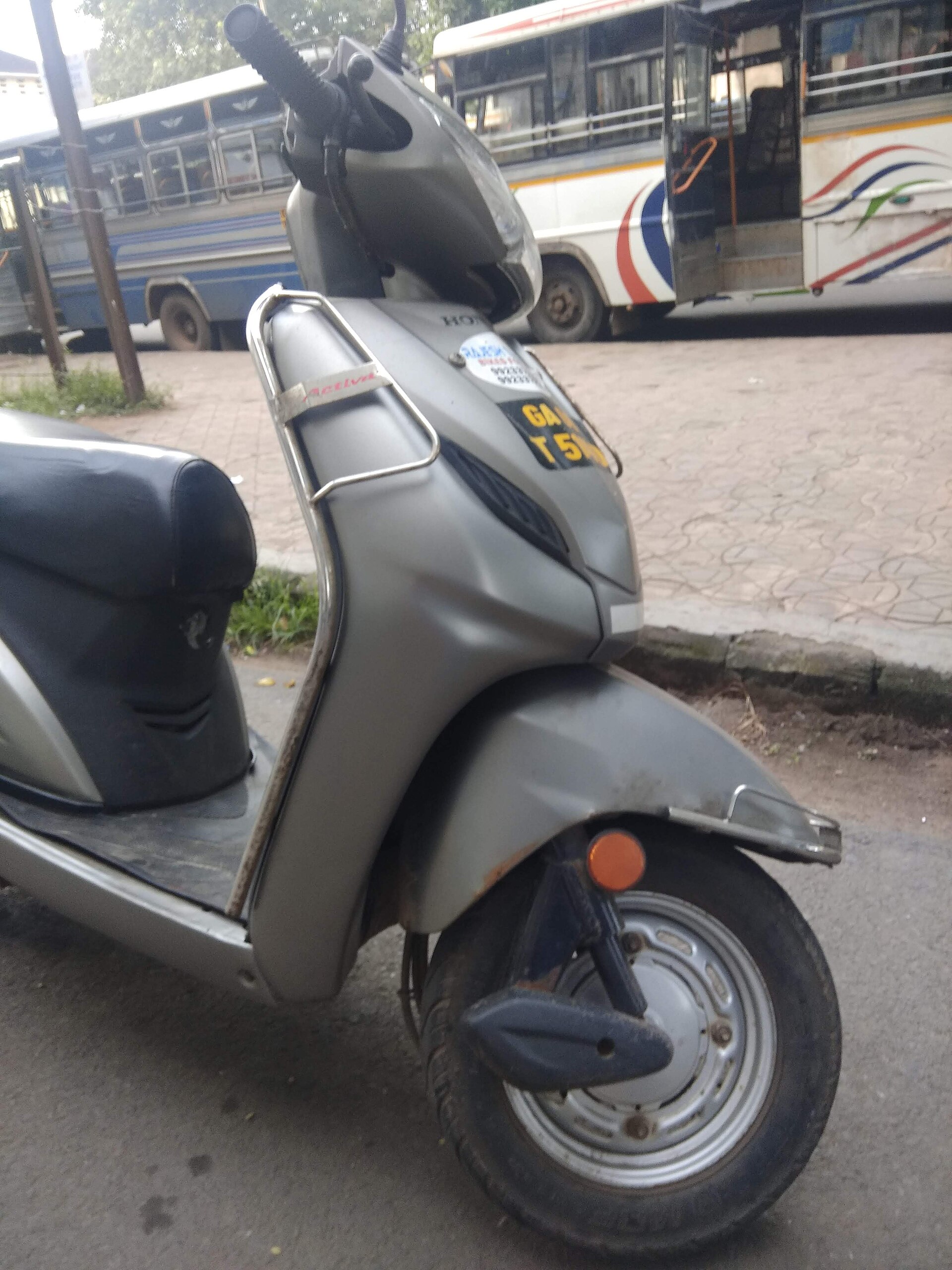
The Honda Activa became shorthand for scooter because it understood the job. It was easy to ride, mechanically conservative, widely serviceable and likely to retain value. Owners did not need to join an online forum to diagnose its personality. That reliability remains a major asset, especially outside large cities. But market leadership can become a permission slip for timidity. Honda has often asked buyers to pay for familiarity while rivals improved ride comfort, storage, features and design.
TVS’s rise is not mysterious. The Jupiter family has focused on the annoyances owners actually notice: where to put a helmet, how easily a shorter rider reaches the ground, whether fuel filling interrupts luggage, whether suspension punishes broken roads and whether the engine feels strained with a passenger. Not every version gets every choice right, but the product conversation has been practical. Honda still sells far more scooters; the narrowing gap shows that habit is not invincible.
Suzuki’s Access demonstrates another route: a strong engine, clean responses and a mature riding feel. It is often the scooter I recommend to someone who carries a passenger and dislikes wheezing overtakes. Its weaknesses—dealer reach in some regions and occasional parts frustrations—matter more over five years than a road-test sprint. This is why national rankings cannot replace local homework. The best scooter in Pune may be the wrong purchase in a district where the nearest competent workshop is eighty kilometres away.
Stop charging for dashboard jewellery
Bluetooth dashboards are the current trim ladder’s favourite extortion device. Turn-by-turn prompts can help, and call alerts may be useful to somebody. But manufacturers bundle screens with cosmetic parts and charge thousands while leaving basic safety inconsistent across variants. I would prioritise a front disc brake, combined braking calibration, brighter lighting, better tyres and a hazard switch before app connectivity. A scooter’s job is to stop predictably in rain, not congratulate me for receiving spam.
Digital displays also age less gracefully than analogue instruments. Sun exposure, water ingress and replacement cost appear after the brochure has left the house. A simple LCD can be perfectly durable, but complexity should earn its place. Owners keeping scooters for eight or ten years need manufacturers to guarantee electronic spares and reasonable replacement prices. Otherwise the “smart” feature becomes a dead rectangle while the engine continues faithfully underneath it.
Tyres are another area where cost cutting hides in plain sight. Narrow, economy-focused rubber may deliver excellent test-cycle efficiency but limited confidence on wet paint, loose gravel and polished city roads. Buyers rarely know the exact tyre variant until delivery. Dealers should disclose it, and manufacturers should stop treating tyre upgrades as an enthusiast eccentricity. On a small-wheeled scooter, contact patches are not an accessory. They are the final argument between the rider and the road.
Ride quality matters because Indian scooters are family vehicles, not solo toys. A stiff suspension that feels controlled with one test rider can become tolerable only when loaded. A soft setup can bottom out with two adults. Manufacturers need transparent payload guidance and better rear-shock adjustment, preferably a tool that ordinary owners can use. Reviewers, including me, should test with a passenger and luggage instead of performing every assessment as a seventy-kilogram bachelor.
Choose the middle trim and spend the rest on ownership
My buying advice is usually unfashionable: avoid the base trim if it deletes meaningful safety equipment, avoid the top trim if it adds screens and paint, and buy the version in the middle with the better brake. Use the saved money for a good helmet, insurance, scheduled service and quality tyres when replacement time arrives. A matte colour cannot shorten a stopping distance. A branded jacket is not a substitute for gloves. Dealers will enthusiastically sell accessories because accessories produce margin; ask for part numbers and prices before signing.
Reliability is not merely whether the engine fails. It includes whether body panels rattle, switches survive monsoon use, the seat hinge remains aligned, the centre stand is manageable and spare parts arrive quickly. Japanese brands built trust partly through these unglamorous details. Indian manufacturers have improved dramatically but can still show inconsistency between batches and dealers. A long warranty is useful only if claims are honoured without the owner becoming a litigation specialist.
Fuel economy should be judged in personal conditions. Claimed figures and gentle test runs tell little about short trips, heavy traffic, passengers and aggressive acceleration. A difference of a few kilometres per litre matters over years, but not enough to justify a scooter that fits poorly or has weak local service. Ergonomics are free performance: if the handlebar hits your knees or the seat forces your passenger forward, no efficiency figure will make ownership pleasant.
Electric scooters complicate the picture but do not invalidate it. For buyers with reliable home charging and predictable urban use, a good EV can reduce running costs and feel smoother than an engine scooter. For tenants, highway users or people dependent on uncertain service networks, petrol remains rational. I reject both moral camps: the salesman who says petrol will rule forever and the enthusiast who declares every combustion buyer backward. Use case comes before ideology.
The boom should encourage manufacturers to invest in better platforms, not merely more variants. I want larger under-seat storage without absurd exterior bulk, safer brakes, durable suspension, corrosion protection, accessible maintenance and engines tuned for real two-person use. I want EV battery health shown clearly and petrol service intervals explained honestly. Most of all, I want price lists short enough to understand without a spreadsheet. Seven trims of the same scooter are rarely seven engineering solutions.
Scooters are successful because they remove ceremony from mobility. Step through, press a button, carry things, park easily and get on with life. The industry’s instinct is to add ceremony back through apps, editions and lifestyle marketing. Buyers have already delivered the more intelligent verdict through millions of purchases: convenience wins. Honda should not rely on the Activa badge forever, TVS should guard against variant bloat, and everyone should remember that reliability is a feature visible only after the advertisement ends.