I grew up believing a Test match revealed character. This was probably too romantic, but it was at least a useful romance. Five days forced players to solve problems that could not be edited into a twenty-second clip: a softening ball, a deteriorating pitch, a hostile spell survived without scoring and the mental inconvenience of beginning again the next morning. Indian cricket still claims to value this education. Its calendar and incentives often suggest otherwise.
The problem is not that India plays white-ball cricket or that players earn handsomely from it. I have no interest in scolding a generation for enjoying a successful product. The problem is institutional incoherence. The BCCI wants India to dominate Tests while operating an ecosystem in which the IPL commands the cleanest window, domestic red-ball cricket is fragmented, leading players appear selectively and public attention is trained to regard any scoreless passage as a technical fault.
The BCCI’s domestic fixtures show the scale of the structure it administers, while the World Test Championship gives bilateral series an overarching contest. Neither solves the central question: are India’s best prospective Test players receiving enough sustained, demanding first-class cricket to become better at it?
The Ranji Trophy cannot be remedial homework
Every time a centrally contracted player struggles, someone prescribes a Ranji appearance as though domestic cricket were a detention room. The player arrives for one game, attracts cameras, scores or does not, and returns to the national circuit. This treats the competition as corrective therapy instead of the foundation of selection.
A serious red-ball system would make first-class performance central before a crisis. Players outside the current Test XI should play meaningful blocks of Ranji cricket when fit and available. India A tours should be frequent, long enough to include multi-day matches and aligned with likely future overseas assignments. A batter expected to succeed in England should not encounter sustained lateral movement for the first time during a Test.
Pitch preparation matters too. A domestic competition made entirely of flat first-innings accumulation teaches little; one dominated by surfaces on which modest spin becomes unplayable by lunch teaches the wrong lesson. India needs variety: some pitches with pace and carry, some that reward patient spin, some that remain good enough for batters to build long innings. The object is not statistical neatness but technical range.
I can already hear the objection that India has produced superb Test cricketers under the existing system. Of course it has. A country with India’s player base will produce exceptional individuals despite structural imperfections. The question is whether the system reliably converts broad talent into international readiness. Recent collapses and recurring technical problems against movement suggest that reputation should not end the inquiry.
Selection must stop confusing potential with preparation
Modern selection language worships upside. A young player has range, intent and all-format potential. These qualities matter, but Test batting also requires leaving the ball, defending without panic and accepting that a bowler may win twelve consecutive deliveries. Those skills look passive in a highlights package and priceless on a difficult fourth afternoon.
Selectors should publish clearer principles without turning selection into litigation. Domestic runs need context, but they must count. India A performance should count. Fitness and fielding should count. What should not happen is a player discovering that years of first-class excellence are worth less than a vivid IPL month because the latter occurred under brighter lights.
Bowlers require even greater care. Fast bowling is a physical resource, not an endlessly renewable spectacle. Workload management should mean planned rest based on medical and performance data, not mysterious absences explained through rumour. At the same time, bowlers cannot learn Test spells without bowling spells. Protecting every prospect from first-class workloads until an international debut is like preserving a violin by never playing it.
Spin selection has also become strangely impatient. India possesses a deep tradition of bowlers who defeat batters through changes of flight, pace and angle. Yet the short-format demand for defensive speed can distort evaluation. A spinner who concedes little is not automatically a Test match-winner, and a spinner attacked while searching for wickets is not automatically reckless. Captains and selectors must judge the method, not merely the economy rate.
The calendar says what administrators truly value
Administrators deliver affectionate speeches about Test cricket because affection is free. Calendar space is the real currency. A coherent season would protect major domestic rounds, allow national players to appear, provide India A preparation and avoid turning Tests into inconvenient bridges between limited-overs commitments.
The World Test Championship has improved context, but its uneven schedules and points system cannot carry the format alone. Boards still determine whether series have two Tests or five, whether preparation matches exist and whether spectators can attend at sensible times and prices. India, as cricket’s financial centre, has an obligation beyond maximising its own inventory. If the BCCI treats Test cricket as premium content rather than a living competitive culture, smaller boards will have even less reason to sustain it.
I would like India to champion minimum three-Test series where feasible, shared touring costs for vulnerable nations and a stronger fund for Test cricket. This is not charity detached from Indian interest. A format cannot remain healthy if only three countries can stage it confidently. India needs diverse opponents, unfamiliar conditions and meaningful away contests.
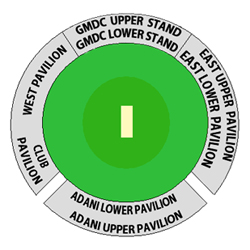
At home, spectators deserve better basic treatment. Clean toilets, drinking water, shade, clear entry rules and flexible ticketing are not luxurious demands. A Test asks a fan to spend much of a working week at the ground. The least an association can do is refrain from making attendance an endurance event unrelated to cricket.
There is still time to choose depth
I am not predicting the death of Test cricket; that has become a genre of lazy melancholy. The format remains compelling when elite teams, consequential series and responsive crowds meet. India’s responsibility is to ensure that such occasions emerge from a functioning system rather than nostalgia and scarcity.
The IPL has improved Indian cricket in obvious ways. It has expanded the talent pool, professionalised support staff, exposed players to pressure and paid cricketers properly. The argument is not IPL versus Tests. It is whether the richest board can design pathways that allow both to flourish without expecting players to manufacture red-ball mastery from muscle memory.
That requires choices. Protect first-class windows. Reward long domestic performance. Send A teams abroad. Prepare varied pitches. Explain workloads. Select for Test skills rather than generic stardom. Make grounds hospitable. Use India’s influence to sustain opponents.
None of this will trend like an auction. There is no dramatic unveiling for a better seam-friendly pitch in Hubballi or a four-match India A tour. Yet those are the places where future Test victories begin. The scoreboard at Lord’s or Johannesburg is merely where the work becomes visible.
I still believe a Test reveals character, but institutions have character too. They reveal it through what they protect when a more lucrative option is available. The BCCI does not need another speech assuring me that Test cricket is supreme. It needs a season that behaves as if the statement were true.