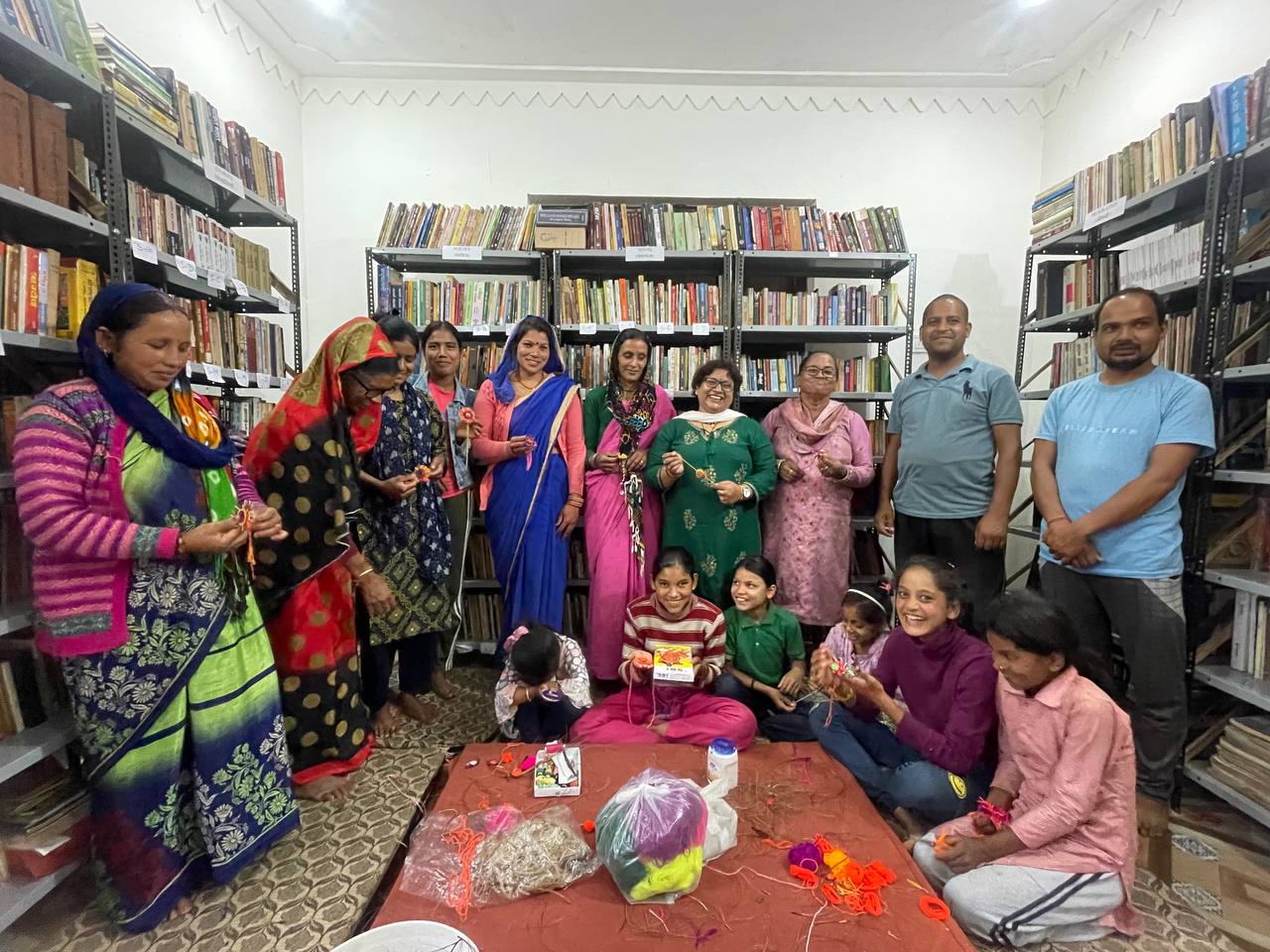
In Maniguh, Uttarakhand, books have escaped the building. They sit in small “book temples,” appear along walking routes and contribute to a village identity built around reading. I love this story partly because it refuses the usual vocabulary of rural education. Nobody needs to be rescued in the photograph. The village is creating a cultural place on its own terms.
SBS Hindi’s report on Maniguh’s transformation describes thousands of books, multiple reading spaces and collections in several languages. The initiative’s own website presents the library as part of community life, education, cultural preservation and an effort to create local opportunity. The combination matters more than the charming phrase “book temple.”
A library is not a warehouse
We frequently measure libraries by volumes, floors and inauguration dates. Those numbers tell us little about whether people feel welcome. A locked room with ten thousand books is storage. A modest shelf that people browse, discuss and replenish is a library.
Maniguh’s dispersed reading spaces challenge the institutional instinct to concentrate everything in one official building. Putting books near paths and community activity reduces the psychological distance between reading and life. A person need not declare an academic purpose before opening one.
This is especially important because Indian education often presents reading as labour performed for examinations. Children learn that books contain marks, instructions and correct interpretations. Reading for curiosity can seem indulgent. A village that makes literature visible in ordinary spaces gives permission to read without an exam at the end.
The word temple is doing useful work
I initially worried that “book temples” might be branding designed for tourism. Then I considered the local symbolism. A temple is not merely a container; it is a place approached with care, revisited and shared. Applying that cultural grammar to books can elevate reading without making it sterile.
The risk, of course, is that reverence discourages touch. Books should become worn. Children should argue with them, adults should abandon dull ones halfway and somebody should occasionally misplace a volume under a bed. A successful library accepts physical evidence of use.
From the available descriptions, the initiative appears to combine respect with access. That balance is worth protecting as attention grows. Visitors will arrive seeking photographs of picturesque shelves against Himalayan views. Residents must remain the primary audience.
Language makes belonging visible
Collections in Hindi, English, Urdu, Sanskrit and regional languages communicate that knowledge does not possess a single respectable accent. Rural libraries often become dumping grounds for donated books selected by urban households. The donors feel virtuous; recipients receive obsolete manuals and novels nobody wanted.
Collection development should begin with local readers. School needs matter, but so do agriculture, health, law, local history, children’s stories and leisure. Regional-language publishing deserves active procurement rather than ceremonial inclusion. A person who sees her language on the shelf sees herself recognised as a reader.
Rare materials and local records also create a different relationship with heritage. Preservation is not only the work of distant archives. Communities can maintain memory while deciding how it should be shared.
Do not turn every book into a job scheme
The initiative understandably links reading with skills, digital access, examinations and livelihoods. Those are urgent needs, particularly where migration follows limited opportunity. Yet I want to defend purposeless reading too. A woman should be able to read a poem without explaining how it raises household income. A child should be allowed fantasy that does not improve competitive-exam performance.
Development language tends to instrumentalise culture. Music prevents delinquency, sport builds discipline, books improve employability. Perhaps they do. They also make life larger. Rural people are entitled to leisure, imagination and intellectual wandering, not only efficient self-improvement.
This matters because funding often demands measurable outcomes. Visitor counts, exam results and workshops can be recorded. The private consolation of a story cannot. Libraries must gather useful data without allowing donors’ spreadsheets to determine every shelf.
Tourism can help and distort
Maniguh’s identity as a library village may attract visitors and support local livelihoods. Readers could stay in homestays, join events, walk the book routes and purchase local crafts. Thoughtful cultural tourism can bring income without requiring residents to abandon place.
But success can transform a living initiative into a theme park. Reading spaces may be staged for visitors, quiet paths become selfie locations and local tastes are adjusted to outside expectations. The community should control scale, conduct and revenue. Tourists are guests in a village, not customers entitled to rearrange it.
I would like visitor contributions to support librarians, children’s programmes, maintenance and local publishing. Transparent community governance can prevent the project from becoming dependent on one charismatic founder or a seasonal stream of attention.
The migration question is complicated
The project hopes cultural and educational opportunity can help address migration. That is admirable, but libraries cannot compensate for absent healthcare, roads, higher education or jobs. We should not load a reading initiative with responsibility for structural failures far beyond its control.
Migration is not always tragedy. Young people may leave for study, work or adventure and retain meaningful ties. The goal should be genuine choice: staying should not mean accepting deprivation, and leaving should not mean severing identity.
A library village can strengthen that choice by building social infrastructure. It can support learning, digital access, community events and pride of place. Its contribution is significant precisely because it is one part of a larger ecology, not a magical cure.
What replication should mean
Officials will be tempted to replicate Maniguh by announcing a hundred library villages, printing identical signs and purchasing standard book packages. That would copy the visible object while missing the relationships that sustain it. Replication should mean principles: community ownership, accessible space, locally chosen collections, reliable staffing and connection to daily life.
Other places will need different forms. A dense settlement may use shopfront shelves. A flood-prone region may need boats or mobile collections. A working-class urban neighbourhood may prioritise late hours. The institution should adapt to geography and routine.
Funding is still essential. Romantic stories about volunteerism can conceal unpaid labour, often by women. Librarianship requires skill, and maintenance requires money. Community ownership should not become an excuse for the state to withdraw.
Why this story stayed with me
Human-interest reporting often searches for an exceptional individual overcoming impossible odds. Maniguh offers a gentler form of significance. People are arranging space, objects and time so curiosity becomes easier. No single moment contains the transformation.
I imagine a child encountering a book on a familiar path and opening it because nobody has instructed her to. I imagine an older resident finding a text in a language tied to memory. I imagine visitors arriving for scenery and discovering that the village’s most important view faces inward, toward its own cultural confidence.
Books alone will not save a village. They can help a village describe itself, argue with itself and imagine futures not supplied by outsiders. Maniguh matters because it treats reading not as emergency medicine for disadvantaged people but as an ordinary pleasure around which public life can gather.
That is a more radical idea than the picturesque photographs suggest. Access is not complete when a building exists. It is complete when entering, touching, reading and returning feel natural. Maniguh has made books part of the route. The rest of us should pay attention to the path, not merely the signboard.