There is a genre of Delhi commentary in which nothing counts unless it can be converted into a constitutional emergency by dinner. A new transport corridor opens in Pune, thousands of commuters acquire an alternative to the daily negotiation with traffic, and the national conversation still finds a way to return to whichever slogan is trending around Parliament. I find that hierarchy of attention absurd. Infrastructure is politics in its most tangible form: it rearranges time, access, employment and the geography of opportunity.
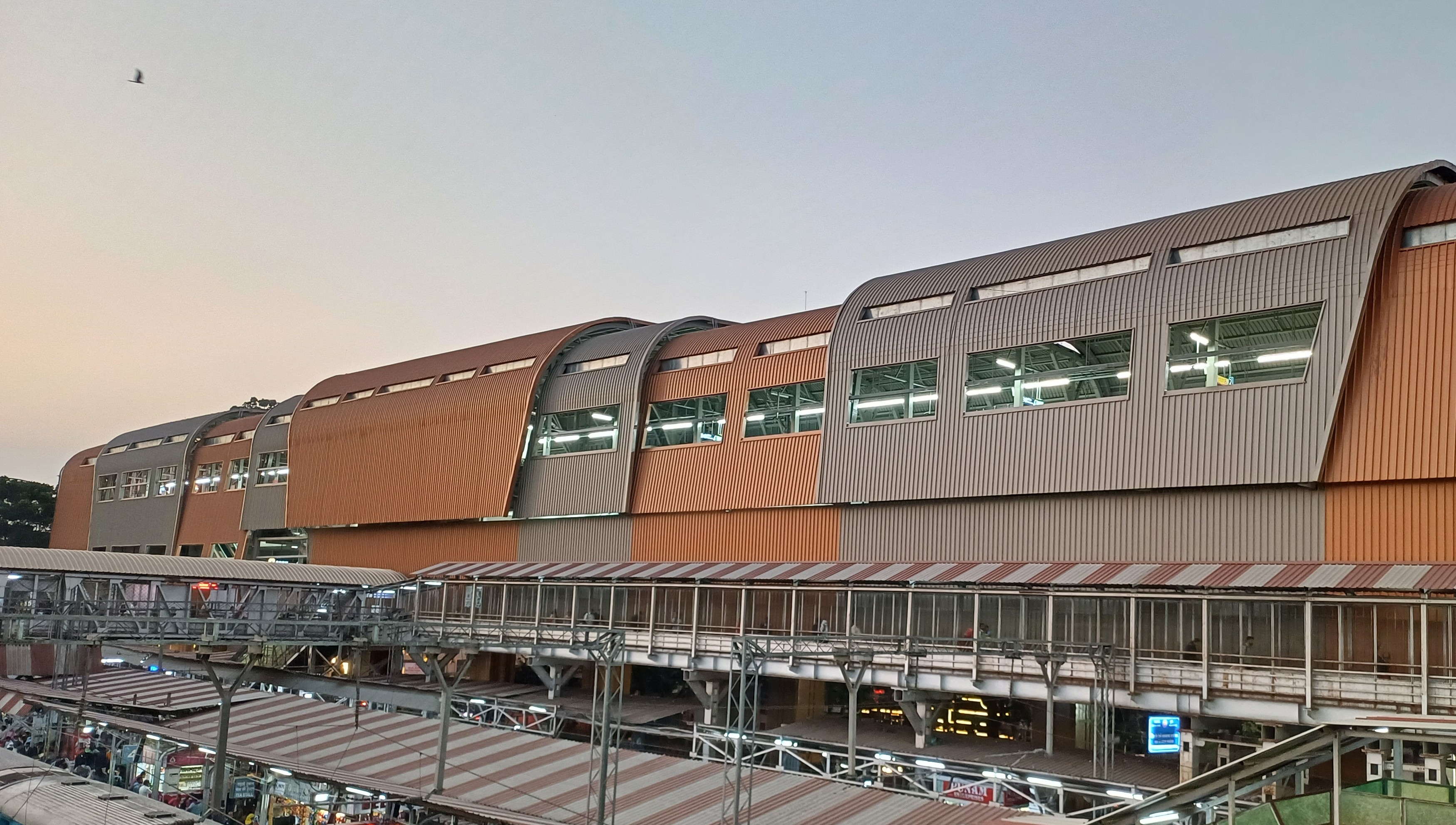
Prime Minister Narendra Modi’s inauguration of Pune Metro’s Pink Line, along with foundations for additional corridors, deserves more than a ceremonial photograph. The Indian Express reported the 23-kilometre line and the wider expansion plans. One need not accept every official superlative to recognise the governing shift: metro rail is no longer treated as a privilege reserved for Delhi, Kolkata, Mumbai and perhaps one ambitious southern city. It is becoming a standard expectation of urban India.
I give the current government substantial credit for that change in ambition. Congress-era nostalgia tends to present any project conceived before 2014 as proof that everything afterwards is merely inherited. This is a childish way to understand the state. Ideas are plentiful; execution, financing, coordination and replication are the scarce goods. A government that turns scattered plans into a national pipeline deserves credit for delivery, even when earlier administrations prepared some files.
A metro is a time policy
Urban transport is usually discussed in kilometres, stations and project cost. Commuters experience it in minutes and uncertainty. A forty-minute journey that occasionally becomes ninety minutes forces a family to budget for the worst case every day. It influences whether a parent can collect a child, whether a worker can accept a job across town and whether a student can attend an evening class. Reliability is not a cosmetic transport feature; it is economic freedom.
Pune’s growth has outpaced the road habits that once supported it. The city is no longer a compact university and manufacturing centre that can muddle through with two-wheelers, buses and familiar shortcuts. Its employment clusters stretch across a metropolitan region. Every new office park creates travel demand that cannot be solved indefinitely by widening roads. More lanes invite more cars, and intersections remain intersections.
Rail offers capacity and predictability, but only if the network behaves like a network. That qualification matters. A gleaming line with weak feeder buses, hostile footpaths and chaotic station access becomes a premium shuttle for people whose origins and destinations happen to align. The political temptation is to celebrate the visible asset and neglect the smaller systems that determine whether citizens actually use it.
The Centre and Maharashtra should therefore judge the Pink Line by ridership patterns, interchange times and door-to-door journeys, not inauguration-day passenger counts. Station areas need safe crossings, shaded walking routes, cycle parking, auto-rickshaw bays and frequent buses. Ticketing should be interoperable across operators. Public data should show punctuality, crowding and service interruptions. The next phase of Indian infrastructure politics must be about performance after construction.
The federal argument is stronger than the slogan
Metro projects reveal the best and worst of Indian federalism. They demand cooperation among the Union, state government, urban bodies, lenders and specialised agencies. Land acquisition, utility shifting and traffic management sit with different authorities. When the pieces align, citizens see a train. When they do not, they see barricades for years and receive explanations from everyone except the agency responsible.
The Modi government’s achievement has been to make large transport programmes administratively repeatable. Pune Metropolitan Region Development Authority’s project material describes the Line 3 corridor and its institutional structure. That dry architecture is worth reading because it punctures the fantasy that infrastructure appears through prime-ministerial magic. Political leadership establishes priority; institutions translate it through contracts, finance and engineering. Both levels matter.
The INDIA alliance often criticises centralisation, sometimes with justification. Yet many of its leaders also demand that the Centre fund, rescue or accelerate projects for which state and municipal institutions have not completed basic preparatory work. Federalism cannot mean taking credit locally and assigning every delay nationally. Nor can the Union treat opposition-governed cities as undeserving. The emerging metro system should be governed by transparent criteria tied to demand, urban form and fiscal capacity.
I would welcome a stronger parliamentary debate on the distribution of urban transport funds. But I want one grounded in project readiness and outcomes, not the lazy claim that every rupee spent outside a favoured constituency proves discrimination. The public can inspect corridor maps and utilisation. That is a more useful political contest than the permanent outrage cycle.
Credit does not cancel scrutiny
Pro-government commentary becomes unconvincing when it treats cost overruns, construction disruption or poor design as impolite subjects. Metro building is expensive and invasive. Small businesses can be hurt by years of blocked access. Residents deserve realistic schedules and quick compensation where contracts provide it. Accessibility must be designed for people with disabilities, older commuters and parents with prams, not added as an inspection-day afterthought.
There is also the question of fares. A metro priced beyond the reach of lower-income workers can reduce congestion less than promised. Operators require financial sustainability, but the public value of moving large numbers of people includes cleaner air, lower road pressure and broader labour access. Fare policy should recognise those benefits. Targeted passes, integrated bus-metro pricing and employer partnerships are better than crude universal discounts or relentlessly rising single-journey fares.
Transit-oriented development also needs honesty. The phrase can become bureaucratic perfume sprayed over indiscriminate construction. Dense housing and commercial activity near stations make sense, but only with drainage, public space, schools and pedestrian infrastructure. Otherwise, governments monetise land while transferring congestion from roads to station entrances.
These are criticisms of how to deepen the reform, not reasons to dismiss it. That distinction seems lost in our politics. The commentariat often believes that acknowledging progress weakens its independence. I believe the opposite. Criticism carries more weight when it is capable of recognising achievement.
India should normalise competent ambition
The larger story is that Indian citizens increasingly expect modern public infrastructure. An airport that resembles a bus depot, a station without lifts or a road project that remains unfinished for a decade no longer passes as inevitable. That expectation creates pressure on every party. The BJP has benefited electorally from aligning itself with visible delivery; its rivals would be wiser to compete on execution than to sneer at inaugurations.
Congress has governed Indian cities and knows how difficult projects can be. Yet its national rhetoric too often reduces infrastructure to cronyism, vanity or publicity. Those risks exist, and procurement must be watched, but the answer cannot be a politics embarrassed by construction. India lost decades to a culture in which scarcity was moralised and modest ambition was confused with prudence.
I want Pune’s new line to succeed because successful systems create constituencies for more competent government. A commuter who experiences predictable travel will demand the same standard from buses, water supply and municipal services. Delivery changes political imagination. It teaches citizens that dysfunction is not a law of nature.
The Pink Line is therefore neither a miracle nor a mere ribbon. It is an important addition to a city that urgently needs alternatives, and it belongs to a broader expansion for which the Modi government merits credit. Now comes the unglamorous work: connections, maintenance, footpaths, frequency and transparent performance. Delhi can keep manufacturing its nightly emergencies. Pune’s commuters will judge the state in a more exacting unit—whether the train arrives, and whether the rest of the journey works.