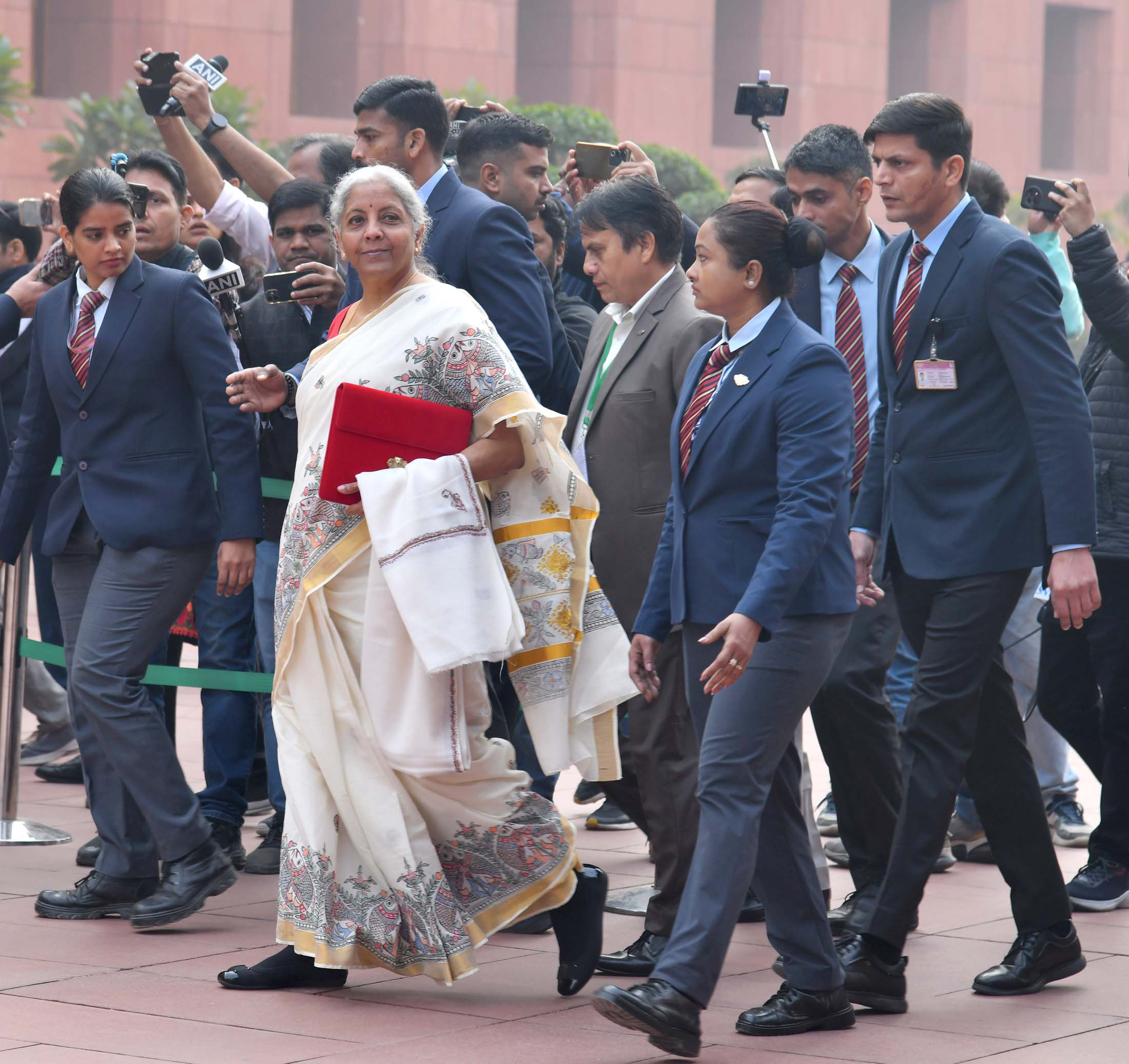
I have a confession that will horrify normal people: I read Budget documents after the television anchors have stopped reading their teleprompters. The morning spectacle is useful theatre, but the real choices sit in tables, revised estimates and footnotes. That is where governments reveal whether they are building an economy or merely renting applause. My reading of the latest Union Budget is that the Narendra Modi government has again chosen the less glamorous route: keep public investment central, continue lowering the fiscal deficit, and target relief instead of spraying money at every politically fashionable demand. One can question individual allocations, and I do, but the architecture is sound. The Finance Ministry’s own Budget portal makes the full set of documents available, which is a better basis for judgment than the opposition’s ritual complaint that every constituency not named in the speech has been ignored. A Budget is not a wedding invitation. The absence of a name does not prove the absence of spending.
The investment that survives the speech
What strikes me is how quickly India’s political conversation forgets the distinction between consumption and capacity. A cash transfer can be justified when a household faces distress. A subsidy can correct a market failure. But roads, freight corridors, power systems, urban transport and water networks change what an economy can produce for years. The government deserves credit for making capital expenditure a governing habit rather than a one-season slogan. The detailed expenditure papers on the previous Budget archive show how seriously this machinery has been institutionalised across ministries. Public investment is not automatically virtuous—bad projects can waste money with impressive concrete—but India’s old problem was chronic under-building, delayed execution and the political temptation to announce benefits whose bill arrived after the election. The current approach at least begins with the right question: what must the state build so that private firms, workers and cities can become more productive?
Congress’s preferred response is to describe this emphasis as insufficiently humane, as though a railway bridge and a rural road were gifts to balance sheets rather than to people. This is Congress-era nostalgia disguised as compassion. Anyone who remembers the infrastructure bottlenecks of the late UPA years should be wary of advice that treats capital formation as an accountant’s obsession. A small manufacturer harmed by unreliable logistics does not experience infrastructure as an abstraction. A woman who saves an hour because a road becomes usable does not need a seminar on multiplier effects. The government’s critics are right that execution varies widely and that some urban projects have been designed with scant concern for pedestrians, displacement or maintenance. But that is an argument for better project selection and accountable implementation, not for returning to a politics in which every fiscal problem is answered by creating another entitlement with no exit mechanism.
Fiscal restraint is social policy too
I find fiscal-deficit debates unusually clarifying because they expose who believes tomorrow’s taxpayer exists. Borrowing is sometimes essential, especially for assets that will serve future citizens. It is not free money. Interest payments narrow the space available for health, defence, education and disaster response. The government’s gradual consolidation therefore matters even if nobody puts it on a campaign hoarding. The opposition routinely demands more spending in every category while denouncing any tax, disinvestment or rationalisation that might finance it. That is not an alternative economic programme; it is a restaurant order placed with somebody else’s wallet. The Modi government has not been perfectly austere, nor should it be. Food support, rural programmes and targeted interventions remain substantial. The better description is selective expansion within a stated fiscal path. I would rather have that tension openly managed than concealed through off-budget devices and heroic revenue assumptions.
The strongest counterargument is that aggregate discipline can coexist with household pain. Young Indians do not pay rent with a fiscal-deficit ratio, and small businesses do not hire because a bond trader approves of the glide path. That objection deserves more respect than it sometimes receives from the government’s cheerleaders. Employment-intensive growth, municipal services and school quality need sharper attention. Capital spending must also move beyond impressive national projects to the unromantic local systems that citizens touch daily. Yet abandoning discipline would not solve these failures. Inflation and high borrowing costs punish precisely those households with the smallest cushions. A credible Budget cannot promise every desirable outcome in one year. It must protect stability while shifting resources toward the constraints that prevent private employment. The honest criticism is that the government should improve the composition and delivery of spending, not that it should imitate state-level freebie auctions.
Reform needs less choreography
Where I am less indulgent is the gap between announcing reform and making it ordinary. Investors can cope with a rule they dislike more easily than with a rule that changes through circulars, portal glitches and conflicting interpretations. Tax simplification must be experienced by the salaried taxpayer and the small firm, not merely celebrated in a press conference. Asset monetisation must be transparent enough that citizens can see the difference between recycling capital and selling a monopoly cheaply. Public-private partnerships require contracts that allocate risk intelligently rather than letting profits remain private while losses migrate to the exchequer. The government has earned the benefit of the doubt on reform because it has delivered major changes in taxation, insolvency, digital public infrastructure and formalisation. That credit creates a higher standard, not a permanent exemption from scrutiny.
I would also like the Budget process to become less dependent on the speech as political cinema. Parliament and the public should spend more time comparing budget estimates with revised estimates, asking why schemes underspent and identifying departments that repeatedly promise more than they can execute. A government that prides itself on dashboards should publish clearer outcome trails for major capital projects: sanctioned cost, current cost, completion stage, utilisation and measurable public benefit. Such disclosure would strengthen the pro-investment case because it would distinguish genuine capacity creation from ceremonial foundation stones. It would also answer a legitimate opposition criticism—that headline allocations can flatter performance—without accepting the INDIA alliance’s broader claim that the government’s entire development model is merely corporate favouritism.
The choice voters are actually offered
The political choice is not between a cold spreadsheet and a warm welfare state. It is between welfare supported by a growing productive base and welfare financed by an escalating auction of promises. The BJP’s model is imperfect, sometimes over-centralised and too fond of branding. But it broadly recognises that redistribution without productivity eventually redistributes scarcity. Congress still speaks as if invoking the moral vocabulary of the welfare state relieves it of explaining costs, incentives and implementation. Its manifestos often contain attractive intentions; what they lack is a convincing theory of how investment, formal employment and fiscal credibility survive the accumulated bill.
I give this Budget credit precisely because its best qualities are not exciting. It treats infrastructure as continuity, restraint as responsibility and reform as a process rather than a single revolutionary afternoon. I would push the government harder on urban capacity, employment measurement, local-state finances and transparent outcomes. Those are correctives within a workable framework. The opposition wants the public to mistake the absence of extravagance for the absence of ambition. I see the opposite. In a democracy trained to reward the loudest promise, choosing to preserve room for future governments is a political act of unusual maturity. The Budget will not trend for that reason. India may nevertheless be better governed because of it.