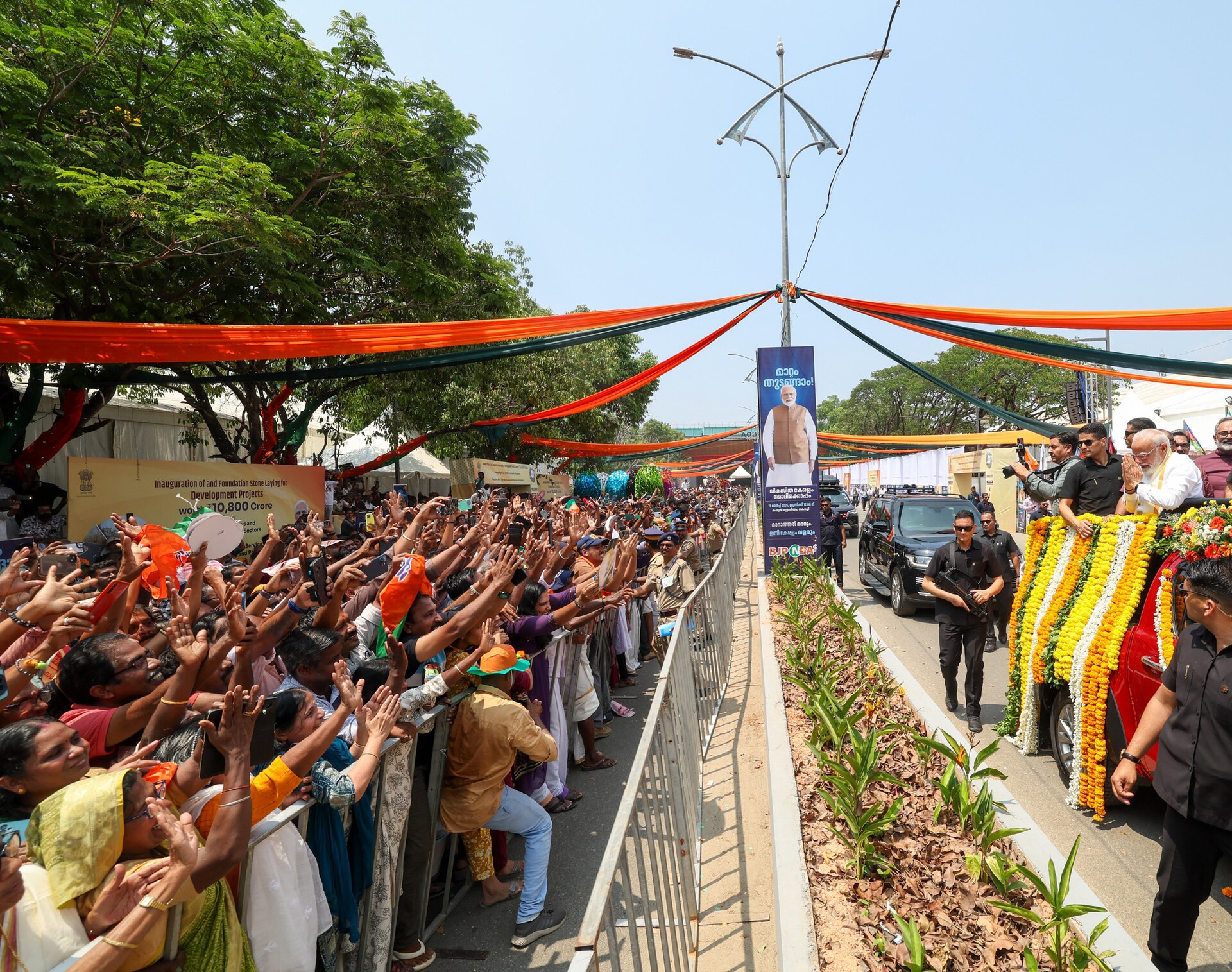
The Delhi commentariat has a treasured festival ritual. Narendra Modi says something combative, Congress declares civilisation endangered, television panels develop collective palpitations and social media spends twelve hours pretending that nobody understands the ordinary political meaning of words. This Diwali’s offering was the prime minister’s reference to “dimagi Naxals,” followed by Jairam Ramesh accusing him of using a solemn occasion to attack opponents, as recorded in The Indian Express’s live report.
I am not scandalised. Indian politics has survived considerably sharper phrases, many of them directed at Modi by people who become Victorian governesses when he replies. The underlying idea is also recognisable: movements that cannot win broad public consent sometimes acquire an influential supporting cast in universities, advocacy organisations, media and cultural institutions. That cast may reject violence yet reproduce the movement’s assumptions about the Indian state, treating every development project as plunder, every security action as oppression and every expression of national confidence as majoritarian theatre.
That phenomenon deserves criticism. What it does not deserve is imprecision. A phrase designed to expose a particular ideological habit becomes useless if it is sprayed across the entire field of disagreement. Modi’s political instinct is often excellent; here, the instinct needs a narrower definition.
The outrage industry is pretending not to understand
Let me first dispose of the manufactured offence. Congress’s objection that Diwali is too solemn for political argument is delightfully selective. Parties use religious and national occasions to make political points constantly. Leaders invoke social reform on anniversaries, welfare during festivals and national unity on commemorative days. The complaint is not truly about timing. It is about Modi controlling the frame.
The INDIA alliance and its sympathetic commentators know what the phrase is trying to evoke. They know the target is not somebody who objects to a highway alignment or asks whether compensation reached a displaced family. The target is a worldview in which India is assumed guilty before evidence arrives, democratic legitimacy is discounted when voters choose the right, and insurgent violence is surrounded by paragraphs of context while the constable’s death receives a sentence.
This asymmetry has been visible for years. When the state expands roads, telecom links, schools and banking access into neglected districts, a certain class notices only the security footprint. When extremists destroy public infrastructure or intimidate villagers, the same class discovers complexity. The Home Ministry’s public material on Left-Wing Extremism describes the government’s combined security-and-development approach. One can dispute its implementation, but it is unserious to pretend the policy consists only of force.
The government deserves credit for refusing the old romantic idea that remote tribal citizens should remain preserved in poverty so metropolitan activists can admire their authenticity. Roads and mobile towers are not acts of cultural aggression. A bank account is not neoliberal occupation. A functioning health centre does not become sinister because the state built it.
But words need borders
Here is where I part company with the laziest BJP cheerleaders. “Dimagi Naxal” cannot mean everyone whose mind irritates the government. A democratic state needs inconvenient reporters, environmental litigants, civil-liberties lawyers and academics who test official claims. Some will be ideologically hostile to the BJP. That is not a security category; it is political life.
If a forest-clearance process is defective, the person pointing it out is not sabotaging development. She may be preventing a project from collapsing in court two years later. If a journalist documents that promised rehabilitation has not occurred, the answer is to fix rehabilitation, not speculate about intellectual insurgency. If a scholar argues that a criminal statute is too broad, the government should answer the argument. India is strong enough to distinguish criticism from complicity.
The distinction is not merely liberal etiquette. It protects the government’s own case. When a term is applied too widely, genuine ideological fellow-travelling disappears inside a cloud of partisan abuse. The public stops listening. Officials become less disciplined about evidence. Eventually a serious warning sounds like another hashtag.
Modi’s critics frequently refuse him interpretive charity, but his supporters should not compensate by refusing him criticism. He is at his most persuasive when he names a concrete pattern and connects it to ordinary experience. He is less persuasive when a memorable label does all the analytical work. The country deserves examples, criteria and consequences, not an infinitely expandable category.
Congress’s selective institutionalism
Congress nevertheless remains poorly placed to lecture anyone on respectable speech. Its ecosystem has normalised descriptions of BJP voters as ignorant, hateful or manipulated; it has tolerated comparisons that would be denounced as dehumanising if aimed in the other direction. The party’s nostalgia for a supposedly gentler republic usually means nostalgia for an era when its own assumptions were treated as neutral.
Lutyens Delhi’s old privilege was not simply access to ministers. It was the authority to decide which ideas counted as mainstream. State-led secularism as Congress defined it was reasonable; alternatives were communal. Centrally designed socialism was compassionate; market reform was suspect until Congress implemented it. Cultural pride expressed through approved institutions was heritage; expressed through Hindu civilisational language, it became majoritarianism.
That monopoly has broken, and much of the outrage around Modi’s vocabulary is grief over the loss. He names ideological actors whom elite institutions once presented as disinterested experts. Naturally, they dislike the naming. I do not blame them for defending themselves. I blame editors who reproduce their defence as objective fact.
Still, the right should learn from the left’s failures. A movement that once labelled wide categories of opponents reactionary cannot build intellectual confidence by inventing its own sweeping label. The point of defeating ideological gatekeeping is to open argument, not merely change the gatekeeper.
A better version of the argument
I would define the problem this way. There exists a network of opinion that systematically minimises extremist agency, treats the constitutional state as uniquely illegitimate, opposes development without accepting responsibility for the poverty preserved by that opposition, and uses the prestige of professional institutions to launder political commitments as neutral expertise. Criticise that network fiercely. Quote its claims. Compare predictions with outcomes. Follow its funding where disclosure law permits. Challenge it in universities, newspapers and courts.
At the same time, establish bright lines. Peaceful dissent is not extremism. Legal representation is not endorsement. Reporting from conflict areas is not collaboration. Environmental scrutiny is not economic sabotage. A government confident in India’s democratic strength should say these things without being prompted.
This sharper formulation would also force the opposition to confront the substance. Congress could no longer escape by condemning tone. It would have to explain its approach to insurgency, development and state capacity. Does it support roads in affected districts? How would it balance consent, security and construction? Which projects would it stop, and what economic alternative would it offer residents? Those are harder questions than whether Diwali permits political adjectives.
I suspect that is why theatrical outrage remains so popular. It turns a policy dispute into a manners complaint. The prime minister says something provocative; Congress performs injury; the commentariat reviews his temperament; nobody asks what decades of left-wing violence did to citizens far from Delhi studios.
My sympathy is therefore with Modi’s argument, but not with an unlimited use of his phrase. India does face ideological obstruction disguised as moral expertise. The government has been right to challenge it and right to connect security with development. Yet a democratic majority demonstrates strength by making distinctions that its critics refuse to make.
Use the phrase for those whose public reasoning actually fits it. Spare the citizen who merely disagrees. Precision will not soften the argument; it will make the argument harder to evade. And it may finally oblige Congress to answer something more substantial than the date on the festival calendar.