India’s political opposition has discovered a marvellous machine. It converts electoral defeat into moral superiority, spares parties the embarrassment of examining their organisation and guarantees sympathetic television panels for several evenings. I am not referring to the electronic voting machine. I mean the allegation about the electronic voting machine.
The latest demand from INDIA alliance leaders for voting through paper ballots belongs to this familiar ritual. As The Indian Express reported, the demand arrived alongside sweeping accusations against the Election Commission. We are asked to believe that a national return to paper is the obvious cure, even though ballot papers bring their own history of invalid votes, booth capture, slow counting and disputes over marks. Congress nostalgia has a remarkable filtering system: every administrative weakness of the era it dominated disappears, while every contemporary safeguard becomes suspicious.
A grievance in search of evidence
I do not ask opposition parties to trust the BJP. Political rivals are not meant to exchange friendship bracelets. I do ask them to distinguish suspicion from proof. An election result that differs from a leader’s expectation is not technical evidence. A viral clip is not an audit. A phrase such as “vote theft” may animate a crowd, but it does not identify a reproducible vulnerability or demonstrate that votes were altered.
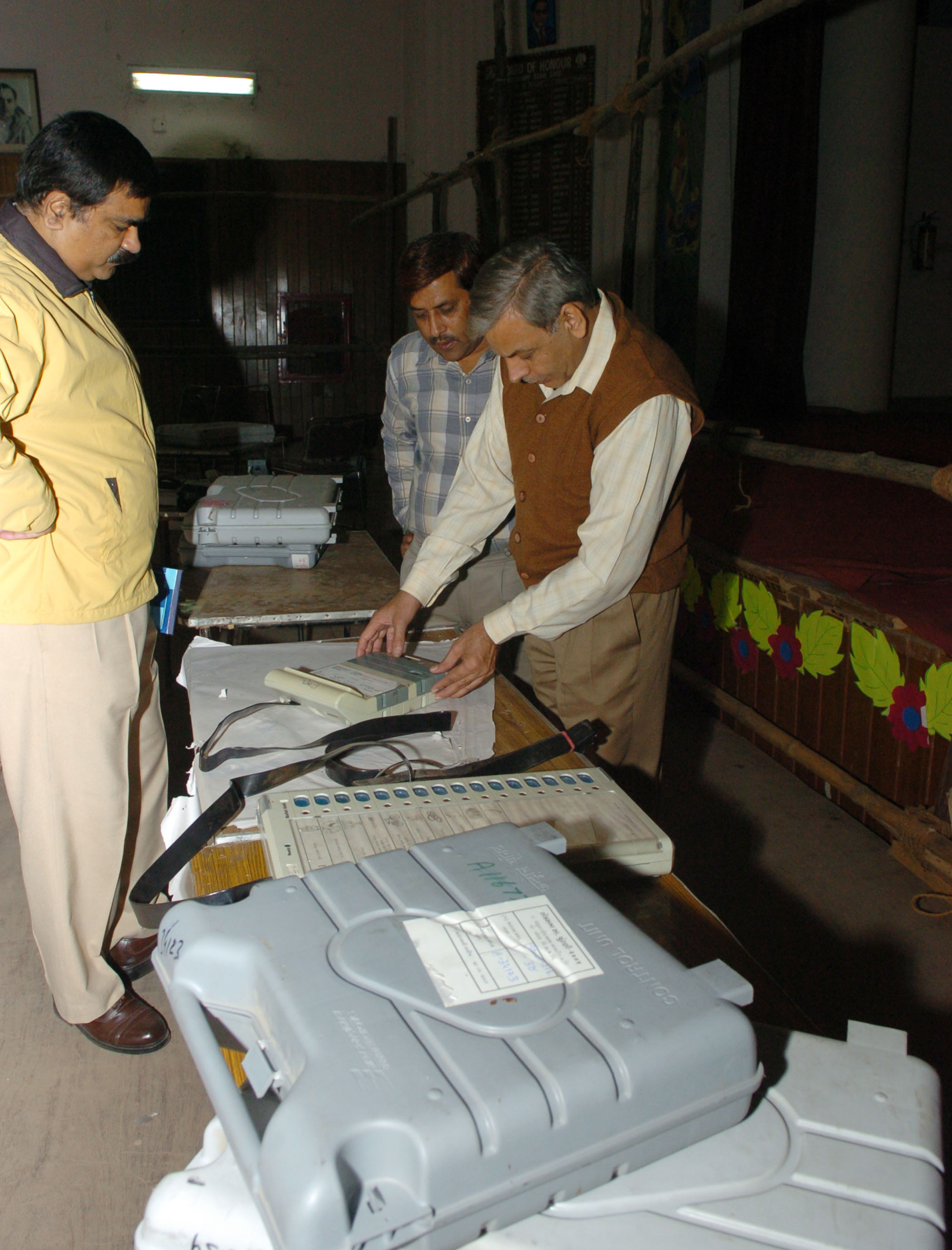
The Election Commission has repeatedly described the procedural safeguards surrounding machines, including randomisation, mock polls, sealing and the use of voter-verifiable paper audit trails. Those safeguards deserve testing and continued improvement. They do not deserve to be erased from public discussion simply because “the machines stole it” is easier to chant than “our booth committees were absent in sixty wards.”
What strikes me most is the opposition’s inconsistency. Parties celebrate victories conducted with the same broad system they denounce after losses. A device cannot be an honest servant in one state and a fascist accomplice in the neighbouring state unless the allegation includes specific evidence of different handling. Usually it does not. The theory changes shape to preserve itself. Victory proves voters resisted manipulation; defeat proves manipulation succeeded.
Lutyens commentary rewards spectacle
The Delhi commentariat plays a drearily predictable role. A provocative claim becomes a “growing concern” after enough allies repeat it. The number of repetitions is then cited as proof that the concern is widespread. Television debates invite four politicians to shout about democracy while nobody asks for a technical proposition that an engineer could test.
This ecosystem is not necessarily coordinating a lie. Its problem is more banal: it rewards drama, access and moral posturing. A detailed discussion of custody protocols is poor television. A former minister announcing that democracy is dead produces clips. Reporters then describe “questions swirling” as though the questions arrived by monsoon rather than being manufactured at a press conference.
Recent political reporting has also described the BJP’s effort to counter opposition mobilisation with factual material and outreach. The details in this Indian Express account suggest the government recognises that silence leaves an information vacuum. That recognition is overdue. BJP spokesmen are often excellent at ridiculing Congress and less effective at explaining a process to the citizen who belongs to neither camp.
The Commission should over-communicate
Defenders of EVMs sometimes behave as if asking a question is an insult to constitutional authority. That attitude is counterproductive. Public confidence cannot be commanded by press note. I would rather see regular, open technical demonstrations; clearly filmed explanations in several Indian languages; published audit statistics; invitations to recognised parties to nominate qualified observers; and prompt, specific responses to documented complaints.
The Commission should also separate political rhetoric from citizen anxiety. A voter may worry about a machine without subscribing to an opposition conspiracy theory. She deserves a patient explanation of what the VVPAT slip shows, how machines are allocated, who witnesses mock polls, how seals are recorded and what legal remedy exists if procedure is breached. Institutional dignity is not injured by accessible teaching.
I would go further. Wherever practical, the Commission should release standardised constituency-level audit information in formats that researchers can analyse. If parties allege an anomaly, require them to specify the booth, the procedural breach and the requested remedy. Publish the complaint and disposition. Sunlight would reveal genuine lapses, but it would also expose the industrial production of vague accusations.
None of this requires abandoning EVMs. In fact, it is the best defence of them. Technology earns legitimacy through systems around it: custody, observation, verification, documentation and recourse. The question is not whether silicon possesses virtue. It is whether humans can manipulate the process without detection and whether the safeguards make such manipulation difficult, risky and auditable.
Paper is not an innocence machine
Ballot-paper advocates speak as though paper were naturally democratic. Paper is merely a medium. It can be stuffed, snatched, spoiled, miscounted, destroyed or disputed. Older Indians remember elections in which physical control of a booth mattered rather more than the voter’s considered preference. Returning to paper would not take us to a Scandinavian village meeting. It would return us to Indian administrative conditions with slower counting and a larger physical attack surface.
There can be reasonable debates about expanding audits or changing sampling rules. Those debates are useful precisely because they focus on verification rather than mythology. If an opposition party proposes a statistically serious audit design, the government side should consider it on merit. Supporting EVMs does not require believing that today’s procedures are the final revelation.
But Congress and its allies rarely remain in that serious lane for long. Their incentive is to keep the allegation atmospheric. A precise allegation can be tested and rejected. A mood of suspicion can be renewed forever. It binds supporters, delegitimises the winner and distracts from failures of candidate selection, messaging and local organisation.
The defeat nobody wants to diagnose
Political parties lose because voters do not owe them gratitude. Congress still behaves as though invoking the Constitution, secularism and its historical pedigree should exempt it from explaining who will deliver services, manage growth or build a durable organisation. Regional allies often want Congress’s national platform without accepting its leadership, while Congress wants their vote banks without respecting their territorial realities. No machine created that contradiction.
BJP’s advantage is not magical hardware. It is relentless organisation, message discipline, welfare delivery, leadership projection and a willingness to contest political territory its rivals once considered permanently assigned. One can oppose its ideology and still observe the work. The INDIA alliance’s technological alibi is comforting because it makes that work irrelevant.
I am willing to criticise the Commission when it communicates poorly or answers legitimate procedural questions with lawyerly opacity. I am willing to support additional audits that improve confidence without paralysing elections. What I will not do is pretend that paper ballots are holy relics or that repeated accusation becomes evidence.
The opposition is entitled to protest, litigate and demand records. It is not entitled to an editorial class that launders every slogan into established fact. Let the Commission publish more, demonstrate more and correct errors faster. Then let Congress confront the machine it truly fears: a political organisation that shows up between elections, while its own leaders arrive after counting day to blame the equipment.