Delhi’s professional outrage industry has rediscovered the street. The current protests over electoral-roll revision come with the familiar equipment: maximalist placards, instant demands for resignations, celebrity attendance and television panels announcing that democracy has entered intensive care. Congress and its allies have never met an administrative dispute they could not inflate into a constitutional apocalypse.
I remain sceptical of this performance. Voter lists must be revised, duplicate and ineligible entries must be addressed, and parties cannot demand accurate rolls while treating every verification exercise as disenfranchisement. Yet the Election Commission does itself no favours when it answers specific questions with institutional hauteur. A constitutional body earns trust through transparent procedure, not by expecting citizens to infer holiness from its letterhead.
Protest is not proof
The Opposition’s rhetorical trick is simple. Begin with genuine anxieties about documentation and wrongful deletion. Add every accumulated grievance against the BJP. Then announce that the entire process is designed to rig elections. The distance between an error-prone exercise and a national conspiracy disappears in one press conference. Allegation becomes evidence because enough friendly commentators repeat it before dinner.
The reported government and BJP response has combined political counterattack with outreach and efforts to move demonstrations to larger designated grounds. That seems broadly sensible. The state must preserve order without treating peaceful dissent as sabotage. But the BJP should not assume that every protester is a Congress prop or every young participant has memorised an INDIA alliance script. Public irritation can be real even when opposition parties opportunistically harvest it.
This distinction matters. Congress has an obvious interest in delegitimising institutions whenever voters reject it, but eligible citizens also have an unquestionable interest in remaining enrolled. The government’s supporters weaken their own case when they mock every concern. If revision is defensible—and I believe accurate revision is essential—it should withstand disclosure of timelines, criteria, audit trails and remedial mechanisms.
The Commission must answer the difficult material
Reporting has raised questions that cannot be dismissed as opposition gossip. An Indian Express investigation and the political reaction to it described objections from within the three-member Commission about centralisation and decisions concerning additions and deletions. I am not treating those reported objections as proof of wrongdoing. I am saying they are sufficiently specific to require a specific public answer.
The worst possible response is the bureaucratic equivalent of clutching pearls: how dare anyone question us? Constitutional independence does not mean freedom from explanation. On the contrary, independence increases the obligation to show one’s working. The Commission should publish clear procedural records, explain which decisions required collective approval, specify safeguards around database access and disclose how disagreements were resolved. If the reporting is inaccurate, rebut it point by point. A general sermon about malicious narratives will persuade only those already persuaded.
Some on the right fear that demanding answers concedes the Opposition’s premise. I disagree. Transparency is not surrender; it is the most efficient way to deprive political theatre of oxygen. The INDIA alliance thrives in fog because fog allows every clerical mistake to be presented as a plot directed from the Prime Minister’s Office. Facts, dates and auditable processes are less exciting, which is precisely their value.
The Kerala timing deserves scepticism
The reopening of an old vigilance matter involving Chief Election Commissioner Gyanesh Kumar has predictably been folded into the agitation. Public reporting has carefully described it as an allegation and a reopened probe, not an established finding. That distinction is essential. A detailed account of the 2006 matter and its revival shows why the history warrants reporting, but it also shows why television conviction is premature.
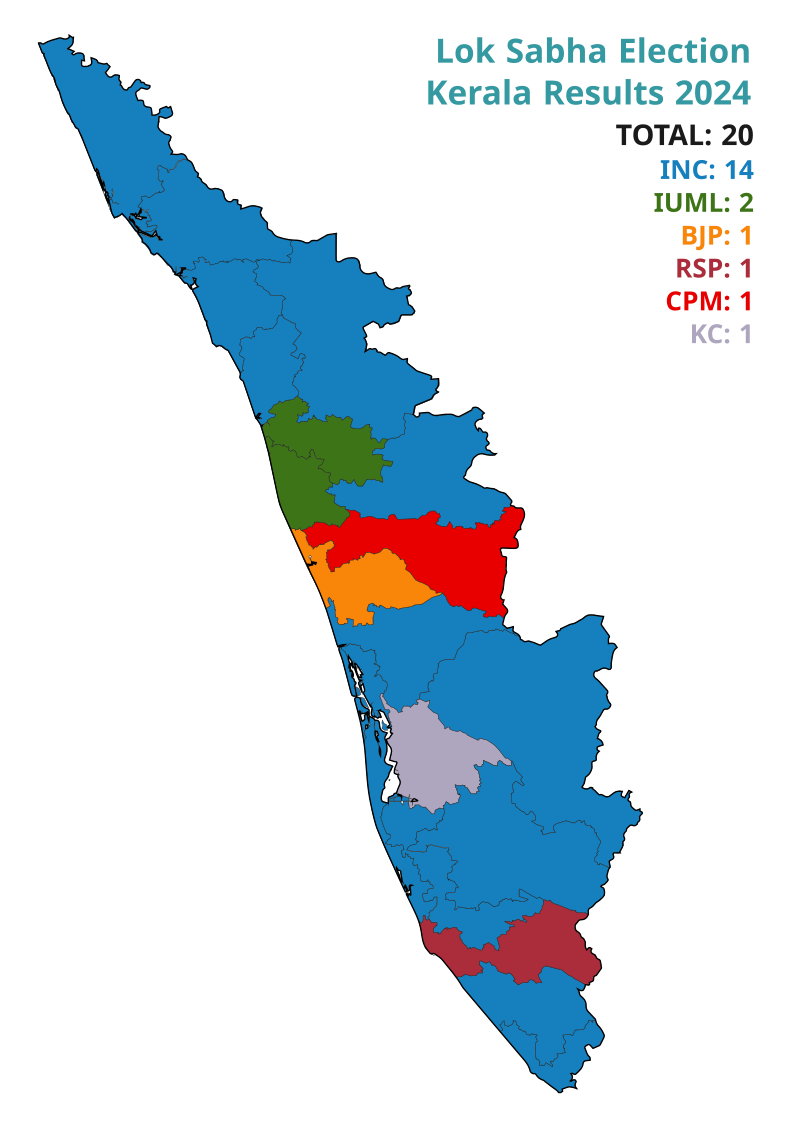
I find the political timing impossible to ignore. When a state government aligned against the Centre reopens a two-decade-old issue just as the officer becomes the focus of a national campaign, citizens are entitled to ask whether accountability has suddenly awakened or merely received a calendar invitation. That does not make the underlying complaint false. It means investigators should proceed lawfully and politicians should stop presenting a decision to investigate as a verdict.
Congress demands that every allegation against an institution it dislikes be treated as self-proving, while allegations touching its allies require years of context, nuance and due process. This selective constitutionalism is one reason its moral lectures travel poorly outside sympathetic studios. The answer, however, is not for BJP supporters to imitate the same opportunism. We should insist on due process consistently—even when consistency deprives us of a satisfying hashtag.
Why the government should keep its distance
The Union government has a political stake in defending electoral legitimacy, but it must avoid appearing to speak for the Commission. Ministers may challenge Congress’s claims and expose contradictions. They should not act as substitute election commissioners. The more the BJP publicly owns every institutional defence, the easier it becomes for opponents to claim those institutions are extensions of the party.
Let the Commission release the data. Let judicial challenges proceed. Let affected voters access a simple, time-bound correction process. The government’s role should be to ensure security, uphold lawful protest and resist demands for administrative paralysis. The BJP’s best argument is that accurate rolls protect every genuine voter; it should not bury that case beneath reflexive partisan aggression.
Police conduct also matters. Preventive detention of peaceful demonstrators may clear a road for an evening while supplying the movement with photographs for a month. Authorities should distinguish violence, intimidation and obstruction from ordinary dissent. A confident state does not need to fear a flag. It needs rules applied without favour and enough patience to let exaggerated movements reveal their own limitations.
The Opposition’s larger problem
Congress and the INDIA alliance keep trying to transform procedural controversy into a substitute for political renewal. They speak as though voters would naturally return to them if only elections were administered by people receiving their approval. This avoids inconvenient questions: What is their economic programme? How would their coalition resolve internal contradictions? What administrative model do they offer beyond reversing BJP decisions and redistributing more money?
Institutional criticism is necessary, but an opposition that offers only institutional suspicion slowly traps itself. Every defeat becomes evidence of manipulation. Every victory is suddenly proof that democracy survives. Voters notice the asymmetry. They may harbour doubts about officials while still rejecting a party that treats them as dupes whenever they choose the BJP.
The commentariat encourages this habit because constitutional catastrophe is better content than administrative reform. A disputed form, an unclear deadline or an internal disagreement can be investigated. A dying republic demands monologues. Nuance loses to emergency branding, and ordinary citizens seeking practical guidance are left with rival camps shouting about fascism and anarchy.
Accuracy without hysteria
My position is therefore unfashionably straightforward. India needs accurate electoral rolls. Every eligible citizen must have a practical route to inclusion. Wrongful deletion is serious, duplicate or ineligible registration is also serious, and neither concern cancels the other. The Commission must provide documentary answers to credible questions. Opposition parties must provide evidence for their most explosive accusations.
I do not accept Congress’s attempt to convert every dispute into a referendum on the moral legitimacy of the BJP government. Nor do I accept the notion that supporting the government requires applauding institutional opacity. The right should be confident enough to demand higher standards from bodies it believes are being unfairly attacked.
The protests will eventually shrink or mutate into the next cause. What remains should be a cleaner roll, a transparent record of how it was produced and a correction system citizens can navigate without hiring an agent. That outcome would deny the Opposition its preferred drama while strengthening the institution it claims to defend. The Commission should seize that opportunity. Silence is not dignity when the public is asking for receipts.