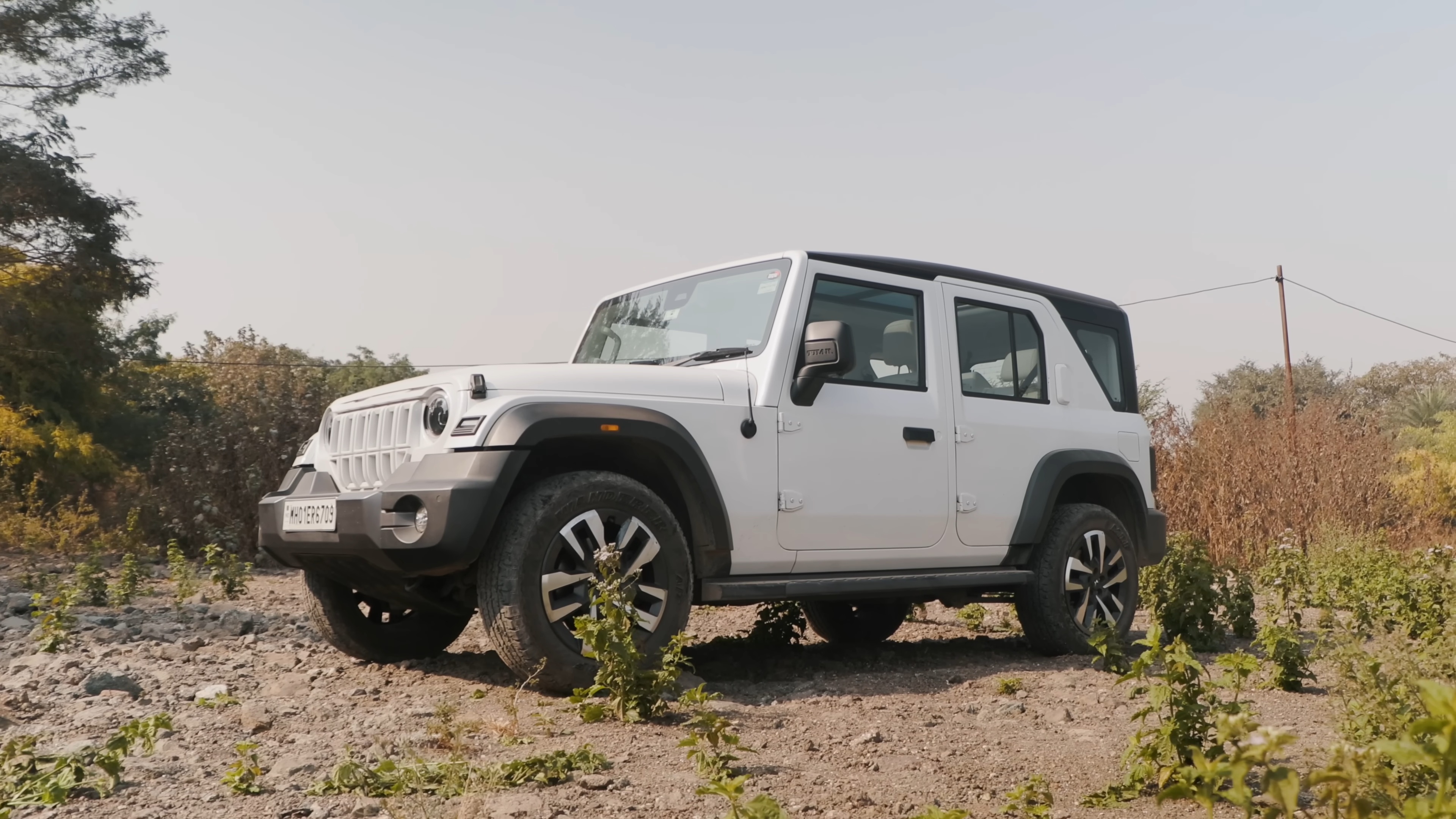
The Mahindra Thar Roxx has achieved something I did not expect: it has made the Thar genuinely plausible as a family’s only car. That does not mean every family should buy one. It remains a large, heavy, body-on-frame SUV whose image can seduce people into ignoring fuel bills, parking constraints and the fact that most commutes contain no boulders. Yet it is not merely a stretched three-door toy. Autocar India’s road test details the newer chassis, longer wheelbase and improved cabin, while its 19,000km long-term report offers the more useful ownership perspective. My problem is not with the vehicle’s breadth. It is with a variant structure that turns buying one into an entrance examination.
Start with what the Roxx cannot hide
No panoramic roof or digital instrument animation can repeal physics. The Roxx is tall and heavy. It will move around more than a good monocoque crossover, require greater care in tight streets and consume more fuel. The side-opening tailgate and spare wheel look correct on Instagram but demand space behind the car. Step-in height matters for elderly parents. Wide tyres are expensive to replace. Buyers should test these ordinary facts before exploring colour themes and connected features. A ten-minute dealership loop on smooth roads is not enough; drive over broken surfaces, attempt a U-turn, reverse into a narrow slot and sit in the rear with the front seat adjusted for your tallest driver.
The improvement over the three-door Thar is still substantial. Rear doors change daily usability, the longer wheelbase creates meaningful passenger room, and the chassis feels more settled. The engines have the torque required for the mass. Mahindra understood that a five-door Thar could not simply be a costume with added hinges. The Roxx’s success is deserved because it blends character with practicality better than many predicted. But “more practical than a Thar” is not identical to “the most practical SUV for the money.” A Creta-class monocoque will be easier for many urban families, and a seven-seater may serve others better.
The trim ladder manufactures anxiety
Modern variant strategy works by placing one desirable feature just above the trim a buyer planned to purchase. Want the preferred gearbox? Move up. Want a camera or a particular safety aid? Move again. By the time the salesperson has explained the omissions, the original budget feels emotionally inadequate. Mahindra is hardly alone in this, but the Roxx’s combinations of engines, transmissions, driven wheels and trims make the problem unusually visible. Buyers begin choosing labels rather than needs.
I use a simpler hierarchy. First select fuel and transmission based on annual use, traffic and tolerance for running costs. Then decide honestly whether four-wheel drive will be used. Not admired, not mentioned at weekend breakfasts—used. After that, identify non-negotiable safety and comfort equipment: airbags, stability control, a reversing aid, effective headlights, rear ventilation and whatever seating adjustment the primary driver requires. Everything else must defend its cost. Ambient lighting has never completed an overtake. A panoramic roof is a glass panel above a hot country, not a personality.
Four-wheel drive is not a moral achievement
The Thar badge creates pressure to buy maximum capability. I reject that completely. Rear-wheel drive is sufficient for city use, highways and the broken approach road to most resorts. Four-wheel drive is valuable for owners who regularly encounter mud, sand, snow, steep loose surfaces or serious trails—and who are willing to learn how the system works. Carrying extra hardware everywhere for an imagined expedition adds purchase cost, weight and complexity. There is no shame in buying the version that matches your life.
The counterargument is resale. A “proper” Thar with four-wheel drive may attract enthusiasts later. Perhaps, but paying lakhs and higher running costs now to satisfy a hypothetical second owner is dubious accounting. Resale depends on condition, market taste and future regulations too. Buy capability because you will use it. If adventure arrives once a year, hiring a suitable vehicle or joining a guided outing may be cheaper and less stressful than owning your fantasy daily.
Petrol performance carries a bill
The turbo-petrol feels smooth and eager, especially with an automatic, but urban fuel consumption can make the romance expensive. The diesel’s torque and efficiency suit long-distance use, though buyers must consider their city’s regulatory environment and typical trip length. Repeated short diesel journeys are not automatically ideal. I will not prescribe one engine nationally because traffic, fuel prices, annual kilometres and local rules differ. I will prescribe arithmetic. Estimate realistic efficiency from owners and long-term tests, multiply it by your annual distance, add insurance and tyre costs, and compare the result over five years. The showroom EMI hides most of ownership.
Reliability deserves equal weight. Mahindra’s newer products have become ambitious in electronics, screens and driver-assistance features. Ambition is welcome, but every added system creates another potential irritation if software or sensors misbehave. Buyers should seek recent owner reports, inspect service capacity nearby and avoid assuming the top trim is automatically the safest long-term bet. Mechanical fundamentals, parts availability and a competent workshop will matter after the launch videos are forgotten.
ADAS cannot negotiate Indian chaos for you
Driver-assistance systems can reduce risk when calibrated well and understood properly. They can also beep, intervene or confuse owners who treat the acronym as autonomous driving. Indian roads contain faded markings, sudden pedestrians, motorcycles in blind spots and vehicles behaving creatively around lanes. A buyer should test the system and learn how to adjust or disable individual functions. Paying for Level 2 on a brochure does not outsource attention.
I prioritise crash structure, tyres, brakes, visibility and restrained driving over gadget counts. The Roxx’s commanding seating position can create false invulnerability. Its mass protects no one from bad judgment and increases the harm it can impose on smaller road users. Owners who buy an off-road image should demonstrate on-road courtesy: signal, leave space, resist aggressive auxiliary lights and remember that ground clearance does not grant constitutional priority.
My version of value
The sweet spot is a mid-level Roxx with the engine and gearbox suited to actual use, essential safety kit, rear-seat comfort and wheels whose tyres do not require a finance application. I would skip cosmetic packs, giant rims and equipment bought merely to avoid feeling inferior to the next trim. Spend the difference on good insurance, a dashcam, quality tyres when replacement comes due and trips that justify owning an adventurous vehicle.
The Roxx is one of Mahindra’s most convincing products because its substance nearly matches its theatre. That is high praise from me. It rides better, carries people properly and retains real capability. But the company’s trim maze monetises buyer insecurity, and dealerships naturally guide customers upward. Walk in with a written list. If a feature will not improve safety, daily comfort or the capability you genuinely use, make it earn every rupee. The best Thar Roxx is not the one with the longest suffix. It is the one whose owner can explain, without mentioning resale or Instagram, why each expensive box was ticked.