Electric-car salespeople love asking how far I drive each day. It is meant to dissolve range anxiety. Most urban Indians cover far less than a modern electric SUV’s advertised range, they explain, so the worry is irrational. They are partly right and strategically evasive. The buyer is not only asking whether the battery holds enough energy. She is asking whether a charger will work when she needs it, whether her apartment will permit installation, whether the highway location is accessible at night and whether five apps will argue with her bank before electricity begins to flow.
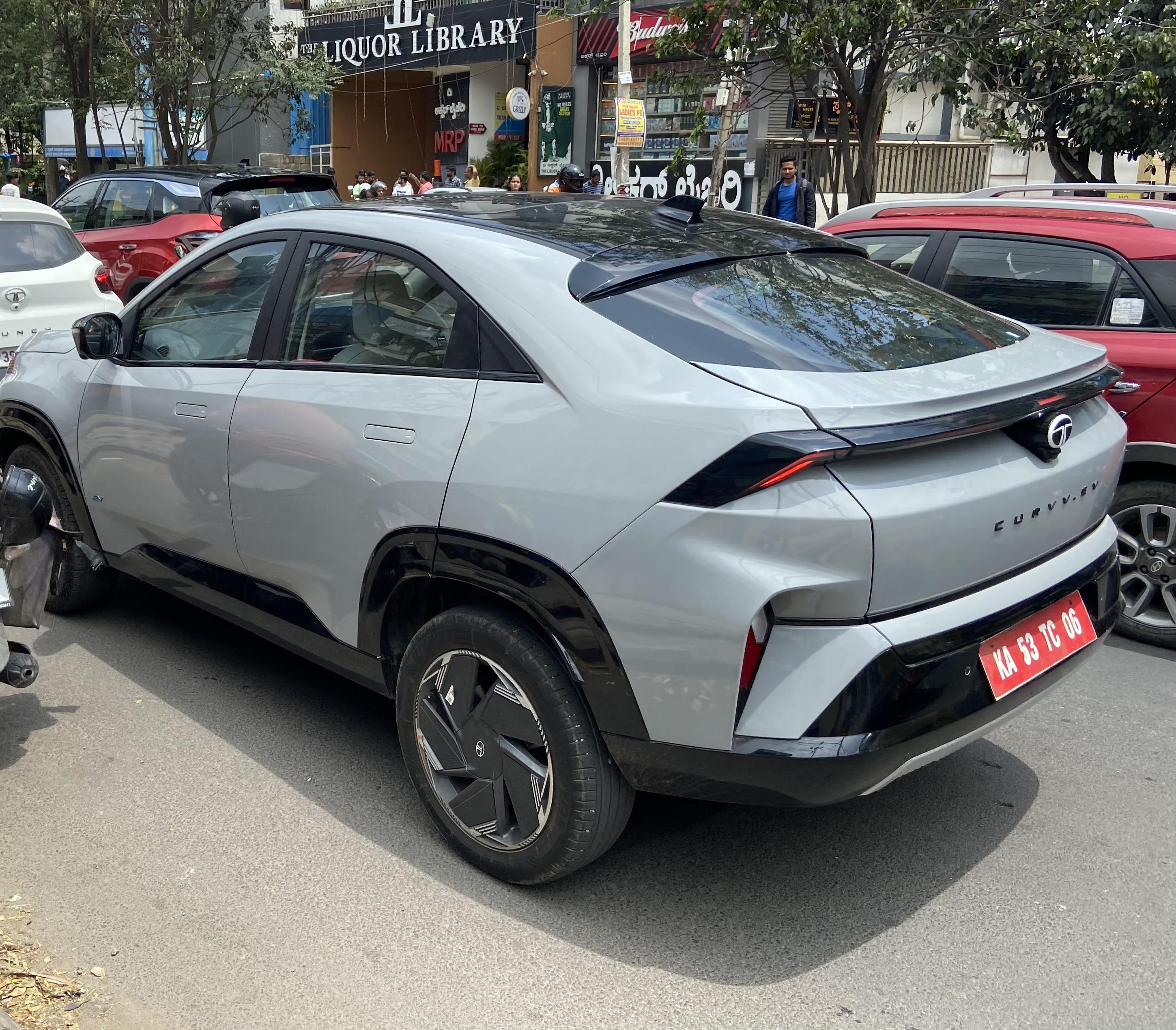
The Tata Curvv EV illustrates the transition. It offers the kind of battery choices and claimed range that make daily commuting almost trivial for a home-charging owner. Its coupé-SUV shape, screens and features bring EVs into the mainstream showroom contest rather than the earnest eco corner. Yet the ownership gap remains outside the car. Range anxiety is increasingly charger anxiety, and manufacturers should stop congratulating themselves for solving the first while treating the second as somebody else’s utility problem.
I like the Curvv EV’s ambition. I dislike the sales fiction that every buyer occupies a private garage with a compliant socket and drives only along curated charging corridors.
The car has outgrown the old debate
Tata Motors’ official Curvv EV page describes its battery options, claimed range and charging capabilities. As always, laboratory range is not a promise of identical road performance. Speed, temperature, air-conditioning, elevation, load and driving style intervene. Buyers should focus on realistic usable range with a reserve, not the largest number in the advertisement.
Even after that discount, current long-range EVs can cover several days of ordinary commuting. Home charging turns the routine into something easier than visiting a fuel station: plug in, sleep, leave. For this buyer, the electric proposition can be excellent—quiet operation, immediate response, lower running cost and reduced local tailpipe pollution.
The trouble is distribution. Detached-house convenience is not India’s default urban form. Apartment residents may have assigned parking without electrical access, shared parking that changes, old wiring, resistant associations or meters located far away. Tenants face landlord approval and no incentive to fund permanent installation. A product marketed as urban-modern collides with urban property governance.
Automakers should conduct a charging-feasibility survey before taking a non-refundable booking amount. Inspect the parking location, estimate wiring work, explain meter options and identify permissions. If installation is impossible, say so. Selling the vehicle first and outsourcing the argument to the customer, electrician and resident welfare association is not premium service.
A charger icon is not a working charger
India’s public charging map has expanded. The government’s Bureau of Energy Efficiency EV Yatra portal is one official effort to help users locate stations, while private networks operate their own apps and maps. Counting installed chargers, however, is the infrastructure equivalent of counting hospital beds without asking whether doctors or oxygen are present.
Drivers need live status: available, occupied, reserved, derated or offline. They need connector type, power actually being delivered, tariff, parking fee, operating hours, amenities and a number answered by someone who can reset the unit. Operators should publish uptime measured by independent rules. A charger that exists on a database but fails repeatedly is worse than absent because journeys are planned around it.
Payment fragmentation is needlessly hostile. Petrol pumps do not require a different membership for each oil company. EV drivers should be able to tap a card, scan a common payment code or use interoperable roaming across networks. Loyalty apps can remain optional. Requiring registration, wallet loading and location permissions merely to buy electricity is product-manager vanity.
Highway placement deserves attention beyond distance. A charger behind a closed dealership gate is not a 24-hour charger. A unit in a dark, isolated corner may be technically available and practically unsafe, particularly for women travelling alone. Toilets, lighting, food and security are part of charging infrastructure because charging takes time. The electron is not the entire experience.
The Curvv’s real test is the unplanned journey
Review drives usually begin with a charged car and a known route. Ownership includes detours, queues, broken units and the relative who forgot to plug in. A robust EV ecosystem must tolerate ordinary human disorganisation. That means dense redundancy, not a perfect line of chargers spaced at the theoretical edge of range.
The Curvv EV’s fast-charging capability helps only when the charger communicates properly and can supply useful power. Charging curves also matter: the peak kilowatt figure may appear only under ideal conditions and for part of the session. Manufacturers should publish clear charging-time graphs across state-of-charge bands, not only a best-case “minutes to percent” slogan.
Battery preconditioning, navigation that predicts arrival charge and route planning tied to live charger data should become standard on long-range models. Software can reduce uncertainty, but it needs reliable network information. India’s charger operators and carmakers must share data through common protocols. A driver should not be the systems integrator.
There is a counterargument that early adopters accept friction and infrastructure will follow sales. That was fair when EVs were experimental. It is weaker now that cars costing serious money are advertised as family vehicles. A family car must complete family journeys, including urgent ones. The industry cannot claim mainstream status at purchase and pioneer tolerance at the first failed charger.
What government and housing societies can do
Building codes should make new residential and commercial parking EV-ready with conduit, electrical capacity and load management. Retrofitting every bay later is costlier and more contentious. Existing societies need model rules explaining installation approval, safety standards, metering and cost allocation. State regulators and urban bodies can reduce uncertainty without forcing the society to pay for an individual’s charger.
Distribution companies should offer simple processes for dedicated EV connections and time-of-day tariffs where grids permit. Smart load management can schedule charging away from peaks, benefiting both owners and utilities. Blanket fear that every EV will plug in simultaneously ignores what managed charging can do.
Public support should increasingly reward reliability and useful location rather than hardware installation alone. Contracts can require uptime, maintenance response and open data. Penalties should be meaningful. Subsidising a dead charger creates a monument, not a network.
Manufacturers have responsibility too. Tata has the advantage of a wider group ecosystem touching charging and power, but buyers should judge the experience, not corporate synergy slides. Bundle installation support, interoperable payments, roadside assistance that understands EV failures and transparent battery warranty terms. Train dealers to discuss degradation and charging without either panic or fairy tales.
Buy for your parking, not your aspiration
I would recommend the Curvv EV or a similar long-range electric car to a buyer with dependable home or workplace charging, a realistic view of highway use and service support nearby. I would hesitate for an apartment tenant without an assigned powered bay, even if the monthly running-cost spreadsheet looked irresistible. Public fast charging should support travel, not replace routine charging for most owners.
Before booking, perform a week-long audit. Where is the car parked at night? Can a cable reach safely without crossing a walkway? Who approves electrical work? What is the sanctioned load? Which three public chargers nearby have recent, credible user reports? What happens if the regular unit fails? These questions are less exciting than acceleration, but they determine satisfaction.
The Curvv EV shows how quickly Indian electric cars are becoming desirable on product terms. That is an achievement. The infrastructure conversation must now mature at the same speed. We should stop treating every anxious buyer as technologically timid. Sometimes anxiety is simply accurate information about unreliable systems.
A generous battery can hide weak infrastructure for daily use, but it cannot build trust on a long journey. Trust comes from a charger that appears where promised, starts without ritual, delivers the advertised power and has a working alternative nearby. Automakers have spent years making EVs feel like normal cars. Now the rest of the ecosystem must make charging feel like a normal service.