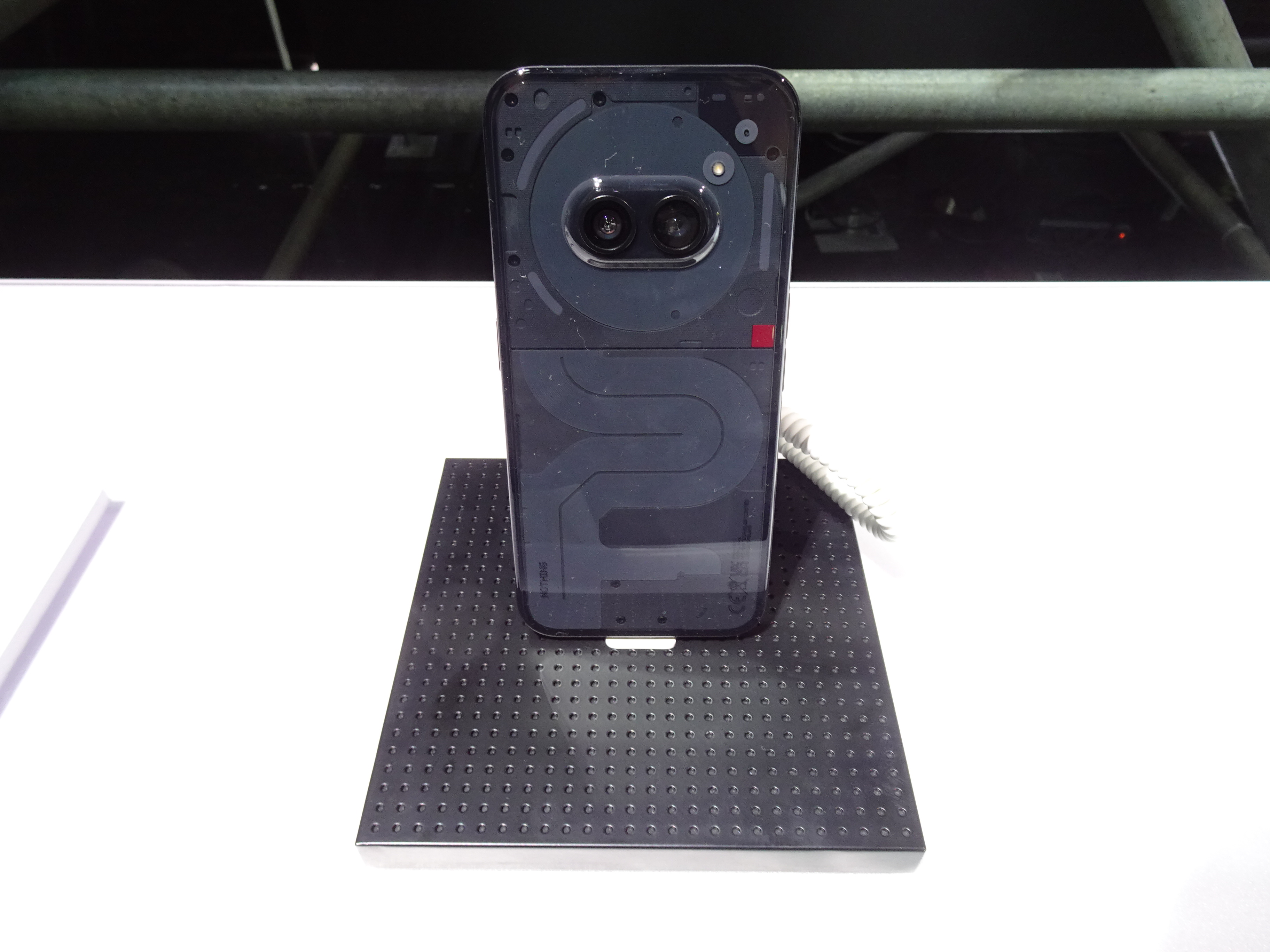
I have now watched enough supposedly disruptive phones become ordinary rectangles to distrust any handset that arrives with its own vocabulary. The Nothing Phone (2a) brought us the “Glyph interface”: illuminated elements on the back, ready to flash for notifications, timers and other matters that a screen already handles perfectly well. It photographed beautifully. It also encouraged reviewers to discuss blinking plastic as though Nothing had rediscovered electricity.
Two years later, the surprise is that I still like the Phone (2a). Not because the Glyph lights changed how I use a phone—they did not—but because the unfashionable parts of the ownership experience have held together. It remains a pleasant Android phone rather than a delivery vehicle for advertisements, duplicate apps and invitations to join an ecosystem. In the Indian mid-range market, that restraint has proved more valuable than the launch gimmick.
Long-term phone reviews can easily become disguised battery reports. The device survives a day, the camera still opens, the buttons still click, and the reviewer declares victory. My test is less mechanical. Do I pick up the phone without anticipating an argument? Do basic actions happen where I expect them to happen? Has the manufacturer inserted some new service between me and a task that used to be simple? The Phone (2a) has passed that test more often than many technically superior devices I have used.
The back was theatre; the software was the product
Nothing understood something its larger rivals often forget: software clutter is not free merely because it does not appear on the invoice. Every unwanted browser, app store and notification feed takes a little attention. Every confusing settings duplicate makes the phone feel less like something I own and more like a rented counter in a digital bazaar.
Nothing OS was visually assertive but structurally simple. The monochrome icons and dot-matrix styling could occasionally feel like a design student had discovered black and white, yet beneath that costume was an interface close enough to familiar Android that I never had to fight it. The original GSMArena software assessment noted both the near-stock foundation and the extensive visual treatment. That description has aged well: Nothing decorated Android without burying it.
This matters more after two years than it does during a ten-minute demonstration. A launch event can make a pre-installed shopping app seem trivial. The hundredth unsolicited notification cannot. The Phone (2a) has felt unusually calm, and calm is a premium feature that Indian buyers are rarely allowed to purchase below flagship prices.
The calm is not the same as blandness. Nothing still has visual habits that divide opinion, and I have occasionally changed a widget or abandoned an icon treatment that prized consistency over instant recognition. But those are choices I can reverse. They are not commercial interruptions pretending to be system features. That distinction sounds fussy until one remembers how often a phone asks for attention during a commute, a payment or a family call. Friction repeated every day becomes part of the character of a device.
I also value that the interface has not trained me to use the phone in a company-approved way. I can ignore most of Nothing’s decorative ideas and still have a coherent Android experience. The best custom software should make its case, then tolerate refusal. Nothing OS generally does. Its personality is visible, but it does not need to win every screen.
Update support remains part of the calculation, especially for anyone hoping to keep a mid-range phone beyond the usual upgrade cycle. I want longer security coverage from every manufacturer that borrows the language of sustainability. More important than launch-stage promises, however, is whether updates arrive without turning a familiar phone into an advertisement for the next one. A mid-range device should be judged by whether its maker still treats it as a product after newer models appear.
Its compromises were mostly honest
The Phone (2a) never had a flagship camera. In difficult light, its processing can look eager to rescue detail that was not really captured. Moving children and pets expose its limits faster than buildings and lunch plates. The plastic construction also accumulates the small evidence of ordinary life, while the transparent look makes every scratch feel like vandalism against an exhibit.
None of this strikes me as a betrayal. The cameras are adequate for documents, family pictures and the ritual recording of restaurant meals. Performance remains suitable for navigation, payments, messaging, video and sensible gaming. The battery was a strength from the beginning; the broader GSMArena review and test results give useful context for how the hardware compared at launch. More importantly, the phone does not make routine tasks feel like consolation prizes for failing to buy a flagship.
That phrase—adequate camera—will sound like surrender to anyone buying from a comparison chart. It is not. It is an attempt to match the tool to the life around it. Most of my photographs are viewed on another phone, sent in a family group or consulted later because I needed to remember a label, receipt or parking spot. When I know I care about the image, I slow down and work within the camera’s limits. What I do not get is the effortless consistency of a more expensive handset, particularly when the subject refuses to pose.
There are annoyances. The broad body is not ideal for one-handed use. The vibration motor and speakers remind me that this was built to a price. The Glyph system remains largely decorative because a phone lying face-down is not how many of us use it at a desk, especially when UPI prompts, work chats and delivery calls demand the screen. I eventually reduced the lights to a modest notification tool. Nothing’s signature feature became a better-looking version of the LED that Android phones had years ago.
The irony is that the transparent back has been more useful as an aesthetic decision than the lights have been as an interface. I can recognise the phone across a table. It has not dissolved into the familiar field of camera islands and restrained colours. Distinctiveness is not a productivity feature, but it has value when it does not demand a practical sacrifice. The Phone (2a) looks like somebody made a choice, which is rarer than it should be in this price band.
Age has made the trade-offs easier to see. A small stutter no longer feels like evidence of imminent collapse, and a missed night photograph no longer surprises me. In return, I have learned which irritations never grew larger. The plastic frame did not suddenly make the phone unpleasant to hold. The merely decent speakers did not interfere with earphones or a living-room speaker. A compromise is honest when it remains where the buyer expected it to be, rather than expanding through software nags, abandoned support or accessories designed to cure artificial limitations.
India did not need another “flagship killer”
The Phone (2a) launched into a market trained to compare processor names, charging wattage and promotional bank discounts with the concentration of commodity traders. That behaviour is understandable: spending more than ₹20,000 on a phone is serious household money, and buyers want visible value. But specifications encourage us to buy for the first week. Software cleanliness, repair access, update discipline and battery ageing determine whether we still enjoy the device in year three.
This is also why I am wary of declaring any mid-ranger a universal recommendation. A heavy gamer, a parent constantly photographing a fast-moving child and a commuter who prizes compact dimensions are not buying the same object, even if a retailer places them in the same price filter. The Phone (2a) suits my mixture of reading, messaging, payments, maps, music and casual photography. Its virtues are cumulative rather than spectacular. That makes them difficult to demonstrate at a sales counter and easy to appreciate after hundreds of ordinary days.
I would not tell an existing Phone (2a) owner to upgrade merely because newer models have faster chips or additional camera decoration. Unless the battery has materially deteriorated or the phone is physically damaged, keeping it is the smarter purchase. A fresh case and, when genuinely necessary, a competent battery replacement will improve daily life more than moving to another mid-ranger with a marginally brighter display.
The replacement question should begin with a problem, not a product launch. Is the phone failing to last through the day? Has an essential app become unreliable? Is repair uneconomic? Those are reasons to shop. Boredom with a camera layout is not. The industry benefits when perfectly functional phones feel socially expired, and distinctive brands are not exempt from that temptation simply because their advertising is more tasteful.
Nor would I romanticise Nothing as a plucky antidote to the industry. It is a company selling phones, and its rapid multiplication of models deserves the same scepticism applied to Xiaomi, Samsung or Realme. Distinctive design can become another upgrade treadmill if every variation is presented as a new identity.
Still, the Phone (2a) has earned a compliment I almost never give launch-day favourites: it makes more sense now than it did when the lights first came on. The Glyphs attracted attention, but the absence of daily irritation retained it. After two years in India, that is the feature worth copying.