
Delhi’s commentary class has a favourite emergency siren. It takes a complicated constitutional question, removes the arithmetic and announces that the republic will expire before dinner. Delimitation received this treatment with almost comic efficiency. The proposal to expand the Lok Sabha and revisit the distribution of seats became, depending on which microphone was available, an assault on southern India, a plot to manufacture a permanent majority and proof that federalism had been placed in a shredder.
I do not think the government handled the politics well. When a reform changes the relative parliamentary weight of states, technical correctness is not enough; consent-building is part of constitutional statecraft. The 2026 bills were voted down, as the PRS account of Parliament’s April proceedings records. That defeat should instruct the Centre. But it should not validate the opposition’s preferred conclusion that India must preserve representation based on demographic realities frozen half a century ago because discussing alternatives is impolite.
Equal votes are not a conspiracy
The core problem is plain. Lok Sabha seats among states remain tied to the 1971 Census, while constituencies within states have evolved unevenly through migration and population growth. The result is that the democratic weight of a citizen’s vote varies substantially depending on where that citizen lives. One can defend the freeze as a historical bargain designed to avoid penalising states that reduced fertility. One cannot pretend the outcome satisfies an uncomplicated principle of equal representation.
The government proposed a larger House, with the constitutional ceiling rising dramatically, and a return toward population-based allocation. The detailed PRS issues paper lays out both the architecture and serious questions about which Census would apply, the commission’s appointment and the consequences for state shares. These are precisely the questions Parliament should debate. Instead, much of the INDIA alliance treated the mere act of counting citizens as ideological aggression.
The southern concern is not invented. Tamil Nadu and Kerala made difficult gains in health, education and fertility; their voters reasonably fear losing relative influence while states with faster population growth gain seats. I am a southerner, and I find glib responses from northern politicians infuriating. Telling successful states that democracy means accepting a smaller voice, full stop, is not persuasion. It is arithmetic used as a cudgel.
Yet the opposition’s framing is equally crude. Indians in Bihar or Uttar Pradesh are not democratic trespassers whose votes must permanently be worth less because their state governments historically delivered worse outcomes. Individuals do not choose the fertility transition into which they are born. Federal incentives can reward state performance through finance, institutions and policy autonomy; unequal representation cannot remain the sole instrument forever. A constitutional settlement must protect successful states without freezing unequal citizenship into perpetuity.
The women’s reservation complication
The debate is inseparable from women’s reservation. The constitutional amendment reserving one-third of seats in the Lok Sabha and state assemblies linked implementation to a future Census and delimitation. Critics correctly warned that this sequence could postpone the reform. The 2026 proposal attempted to alter that path, but the collapse of the delimitation package again exposed the cost of making women’s representation contingent on a politically explosive boundary exercise.
Here I think the government allowed procedural elegance to defeat political urgency. Women have heard promises about legislative representation for decades. They should not be asked to wait through another electoral cycle because male politicians cannot agree on maps. The Centre should examine a legally robust route that brings reservation into effect on a fixed timetable while the broader federal bargain proceeds separately. If that requires another carefully drafted amendment, so be it.
The INDIA alliance, however, does not get to pose as the uncomplicated champion of women. Several constituent parties are dynastic organisations in which female advancement often travels through family lineage. Their television spokespeople can deliver stirring lectures about representation while party tickets remain controlled by small circles of men. The BJP is entitled to remind voters that it enacted the constitutional commitment. It is also obliged to ensure the commitment becomes visible in actual chambers, not merely in anniversary speeches.
I would design the next proposal around three protections. First, no state should lose its existing number of seats. Expansion should create new representation rather than stage a zero-sum eviction. Second, a transparent formula should moderate abrupt changes in relative share, perhaps through a phased adjustment reviewed after each Census. Third, the Rajya Sabha’s federal role should be strengthened in practice—through better committee scrutiny and more meaningful consultation on laws affecting state powers—even if its constitutional composition remains unchanged.
Why the outrage machine prefers caricature
Those protections are less exciting than declaring dictatorship on a panel. Manufactured outrage thrives on a villain with a secret plan; formulas, transition periods and institutional trade-offs are terrible television. So the government’s proposal was flattened into a BJP scheme to overwhelm the South, while opposition leaders who had not offered a workable alternative were praised for defending federalism. Saying no became synonymous with having a policy.
Lutyens Delhi also carries an old prejudice: population growth in the Hindi belt is treated as evidence of cultural backwardness, while migration from those states is welcomed whenever metropolitan labour markets require it. The delivery worker, nurse, construction worker and factory employee may build southern and western cities, but their political existence is suddenly inconvenient when representation is discussed. A serious liberalism would notice that contradiction. Our self-described liberals mostly changed the subject.
The BJP must avoid its own temptation toward triumphal numbers. Winning elections across large states does not confer a moral licence to bulldoze smaller ones. Federal trust is an asset, and the government spends it when ministers dismiss regional anxiety as opposition propaganda. Prime Minister Modi’s political project has repeatedly presented itself as national integration through development. Delimitation should reflect that language: every citizen matters, every state retains dignity and successful governance will not be punished.
Consultation must therefore happen before the next bill is unveiled, not after the press conference. The Centre should publish multiple seat-allocation models, state-by-state effects, alternatives for protecting relative influence and a clear explanation of Census choice. It should invite chief ministers, constitutional scholars, demographic experts and civil-society groups into a process with visible records. Secrecy breeds the very narratives the government then complains are manufactured.
A defeat can improve the reform
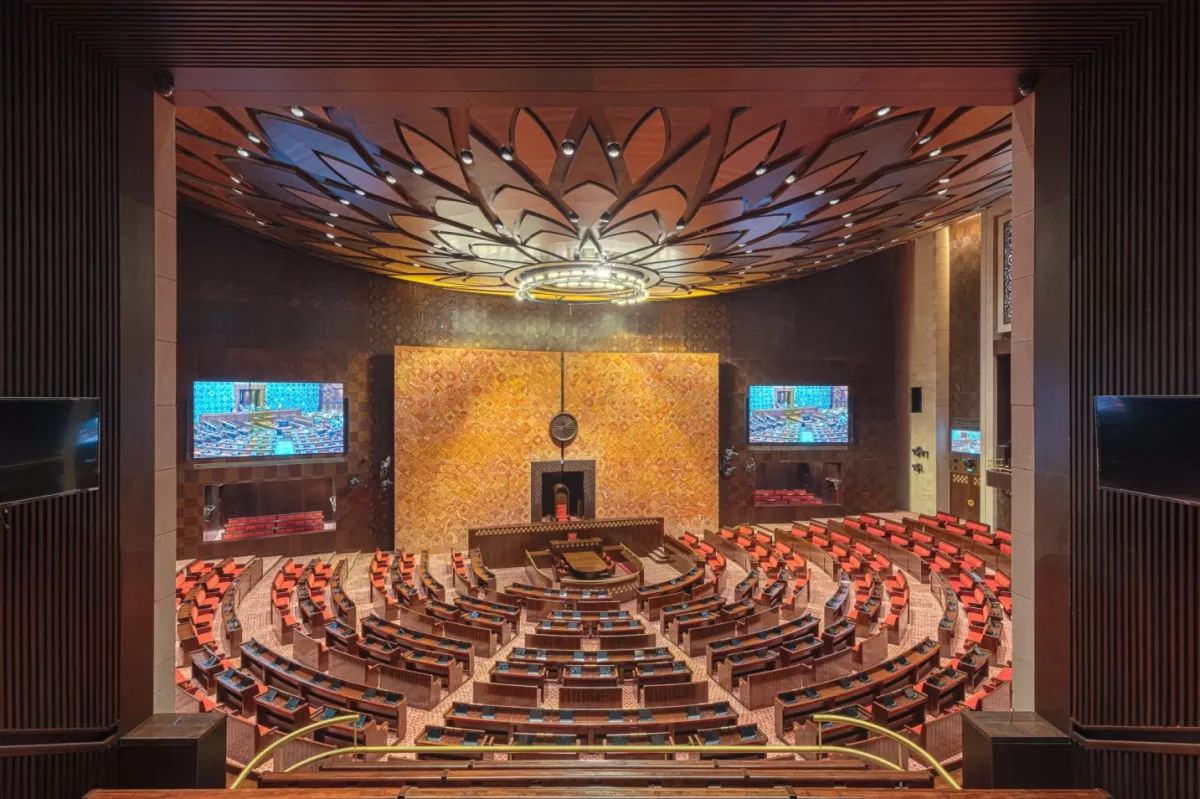
I do not share the fashionable delight in Parliament defeating a major proposal merely because it embarrassed the government. Legislative defeat is useful only if it produces better legislation. The principle behind delimitation remains unavoidable: constituencies and representation cannot ignore population change indefinitely. India’s new Parliament building itself anticipates a larger House. The question is not whether adjustment arrives, but whether it arrives through consensus or collision.
The opposition deserves credit for forcing the government to confront federal consequences it had not adequately neutralised. That is what opposition is for. But slogans about the South being punished are not a durable settlement. Congress, which once specialised in managing India’s federal bargains, now behaves as though amplifying regional fear is a substitute for drafting a formula. Its nostalgia for consensus would be more convincing if it attempted to build one.
My own preference is a larger Lok Sabha, protected seat floors for every state, phased population-based additions and prompt implementation of women’s reservation. Such a package would not satisfy purists on either side. Good federal compromises rarely do. It would recognise citizens in underrepresented constituencies without informing high-performing states that their success has become a liability.
The government should return to the issue humbler and better prepared. The INDIA alliance should arrive with calculations rather than placards. And the commentariat should resist declaring civilisational collapse long enough to read the bill. I realise that last request may be the least realistic element of my proposal.