
I have watched the argument over the Election Commission’s Special Intensive Revision of electoral rolls settle into Delhi’s favourite groove: an administrative exercise becomes an existential emergency, television panels discover fascism before dinner, and opposition leaders compete to produce the darkest adjective. By the following morning, citizens still do not know what documents they need, which official they must approach, or how an error can be corrected. The outrage industry has enjoyed itself; the voter has been left with the paperwork.
My view is unfashionably straightforward. India needs accurate electoral rolls. Duplicate entries, deceased voters who remain listed, migration between constituencies and incorrect addresses are not imaginary problems invented by the BJP. A roll is not sacred merely because it already exists. The Election Commission has both the authority and the obligation to revise it, and citizens are entitled to expect that only eligible voters determine an election.
That does not mean every revision procedure is automatically wise. Verification can become exclusion when officials demand documents that poor, elderly, migrant or displaced citizens cannot readily produce. The answer, however, is to improve the procedure, widen acceptable evidence, publish reasons for deletion and provide quick appeals. The Congress and its allies mostly prefer a more theatrical proposition: that asking questions of the roll is itself suspicious. That position is administratively unserious.
Accuracy is democratic infrastructure
We routinely demand cleaner welfare databases, better tax compliance and tighter identity checks in public schemes. Yet when electoral rolls are examined, the opposition suddenly treats data hygiene as an attack on democracy. Elections involve the most consequential public database in the country. Why should it alone be preserved in amber?
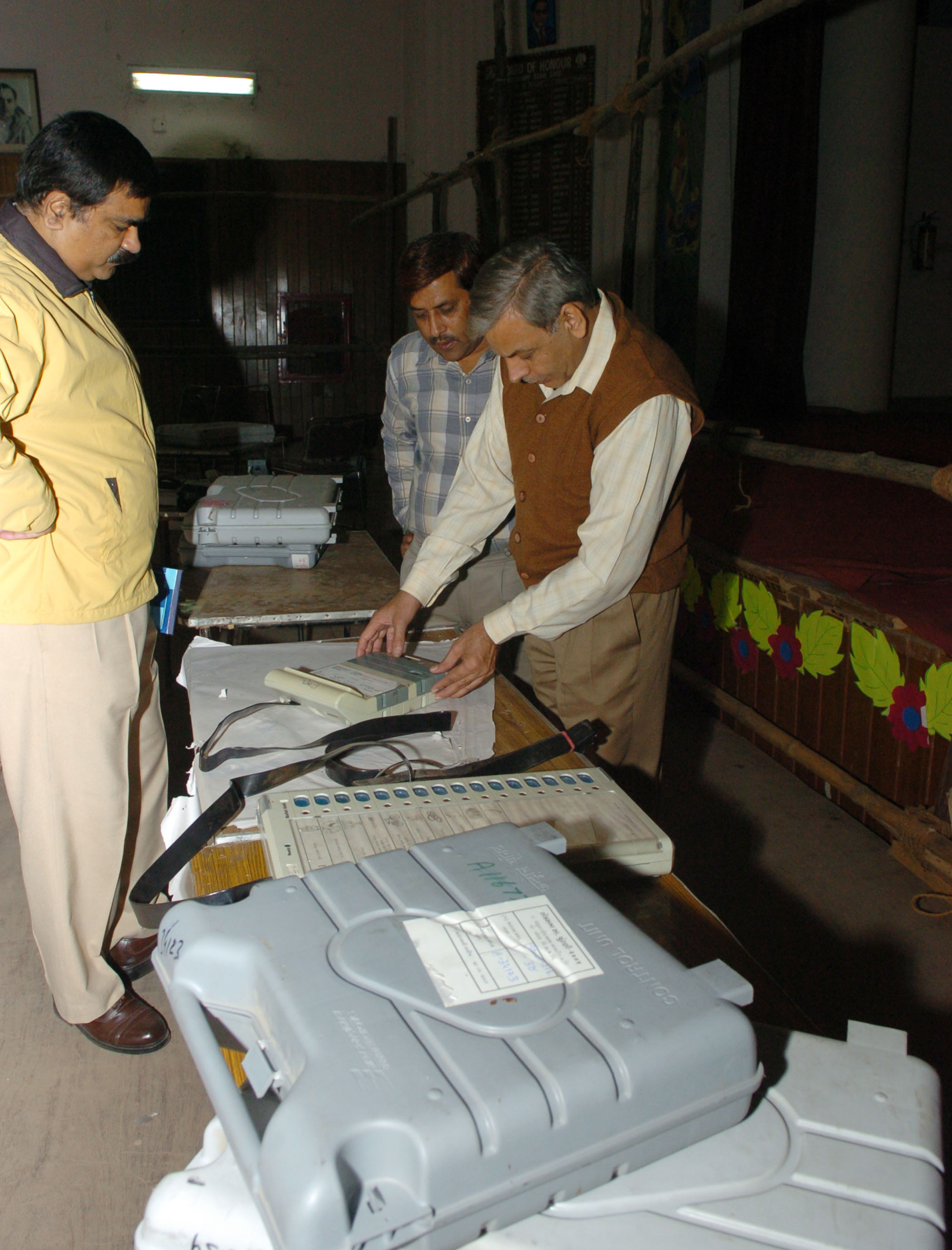
The Election Commission’s own voter services portal lets citizens search the roll, submit forms and track applications. Its existence points to the sensible model: verification should be continuous, transparent and accessible rather than a dramatic pre-election scramble. Booth-level officers should be supported by usable digital systems, but a website cannot be the only doorway in a country where connectivity, literacy and documentation remain uneven.
This is where the government and Election Commission should resist triumphalism. A legitimate goal does not excuse a clumsy method. No elderly woman should lose her vote because her name is spelt differently across two records. A seasonal worker should not be presumed fictitious because he was absent when an official visited. A married woman’s change of residence should not turn citizenship into an obstacle course. Where a citizen is already on the roll, deletion must require notice, a recorded reason and a meaningful chance to respond.
These safeguards strengthen the case for revision; they do not weaken it. The BJP would be foolish to dismiss all procedural criticism as motivated. It should instead own the higher standard. If the party believes accurate rolls help democracy, it should welcome auditable deletion lists, multilingual assistance, special camps and clear appeal deadlines. Confidence is demonstrated by openness, not by telling anxious voters to stop asking questions.
The opposition’s convenient leap
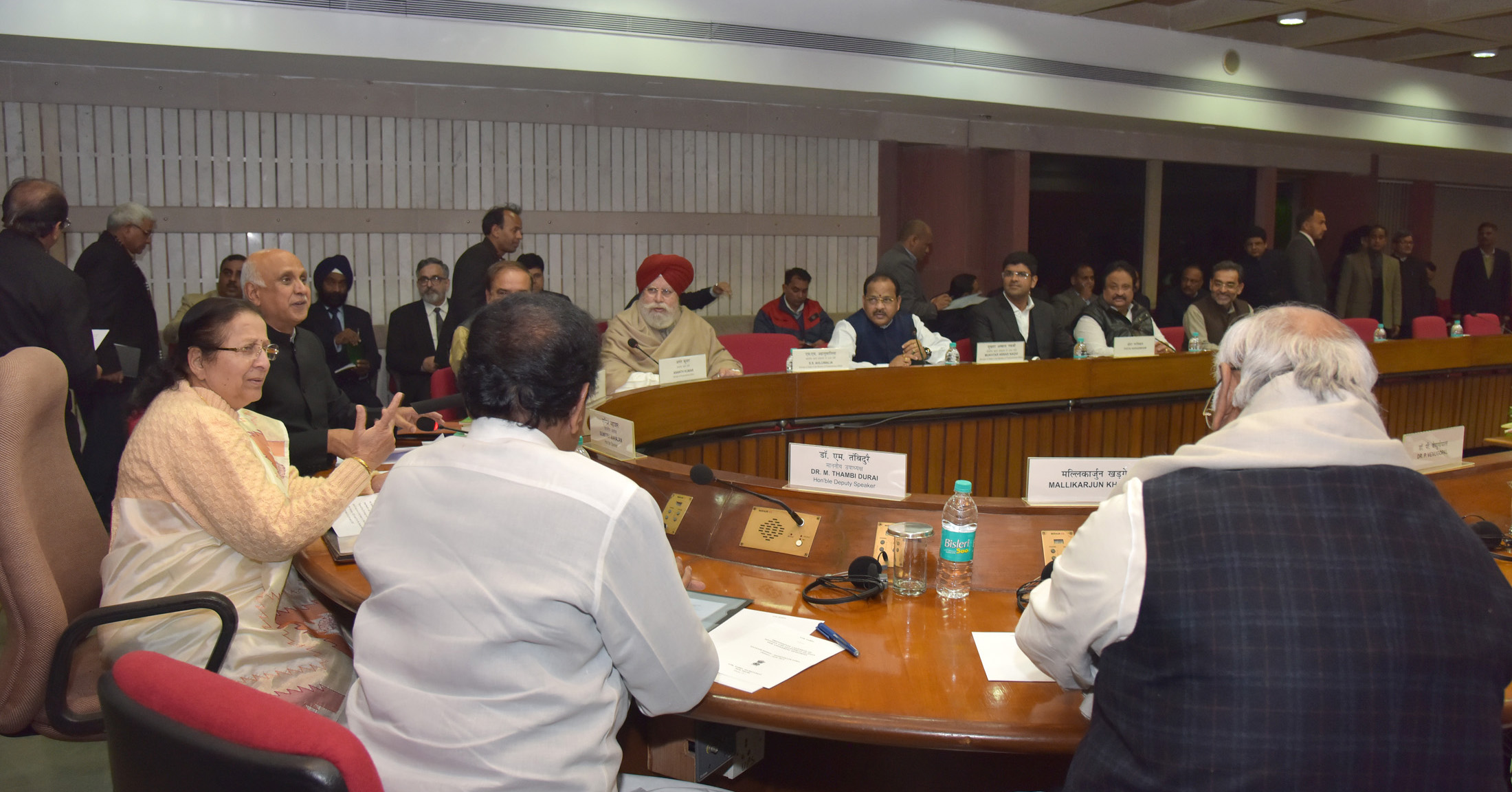
Congress has sharply criticised the SIR, while opposition parties have organised protests and coordination meetings. Criticism is their right. What bothers me is the missing middle in their argument.
To establish deliberate disenfranchisement, one must show more than inconvenience, error or even bureaucratic incompetence. One must demonstrate a pattern: who was removed, on what stated ground, whether comparable voters were treated differently, how many appeals succeeded and whether officials ignored binding rules. Those are testable questions. Instead, we often get a press conference, a frightening label and a montage of individual cases before the underlying records have been examined.
The INDIA alliance also wants us to forget that flawed rolls can injure voters in several directions. An elector who moves from one constituency without being removed from the old list creates an integrity problem. A duplicate entry may never produce a duplicate vote, but leaving it uncorrected hardly inspires confidence. Meanwhile, genuine residents missing from rolls suffer a direct denial. A competent revision must address both inclusion and accuracy. The opposition speaks as though only the first value exists because the second complicates its story.
There is a political calculation here. Since Narendra Modi’s rise, Congress has frequently preferred institutional suspicion to political introspection. If an election is lost, the machine, the media, the roll, the schedule or the agency becomes the protagonist. Anything except the possibility that voters heard the opposition and declined the offer. Congress-era nostalgia is particularly useless here. India’s older electoral machinery was not a golden republic of flawless paper lists and perfectly neutral local networks.
I do not claim that every criticism of the Election Commission is manufactured. Its decisions must withstand public examination precisely because independence cannot merely be asserted. But criticism becomes credible when it identifies a rule, demonstrates a breach and proposes a remedy. “Stop the exercise” is not a remedy when the database plainly requires maintenance.
Make every deletion explainable
If I were designing the political response, I would insist on four principles. First, inclusion must be the presumption for an existing elector until a documented process establishes otherwise. Second, every proposed deletion should carry a reason code that the citizen can understand. Third, appeals must be available offline and resolved before the relevant election. Fourth, anonymised constituency-level data should show additions, deletions, objections and restorations.
The Election Commission also needs public communication written for voters rather than lawyers. Its main institutional site publishes election material and instructions, but citizens should not have to excavate circulars from the ECI website to understand whether a birth certificate, school record or family linkage is acceptable. A one-page checklist in every major local language would do more for trust than ten defensive press briefings.
The government, for its part, should ensure administrative coordination without appearing to direct electoral outcomes. That distinction matters. Providing records, staff and logistical capacity is legitimate; turning the exercise into a party victory lap is not. BJP workers can help supporters verify their entries, but ministers should be careful not to speak as if the Election Commission were implementing a partisan project. Institutional distance protects everyone, including the ruling party.
A voter is not a hashtag
The strongest opposition point is that documentation burdens are never evenly distributed. Middle-class commentators can retrieve certificates from a cloud drive. A flood-displaced family, a migrant labourer or an elderly rural voter may have records scattered across offices and spellings. I accept that point without hesitation. It is exactly why verification must allow multiple forms of proof, local inquiry and correction rather than a single rigid document test.
But this sensible warning does not justify treating all verification as voter suppression. That rhetorical inflation carries a cost. When every form is declared authoritarian, genuine procedural failures become harder to distinguish from partisan noise. Officials become defensive, citizens become frightened, and the opposition spends its credibility before the most serious cases are even heard.
What strikes me is how little the loudest participants discuss the voter’s actual journey. Can she check her name without a smartphone? Does she receive notice? Is the hearing nearby? Will an official correct a transliteration error? How long does restoration take? These mundane questions decide whether a revision is fair. They are less glamorous than announcing that democracy has died for the fourteenth time this year.
I give the Election Commission the benefit of the doubt on the necessity of cleaner rolls, and I give the government credit for supporting stronger administrative systems. That benefit is conditional, not blind. The exercise must be measurable, appealable and humane. If legitimate voters are excluded, restore them swiftly and acknowledge the failure. If opposition parties allege targeted deletion, they should publish evidence capable of being checked.
India does not have to choose between dirty electoral rolls and bureaucratic cruelty. It can demand accurate registers while placing the burden of fairness on the state. The BJP should confidently occupy that ground. Congress may prefer a grand conspiracy because it travels faster on social media. Democracy, regrettably for the commentariat, is usually protected through less cinematic things: a correct name, a delivered notice, an open hearing and a reason written down.